For Schools & Post-16
The BOUNCE Approach® for Schools & Post-16
A developmental framework
A shared framework that creates consistency across your whole setting – so every adult understands what’s happening, speaks the same language, and responds in the same way.
For any child or young person struggling
Every professional knows this moment
The one who arrives already at the edge before anything has even happened.
The one whose behaviour changes completely depending on which adult is in the room.
The one who responds well with one member of staff – and falls apart with everyone else.
The one with a support plan, a key worker, a TA and an ELSA who still cannot access the day.
The one who is trying – whose nervous system is working against them in ways nobody can yet see.
The one who needs every adult around them to understand and respond in the same way.
← Swipe to see more →
The one who is not being difficult. Who is trying.
You are not failing them. You may simply be missing a shared framework – one that helps every adult understand what’s happening and respond the same way.
That’s what the BOUNCE Approach® is for.
★★★★★
“We were opening a new provision for children with SEMH needs and autism, and I wanted it built on the right foundations from the very beginning. I needed a framework that understood these children – their nervous systems, their sensory worlds, how they communicate, how they see themselves – and that was neurodivergent-affirming all the way.
The BOUNCE Approach® gave us exactly that. All staff, many new to this type of setting, were trained and confident before we opened, with interventions ready to use across every area of need.”
Headteacher
New Specialist Provision
Our approach · Let’s explore
The six BOUNCE pillars
Look beyond behaviour and explore the areas that may be influencing a child’s wellbeing, regulation, relationships, learning and development. Select any pillar to see what you can add to your toolkit.
B
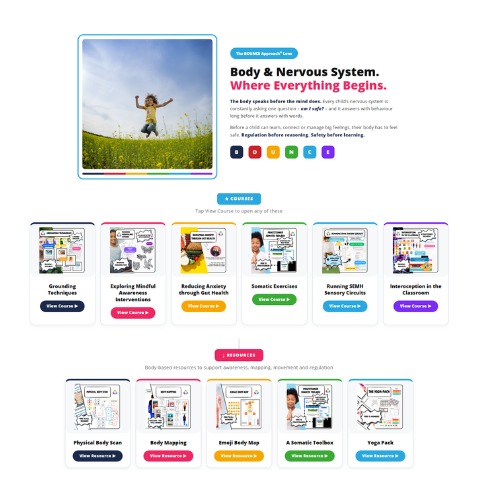
Body & Nervous System
Grounding, regulation & somatic awareness.
Show more ↓
Reducing Anxiety through Gut Health
O
Openness to Connection
Trust, attachment & co-regulation.
Show more ↓
U
Understanding Sensory
Sensory processing & awareness.
Show more ↓
N
Navigating Emotions
Emotional expression & regulation.
Show more ↓
C
Connection & Communication
Communication skills & connection.
Show more ↓
E
Esteem & Identity
Self-esteem, identity & belonging.
Show more ↓
← Swipe to explore →
Imagine having all of this in one place
More than 50 CPD-certified courses, interventions, assessments, activities, templates, tools and downloads – organised through the six BOUNCE pillars, available whenever you need them.
Less searching. More confidence. Better support for the children who need it most.
Your BOUNCE Journey
Your BOUNCE journey
Every member of staff needs the confidence to recognise need, know what to do next, and measure whether it’s working. The Learning Portal gives them the training, creative approaches and practical tools – and gives you the evidence to demonstrate impact across your school or college.
1
Understand
How do I ensure every learner receives the right support?
Show more ↓
Staff complete a 2-minute Snapshot before support begins
The Snapshot identifies each learner’s strengths, developmental priorities and needs across the six pillars
Results automatically link staff to relevant training, support plans, interventions and resources
Every member of staff follows the same trauma-informed, neurodivergent-affirming framework
Leaders receive a clear baseline across individuals, groups and cohorts
✓ What you get: A 2-minute assessment that helps every member of staff understand what each learner needs next.
2
Equip
How do staff know what to do next?
Show more ↓
Every member of staff has their own Learning Portal account
Staff learn to differentiate by developmental stage rather than chronological age
Access editable support plans, practical strategies and ready-to-use resources
Choose from PSHE Learning Journeys, LEGO®-style literacy planning, sensory circuits and creative therapies
Regular live drop-in sessions mean the BOUNCE team is there when staff need advice
✓ What you get: A confident workforce with on-demand training, practical resources, live support and everything needed to deliver independently.
3
Deliver
How do we ensure support meets every learner’s needs?
Show more ↓
This isn’t about worksheets – it’s the right experience at the right developmental stage
Staff confidently adapt creative approaches: LEGO®, sand, art, Play-Doh, movement, music, sensory
Resources are adapted to the learner, not the learner to the activity
The same approach differentiates for a 5-year-old or a 19-year-old building independence
✓ What you get: Creative, flexible interventions that can be adapted to every learner’s developmental stage.
4
Monitor
How do we know support is working?
Show more ↓
Staff repeat the 2-minute Snapshot at agreed review points
Progress is measured against the original baseline
If progress stalls, staff access extra training, resources or a live drop-in for advice
Staff record outcomes within your existing assessment and tracking systems
✓ What you get: Reliable progress information, ongoing expert support, and confidence that staff are never left to solve challenges alone.
5
Lead with Confidence
How do I know our investment is making a difference?
Show more ↓
Staff record Snapshot outcomes and impact within your existing tracking systems
Each term, review whole-school data across individuals, targeted groups and cohorts
Evidence improvements in engagement, attendance, wellbeing, behaviour and academic progress
Demonstrate impact for governors, trust leaders, Ofsted and local authority reviews
✓ What you get: A confident workforce, consistent provision, and meaningful evidence that supports inspection readiness and better outcomes.
← Swipe to see more →
From a 5-year-old learning to regulate to an 18-year-old developing their identity, every member of staff has the knowledge, tools and confidence to deliver consistent support that meets the needs of the child in front of them.
The Learning Portal
Everything you need, already in one place
You know the feeling. Sitting down to plan and not knowing where to start, so you build something from scratch again – your evening, your printer, your money.
55+
CPD courses
Foundation to specialist
120+
Activities and ideas
Ready to run in a session
40+
Regulation strategies
Nervous system first
38+
Printable packs
Download and use today
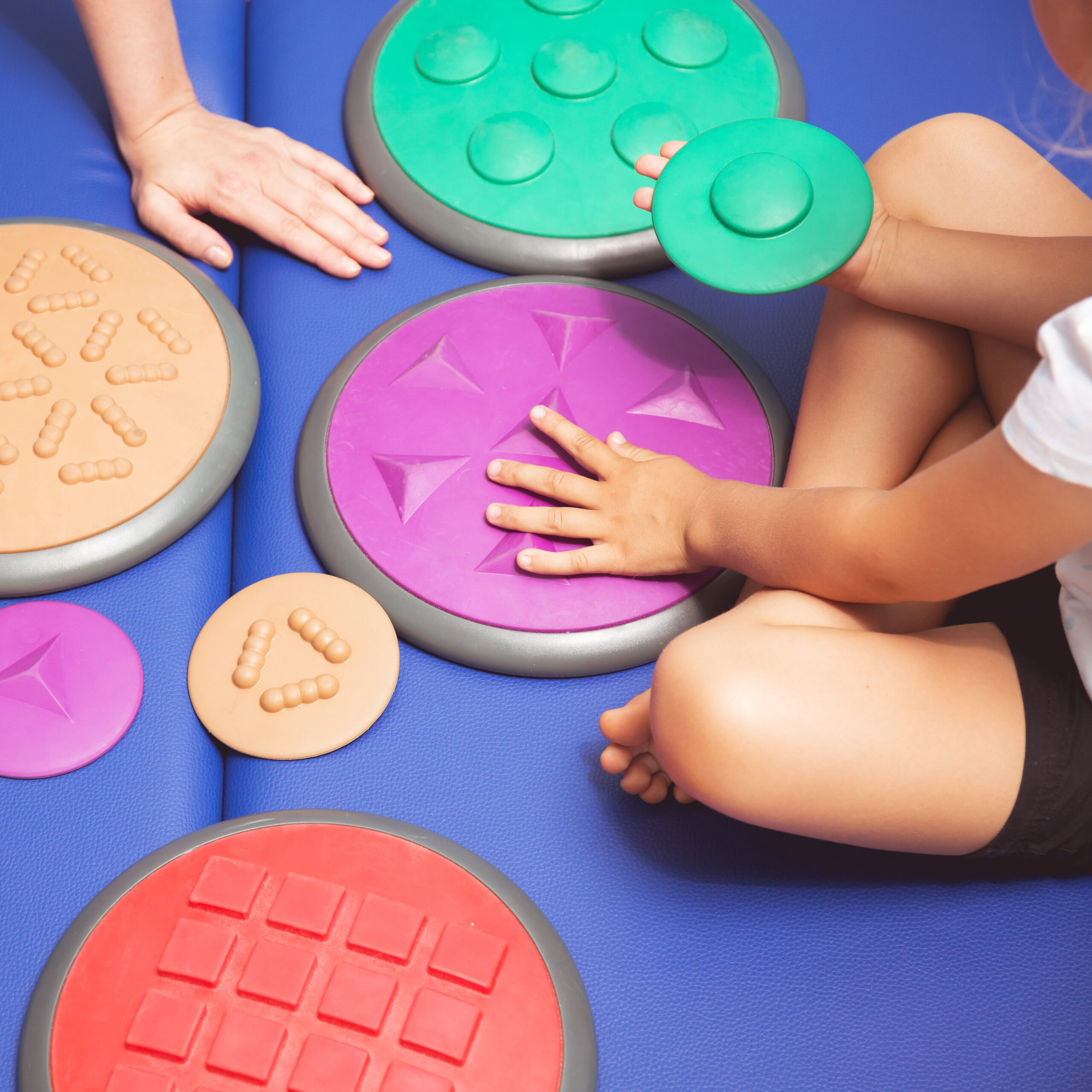
Body first
Somatic and sensory tools
A dysregulated child cannot access a conversation about behaviour. These come first, and they work at the level of the nervous system rather than the reasoning brain.
✓
Sensory circuits and movement breaks
✓
Grounding, breathing and interoception work
✓
Drumming, yoga and story massage
✓
Sand tray and tactile interventions
✓
Regulation music children can use independently
Search by need
Activities, strategies and an A-Z
Filter by pillar, by presenting need or by setting. You are not reading a whole course to find one idea – you go to the need and the ideas are there.
✓
Emotional regulation and co-regulation
✓
Anxiety, attachment and school avoidance
✓
Communication and executive functioning
✓
Identity, self-esteem and social skills
✓
De-escalation, plus an A-Z for quick answers
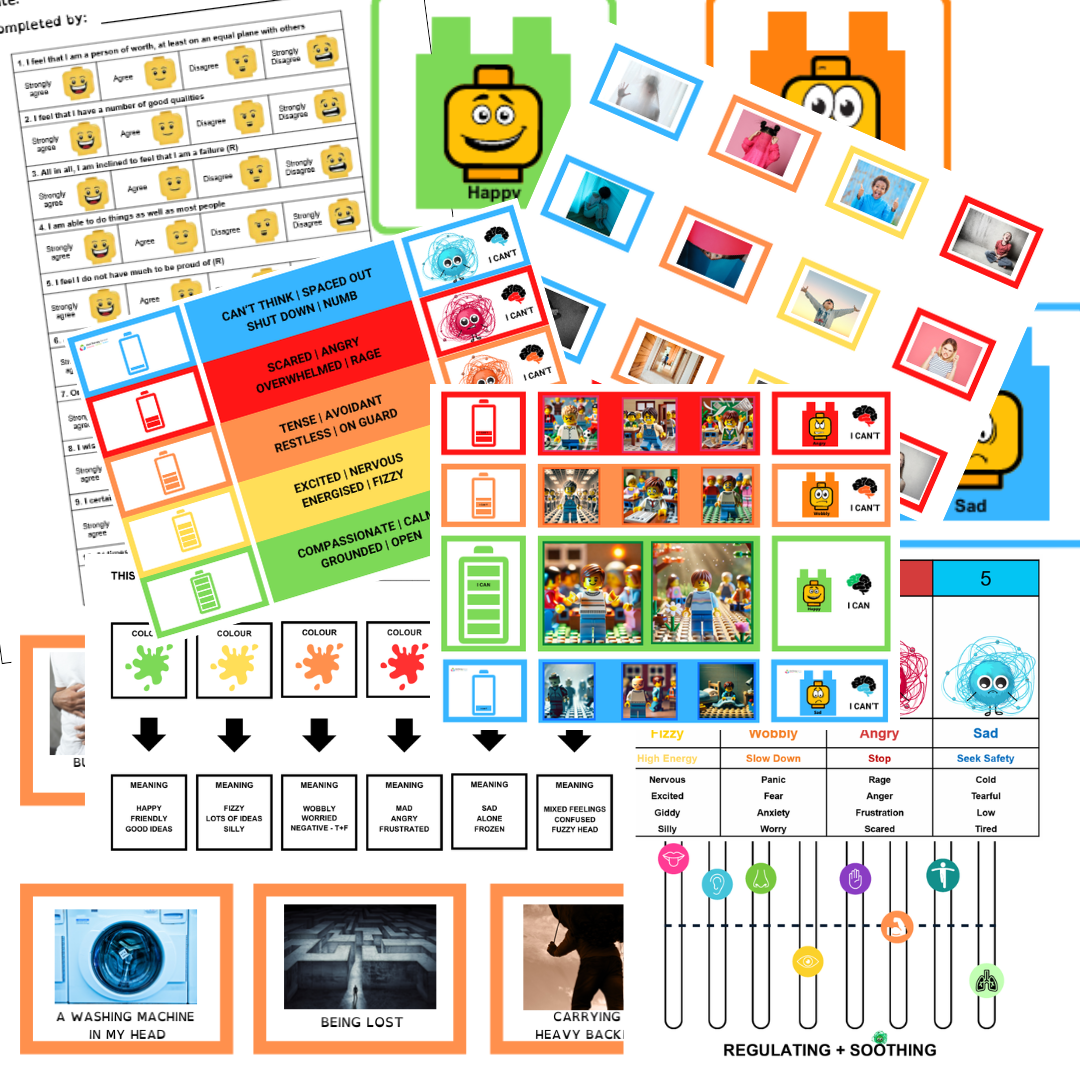
Print and go
Toolkits, printables and templates
Finished resources, not templates someone has to build out. Download it, print it, use it this afternoon – and send it home so the same approach carries across.
✓
Emotional Regulation and Sensory Toolkits
✓
Executive Function resources
✓
Visuals, posters and choice boards
✓
Observation, planning and review templates
✓
Send-home to support families
All of it organised the same way.
The Snapshot flags a pillar, the portal is already sorted by that pillar – so the gap between knowing and doing is a click, not an evening.
One annual membership works out at under £27 a month, paid once. No VAT to add. Invoicing and purchase orders welcome if your school is funding it.
CPD tools for schools and post-16 settings
Get every adult to the same understanding
A shared framework only works if the whole setting has it. These tools are how you plan that training, get it to the right people, and show what it changed – without pulling everyone into a hall for a twilight.
✓ Included with every team membership, from 3 to 50 staff
1
Lead
Team Leader Dashboard
Your year in five stages – Assess, Plan, Do, Review – with the messages to staff already written. Tick things off as you go.
2
Plan
CPD Planner
Pick a key area and the plan comes back in tiers – what the whole staff need, what key adults need, what the people running interventions need.
3
Choose
CPD Pathway
For the staff who want to go further on their own – a teaching assistant, an ELSA, a pastoral lead building their own route around the young people they support.
4
Evidence
CPD Evidence Portfolio
Each member of staff records what they learned, what they changed and what difference it made – then sends you the PDF.
↻ The loop closes. You plan it, staff complete it, the evidence comes back – and it is there for performance management, for the SEND report, and for the next person who joins in January.
What your team sees
Step-by-step tools anyone can pick up, from an experienced SENDCO to a teaching assistant in their first term. Every one ends in a clear PDF you can keep, share or file.
1
Team Leader Dashboard

Your checklist for the year, ticked off as you go. Send resources to staff with the wording written for you, map portal provision to the four areas of need for EHCP work, and invite named staff onto the BOUNCE Practitioner® route.
2
CPD Planner

Add your staff once. Choose a key area from the BOUNCE Approach® pillars, see the training recommended for whole staff, key adults and interventions, then allocate who does what and when. A PDF per person to send out.
3
CPD Pathway

The staff-led route. Someone picks the courses that fit the children and young people they work with and builds a pathway with a term against every item – useful for an appraisal target, and for the person who wants to go further than the plan asks.
4
CPD Evidence Portfolio

Learning, application and impact for every piece of CPD a member of staff completes, with a Snapshot result where one was used. They keep it updated and hand you the PDF – so the evidence arrives written, not remembered.
A young person should not have to work out which adult understands them.
Consistency across a setting is a training problem before it is anything else – and training only holds if it reaches the teaching assistants, the cover staff and the person who started at half term, not only the people who could make the twilight. These tools are how you get everyone there and keep the record of it. Nothing is stored on this website and there are no staff logins to manage. Each PDF is the record, and it reopens the tool so a plan or portfolio can be picked up again at any point.
EHCP Mapper
BOUNCE Practitioner® route
Ready for new starters
Evidence for annual reviews
Whole-team access from 3 to 50 staff. No VAT to add. Invoicing and purchase orders welcome.
Testimonials
Trusted by professionals
★★★★★
“Your workshops were a highlight of SEND Live 2025. The feedback from attendees has been overwhelmingly positive.”
Lydia Martin
Senior SEND Project Officer
★★★★★
“CTS are SO important in equipping us as professionals with a range of ideas and knowledge to support children and families who feel lost or in the dark.”
Dr Claire Stubbs
Counselling Psychologist
★★★★★
“My absolute go-to when working in a primary school. These resources have made a huge difference to our vulnerable children.”
Debbie
Pastoral Lead
★★★★★
“The whole package of intervention alongside appropriate impact measurement tools is an excellent way to evidence progress and impact.”
Nathan
Professional
★★★★★
“A highly effective and practical tool that benefits both pupils and classroom practice. Real impact on my work supporting pupils with ASN.”
Chloe
Teacher (ASN)
← Swipe to see more →