BOUNCE Approach®School AvoidanceCPD CertifiedOn-DemandND-Affirming
Therapeutic Approaches to Emotionally-Based School Avoidance
Practical, creative, and nurture-based approaches that help children find their voice in emotional overwhelm — and support genuine re-engagement with education.
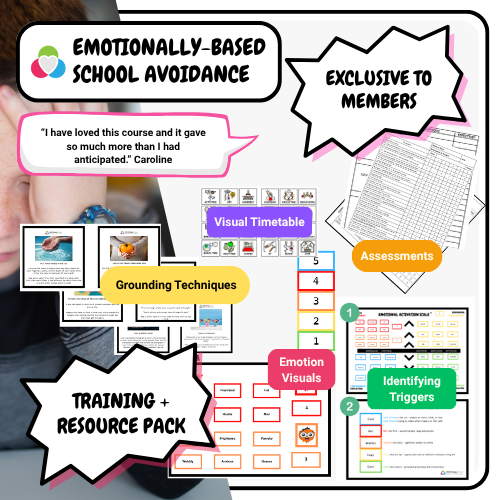
Emotionally-based school avoidance is rarely about school itself — it’s about a nervous system that no longer feels safe enough to go. This training uses real case study examples to show how children have been given a voice in their emotional overwhelm, and how practical therapeutic interventions and school adaptations created the conditions for positive change.
The approaches shared are creative, accessible, and designed to sit alongside existing provision — giving professionals new tools to support re-engagement, and helping families understand the barriers their child is facing so they can work collaboratively with school. Suitable for both practitioners and families, no prior experience required.
Objectives
Learning Objectives
By the end of this training, you will be able to:
1
Explain what emotionally-based school avoidance is
Describe EBSA accurately — what it is, what drives it, and why it is understood as a nervous system and emotional response rather than a behaviour choice or parenting issue.
2
Understand what the research tells us about the rise in EBSA
Review the evidence base for the significant increase in emotionally-based school avoidance — and understand the key factors the research identifies as driving this rise.
3
Review the key areas from the research
Identify the consistent themes and findings across the research — and understand what they mean for how schools and practitioners respond to children who are struggling to access education.
4
Explore provision across universal, targeted, and specialist levels
Understand how to assess need, identify barriers early, and match provision to the level of support required — from whole-school approaches through to specialist individual intervention.
5
Use practical strategies to identify barriers to school access
Apply four approaches to understanding what’s getting in the way for a child — Pupil Voice Checklists, SEMH visuals, drawing and storyboards, and sand tray — each offering a different route into the child’s inner experience without demand or pressure.
6
Apply learning through case study examples
Review real-world case study examples to deepen your understanding of how EBSA presents in practice — and how the approaches covered in this training have been used to support children and families.
7
Consider autistic burnout and its role in school avoidance
Understand how autistic burnout contributes to EBSA — and why the goal of this work is never to fix the child or force return to school, but to reduce barriers, restore safety, and rebuild capacity at the child’s pace.