BOUNCE Approach®Emotional IntelligenceCPD CertifiedOn-DemandND-Affirming
Behaviour and Emotional Intelligence
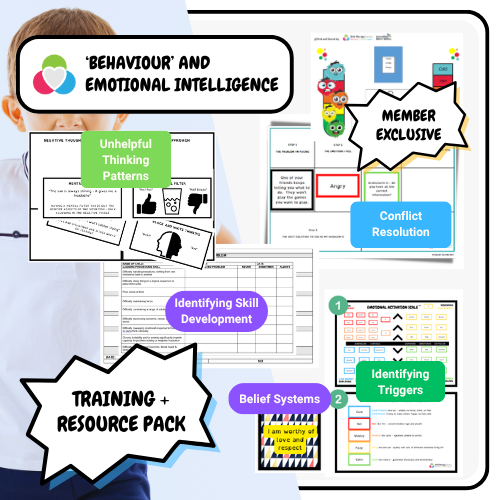
Explore the developmental roots of emotional intelligence — and how understanding Theory of Mind, executive functioning, and emotional skill gaps transforms the way we respond to children’s behaviour.
Challenging behaviour rarely appears from nowhere — it almost always signals an unmet emotional need or a skill that hasn’t yet developed. This training explores emotional intelligence through the lens of Theory of Mind, tracing how this vital skill set develops over time and how it connects to executive functioning, planning, and problem-solving. Understanding this developmental continuum changes the questions we ask — from “why is this child behaving this way?” to “what does this child not yet have the skills to do?”
Using the case study of ‘Sid’, the session illustrates how emotional skill gaps show up in behaviour — and how practitioners can support skill-building, repair conflict without shame, and put practical strategies in place that prevent negative patterns from taking hold. Suitable for anyone working with or supporting children whose behaviour is communicating something they can’t yet put into words.
Objectives
Learning Objectives
By the end of this training, you will be able to:
1
Understand emotional intelligence and the Theory of Mind
Explore the relationship between emotional intelligence and Theory of Mind — and understand why both are central to how children read, respond to, and connect with the world around them.
2
Understand the Theory of Mind
Explain what Theory of Mind is, how it develops, and what it means in practice when a child has a different or emerging capacity to perceive the thoughts, feelings, and intentions of others.
3
See emotional intelligence as a continuum
Move away from a binary view of emotional intelligence and understand it as a continuum of developing levels — so you can identify where a child is and meet them there, rather than applying a one-size-fits-all approach.
4
Understand the relationship between emotional intelligence and executive functions
Explore how emotional intelligence and executive functions are interconnected — and why supporting one has a direct impact on the other in terms of a child’s capacity to regulate, plan, and engage.
5
Apply learning through a case study — meet Sid
Explore a real-world case study to understand what emotional intelligence difficulties look like in practice — and what is actually driving the behaviour beneath the surface.
6
Identify emotional intelligence skill gaps
Learn how to identify the specific emotional intelligence skills a child hasn’t yet developed — so support is targeted, purposeful, and grounded in what the child actually needs rather than what they appear to be doing wrong.
7
Build emotional intelligence skills developmentally
Explore how to support the development of emotional intelligence in a way that follows the child’s developmental readiness — building skills sequentially rather than expecting capacities the nervous system isn’t yet able to sustain.
8
Repair conflict without shame
Understand how to support children in repairing conflict and preventing patterns of negative behaviour — in a way that builds connection and accountability without triggering shame.
9
Consolidate and reflect on key learning
Bring together the key themes from across the training — leaving with a clear, integrated understanding of emotional intelligence and a renewed sense of how to apply it with the children you support.