Big emotions / Emotional overwhelm
Using The BOUNCE Approach®
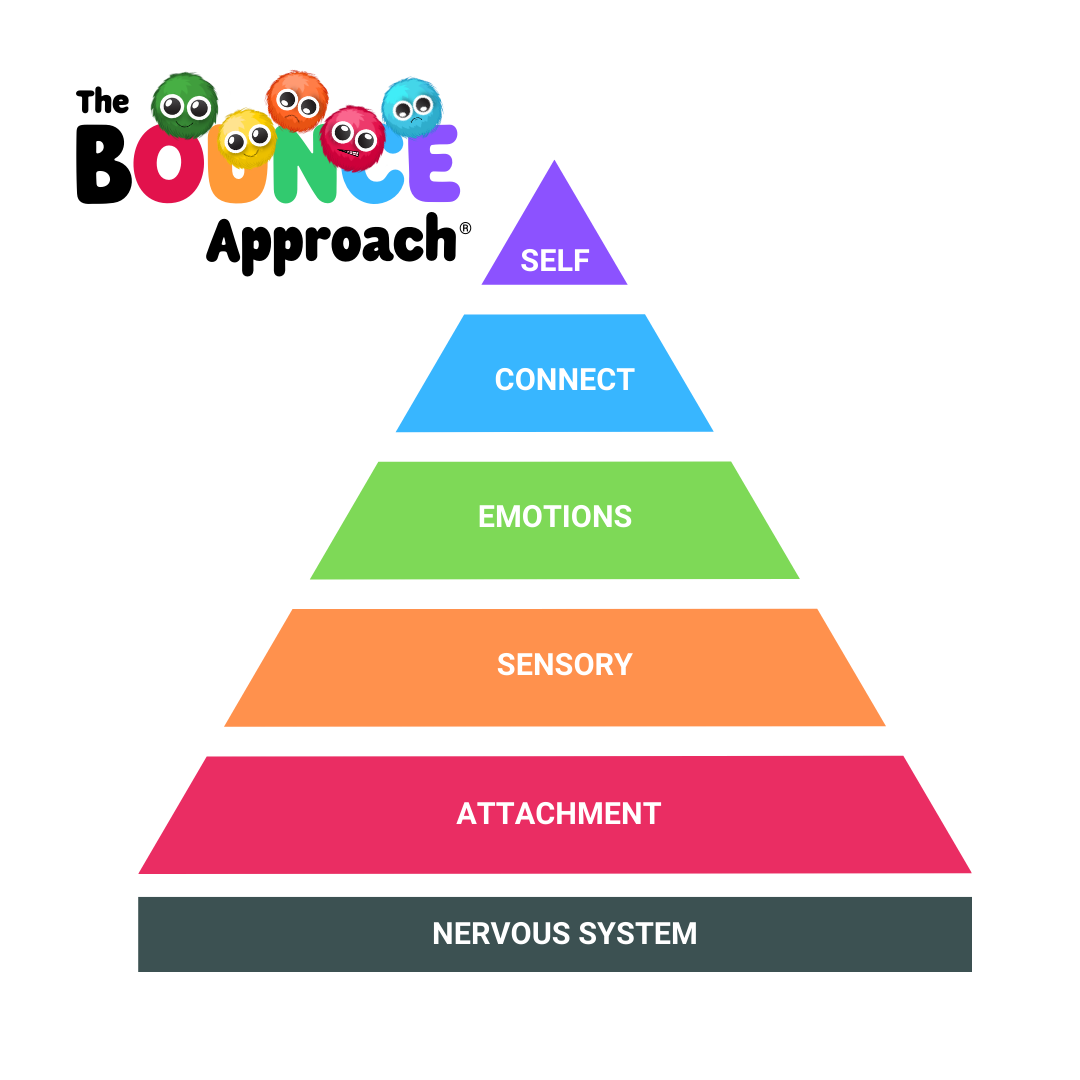
The BOUNCE Approach® supports children’s social, emotional, and mental health using evidence-based research, therapy models, and practical tools.
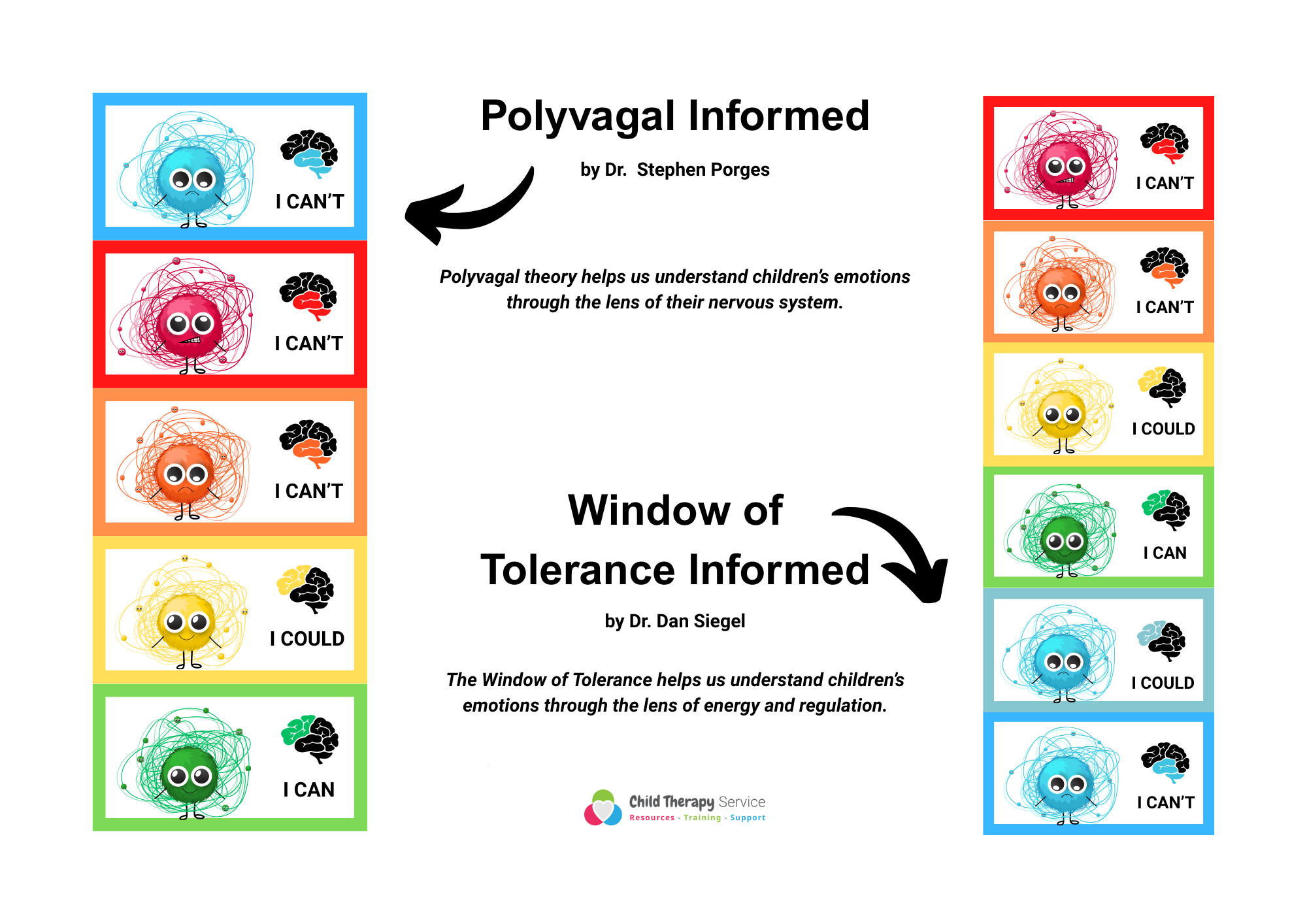
- Polyvagal Theory — helps us understand emotions through the lens of the nervous system (safety, danger, shutdown).
- Window of Tolerance — helps us see emotions through the lens of energy and arousal (too high, too low, or “just right”).
Together:
- Polyvagal = why the nervous system responds the way it does.
- Window of Tolerance = what level of energy/arousal the child has available.
The goal is not to “stay green” all the time — it’s to build self-awareness and a felt sense of safety.
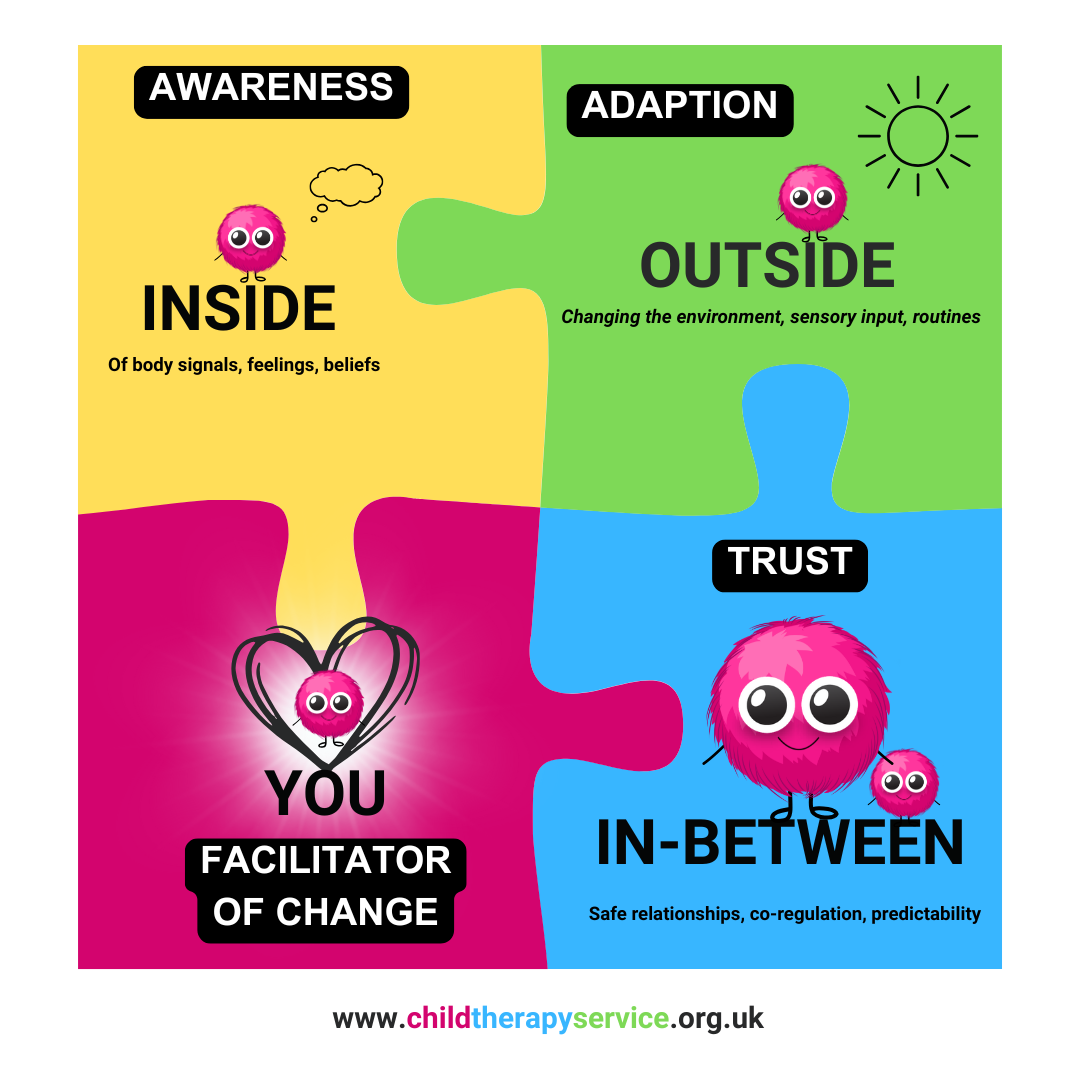
Once we know where the child is, we can put the right supports in place:
- Inside — what happens within the child’s body and mind (breath, sensations, beliefs).
- Outside — the environment and sensory world around them (noise, light, textures, routines, spaces).
- In-Between — relationships and co-regulation with others (connection, tone of voice, predictability, repair).
- You — the adult, whose regulation and presence are the foundation that makes all the other tools work.
What’s happening
- Big emotions occur when the nervous system is pushed outside the Window of Tolerance — often quickly and without warning.
- In Red (angry/protective), the child may shout, hit, throw, or run.
- In Blue (sad/low), they may cry, shut down, or withdraw.
- In Yellow (fizzy/energised), they may pace, bounce, or talk rapidly.
- Energy battery impact: Overwhelm can drain energy suddenly, often leaving the child feeling flat or exhausted afterwards.
The BOUNCE Approach®
🖤 B — Body and Nervous System (Inside Tool)
- Pause all demands; focus on regulation first.
- Offer slow, rhythmic breathing, heavy work (pushing against a wall, squeezing a cushion), or proprioceptive input.
- Provide a quiet, low-stimulation space if they need to step away.
❤️ O — Openness to Connection and Attachment (In-Between Tool)
- Stay nearby and emotionally available, even if the child can’t talk yet.
- Use short safety phrases: “I’m here. You’re safe. We can get through this together.”
🧡 U — Understanding Sensory Differences (Outside Tool)
- Reduce sensory load: dim lights, soften sounds, and limit visual distractions.
- Offer calming sensory input such as weighted blankets, soothing textures, or slow, rhythmic movement.
💚 N — Navigating Emotions (Inside Tool)
- Once calmer, name the emotion using parts language: “A part of you felt…”
- Map the emotion to the colour system and note any body sensations linked to it.
- Discuss early warning signs for next time in a non-judgemental way.
💙 C — Connection to Self and Others (In-Between Tool)
- Repair relational ruptures with simple, reassuring language.
- Invite the child to share their perspective when ready, and listen without correcting.
💜 E — Esteem and Identity (Inside Tool)
- Reinforce self-worth: “Having big feelings doesn’t make you bad — it means your body is sending you a message.”
- Highlight a skill they used in calming down or re-engaging.
Adult Focus:
- Co-regulation is more effective than correction during high emotional arousal.
- Make emotional safety the priority before problem-solving.
- Support the child to notice their own early signs of escalation over time.
Next Steps
Explore further learning: Take our De-escalation through Co-regulation course, which gives you practical strategies to help children move from overwhelm back to calm. (Exclusive to members)
Join the Learning Portal: Gain instant access to 50+ trainings, printable resources, and interventions to support emotional regulation and connection.