Neuroscience shows us that our brains and nervous systems are shaped by our experiences.
Over time, we develop beliefs about ourselves, other people and the world – not because we consciously choose them, but because our brains are trying to keep us safe.
As Dr Gabor Maté explains, many of our thoughts, behaviours and coping strategies are adaptations to what we have experienced. They often made sense at the time, even if they no longer serve us today.
These beliefs can sound like:
“I have to get everything perfect.”
“I mustn’t let anyone down.”
“If I ask for help, people will think I’m weak.”
“I always have to be busy.”
“I’m responsible for everyone else.”
“If I make a mistake, I’ll be judged.”
“I’m not good enough.”
“I need everyone to like me.”
“I have to stay in control.”
“My needs don’t matter.”
We often don’t realise we’re carrying these beliefs because they’ve become part of the way we see ourselves and the world.
When we begin to notice them, we can replace self-judgement with curiosity.
Instead of asking
“What’s wrong with me?”
We can ask
“Where might this belief have come from?”
“How has it tried to protect me?”
This doesn’t mean the belief is true. It means it may once have served a purpose.
As we become aware of our beliefs, we can begin to ask another important question:
“Is this belief helping me to live the life I want today?”
This is where our values become important.
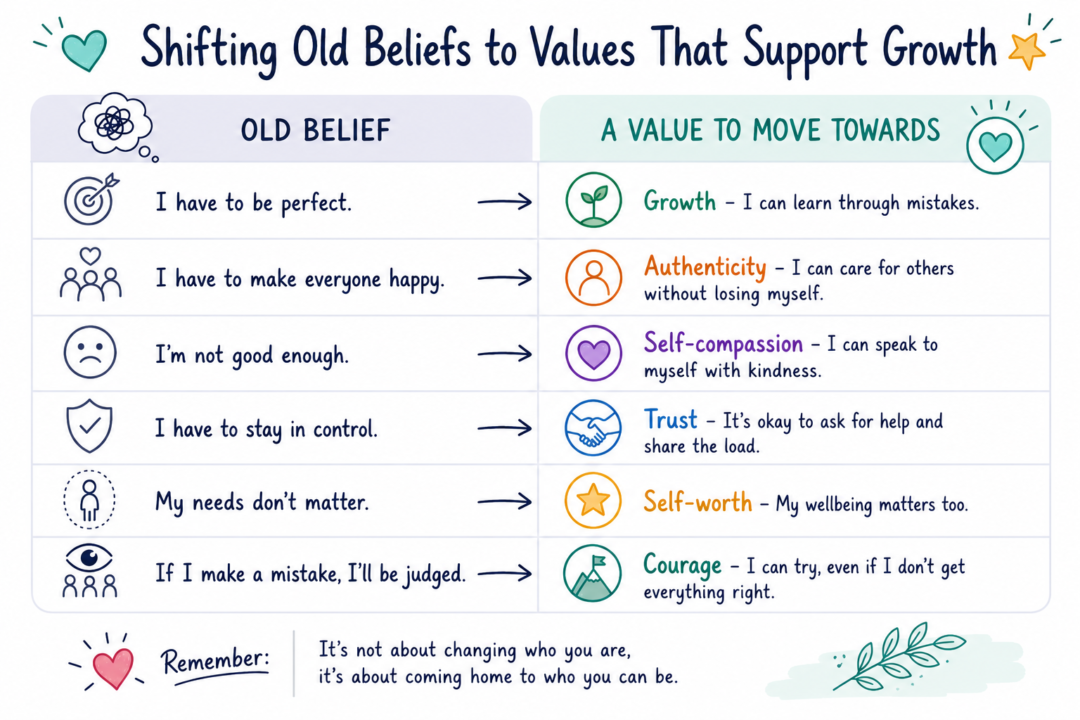
Beliefs
Often develop automatically through our experiences.
Values
The qualities we consciously choose to guide our lives. They reflect the kind of person we want to be, even when life feels difficult.
This doesn’t mean our old beliefs disappear overnight. Instead, we begin to notice them with compassion rather than criticism.
We recognise that they were developed by a brain and nervous system trying to keep us safe.
Over time, by repeatedly choosing behaviours that align with our values, we can begin to create new patterns and new experiences.
This is one of the wonderful things about the brain – it remains capable of change throughout our lives.
The more we experience safety, connection and acceptance, the more our brains can develop new expectations about ourselves and the world.
The BOUNCE Approach® invites us to become curious about both our beliefs and our values.
By understanding the beliefs that have shaped us, we develop compassion for ourselves.
By choosing the values that guide us, we create the opportunity for growth.
And when we do this for ourselves, we are better able to offer the same curiosity, compassion and understanding to the children, young people and families we support.
Would you like to access a free resource?
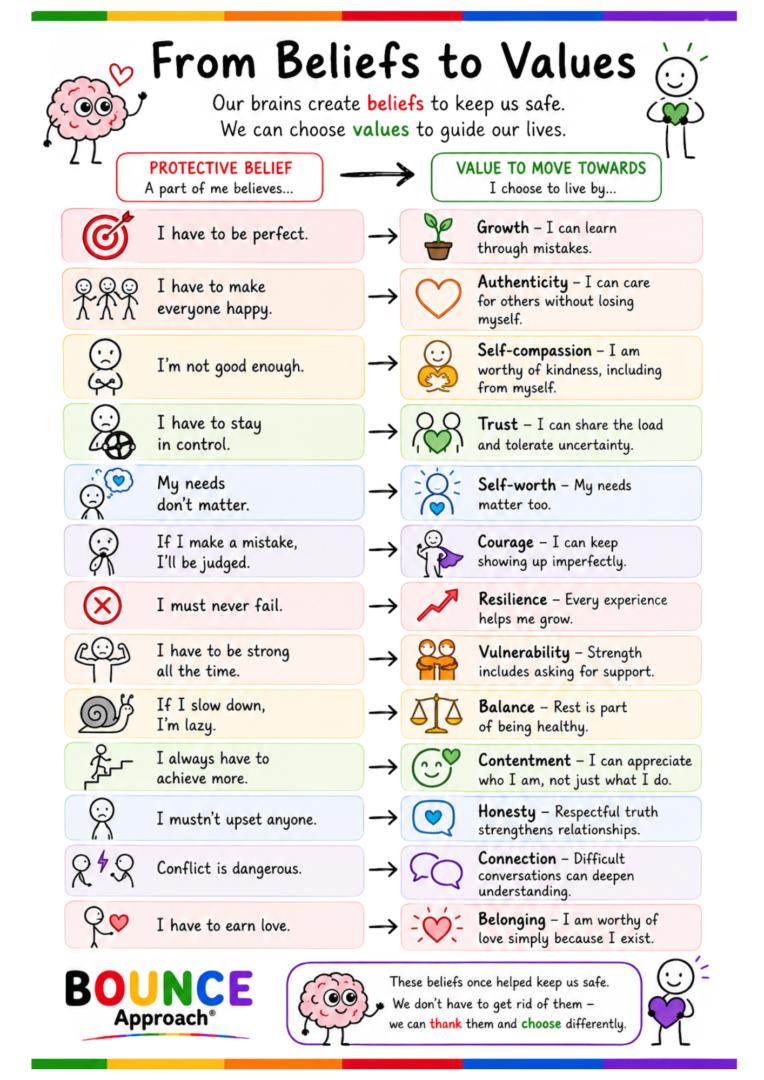
Simply log in, then use the button below:
If you are a member – you’ll find this in your resource library alongside suggested activities.