Demand Avoidance
Using The BOUNCE Approach®
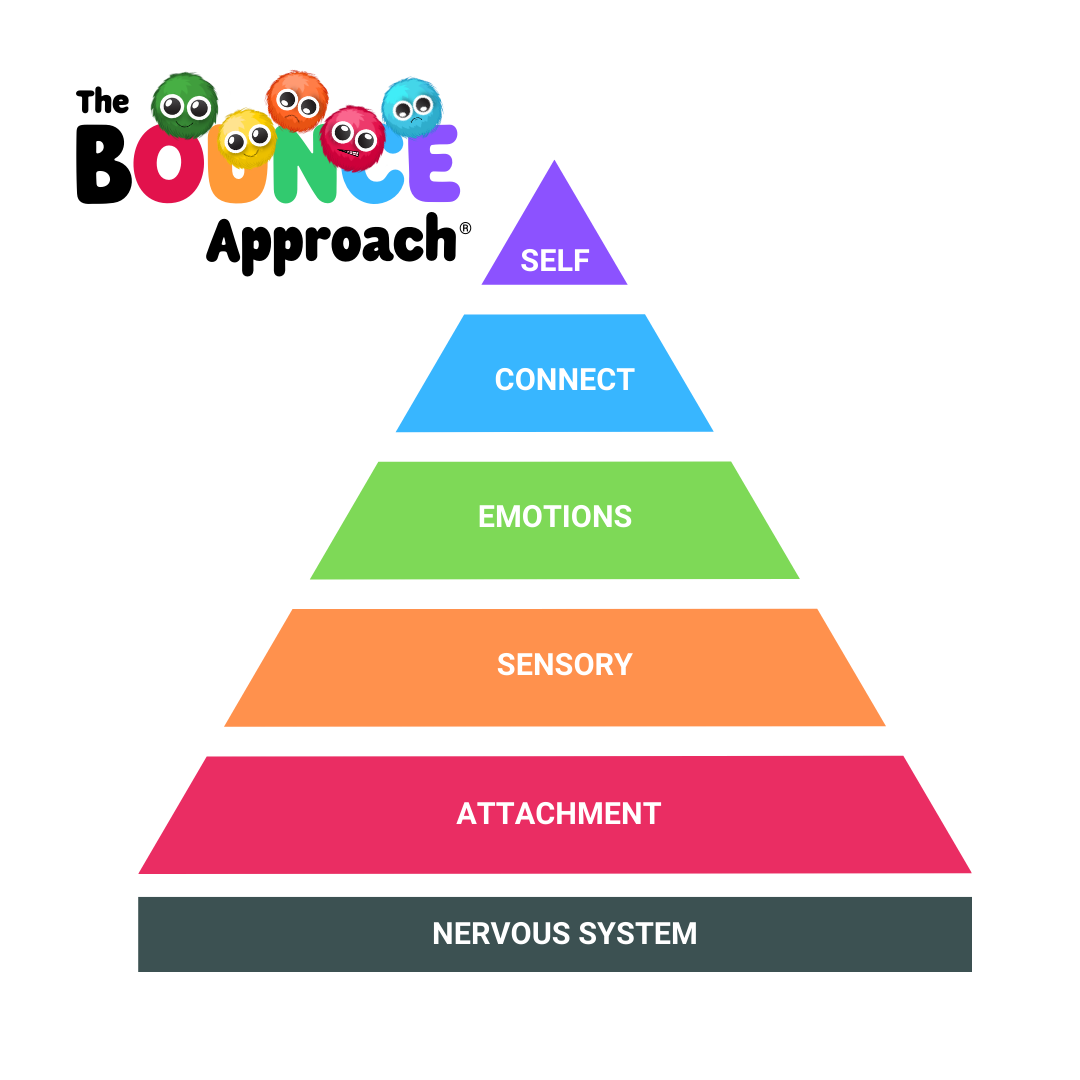
The BOUNCE Approach® supports children’s social, emotional, and mental health using evidence-based research, therapy models, and practical tools.
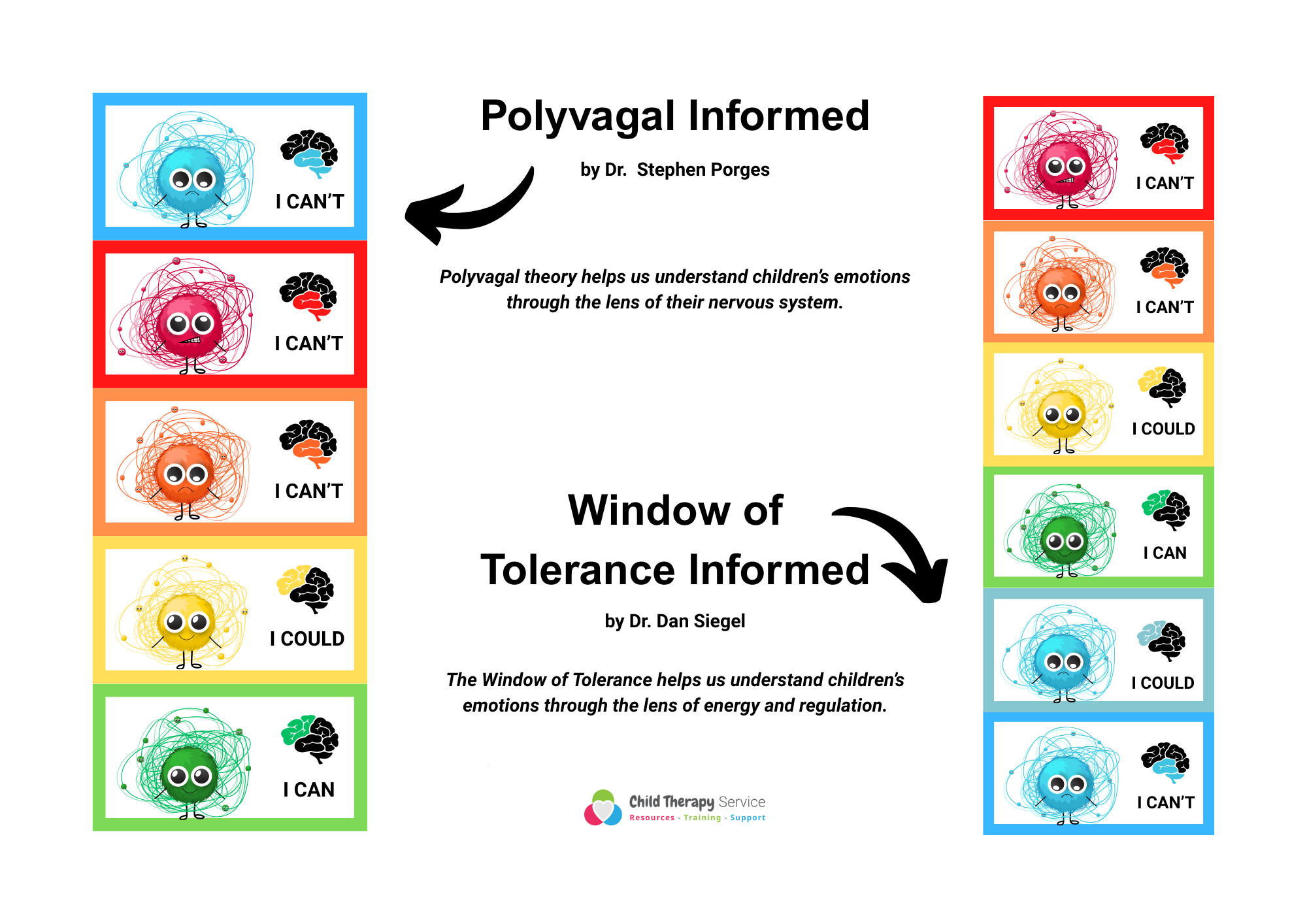
- Polyvagal Theory — helps us understand emotions through the lens of the nervous system (safety, danger, shutdown).
- Window of Tolerance — helps us see emotions through the lens of energy and arousal (too high, too low, or “just right”).
Together:
- Polyvagal = why the nervous system responds the way it does.
- Window of Tolerance = what level of energy/arousal the child has available.
The goal is not to “stay green” all the time — it’s to build self-awareness and a felt sense of safety.
Once we know where the child is, we can put the right supports in place:
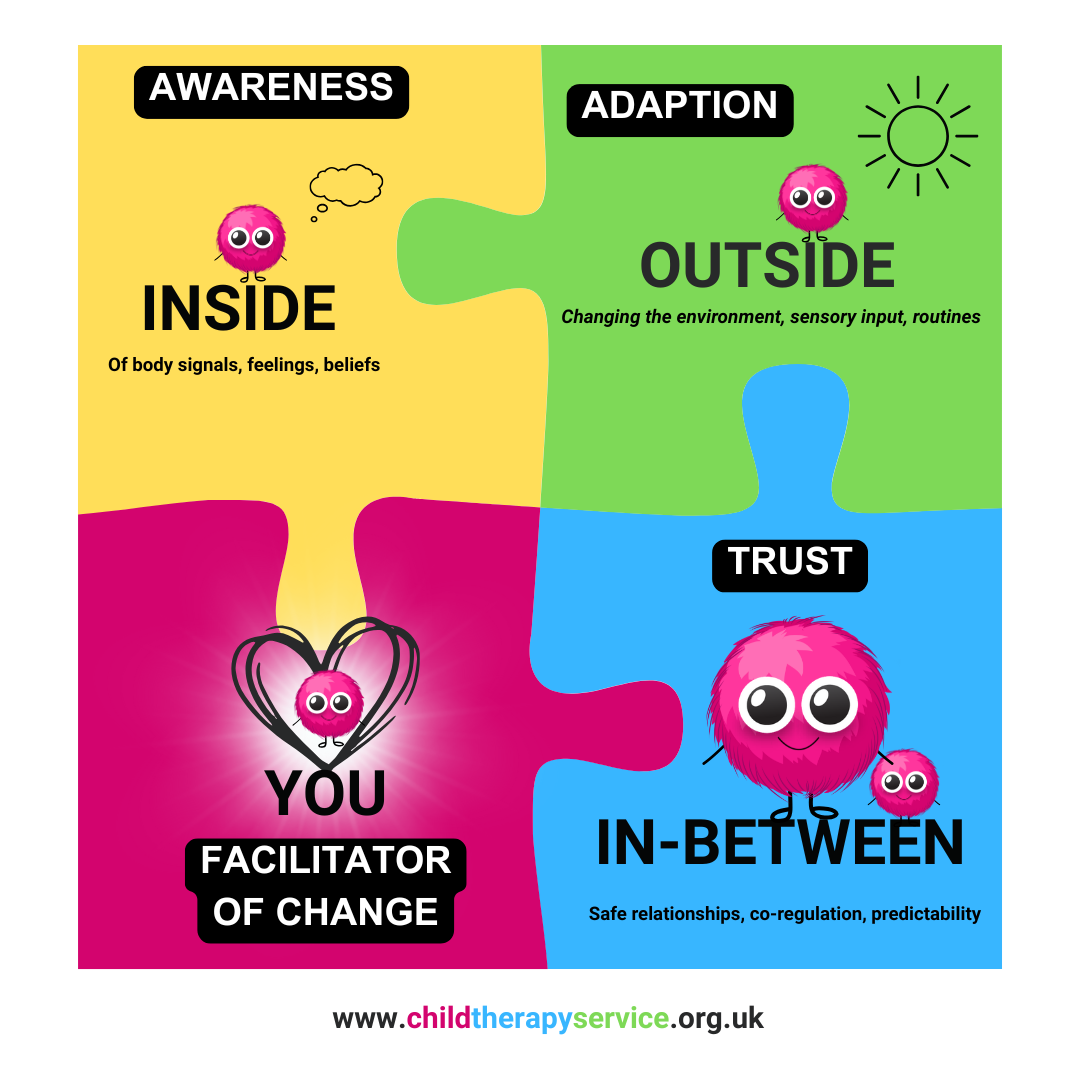
- Inside — what happens within the child’s body and mind (breath, sensations, beliefs).
- Outside — the environment and sensory world around them (noise, light, textures, routines, spaces).
- In-Between — relationships and co-regulation with others (connection, tone of voice, predictability, repair).
- You — the adult, whose regulation and presence are the foundation that makes all the other tools work.
What’s happening
- Demand avoidance happens when the nervous system interprets a request — even one the child usually enjoys — as a threat to safety, control, or autonomy.
- This can lead to refusal, withdrawal, distraction, humour, or strong emotional reactions.
- For some, especially those with a PDA profile (Pathological / Extreme Demand Avoidance), the reaction is rooted in anxiety and a need for a sense of control.
- Energy battery impact: Repeated demands can drain capacity quickly, especially if the child is already tired, overstimulated, or stressed.
The BOUNCE Approach®
🖤 B — Body and Nervous System (Inside Tool)
- Lower immediate pressure by pausing or breaking the demand into smaller steps.
- Offer regulation first — deep breathing, stretching, or sensory grounding — before trying again.
❤️ O — Openness to Connection and Attachment (In-Between Tool)
- Keep the interaction collaborative rather than confrontational.
- Use relationship-based cues (“Let’s figure this out together”) rather than control-based instructions.
🧡 U — Understanding Sensory Differences (Outside Tool)
- Check if sensory discomfort is making the demand harder (e.g., noise, clothing, lighting).
- Adapt the environment to reduce overwhelm before asking again.
💚 N — Navigating Emotions (Inside Tool)
- Use parts language to externalise the response: “A part of you feels pressured right now…”
- Help the child name how they’re feeling and identify what might make the request easier.
💙 C — Connection to Self and Others (In-Between Tool)
- Offer choices to restore a sense of control (“Do you want to start with this now or after snack?”).
- Use humour or play to make the demand less threatening.
💜 E — Esteem and Identity (Inside Tool)
- Affirm autonomy and problem-solving skills: “You know what helps your body feel ready — that’s a strength.”
- Celebrate any step towards the demand, even if it’s partial.
Adult Focus:
- Reduce perceived threat by adjusting how and when demands are made.
- Build trust and predictability so the child feels safe enough to engage.
- Remember: avoidance is often a form of self-protection, not defiance.
Next Steps
Explore further learning:
- Demand Avoidance — a step-by-step approach to reducing pressure while keeping connection strong.
- Declarative Language — communication strategies to reduce the intensity of demands and build cooperation.
- Understanding P.A.C.E — using Playfulness, Acceptance, Curiosity, and Empathy to build trust and reduce anxiety.
Join the Learning Portal: Get instant access to 80+ practical trainings, printable resources, and interventions to strengthen emotional regulation, communication skills, and relationship repair in both home and school settings.