Beliefs and Thinking Patterns
Using The BOUNCE Approach®
What’s happening
- Children’s thoughts and beliefs powerfully shape how they feel and behave.
- Negative beliefs like “I’m stupid” or “I always mess up” can show up as anxiety, avoidance, people-pleasing, perfectionism, or shutdown.
- Often, these beliefs are linked to body clues — racing heart, shaky legs, a stomach full of knots — that children may not connect to their thinking.
- Without support, these “stuck” beliefs limit self-esteem, relationships, and learning.
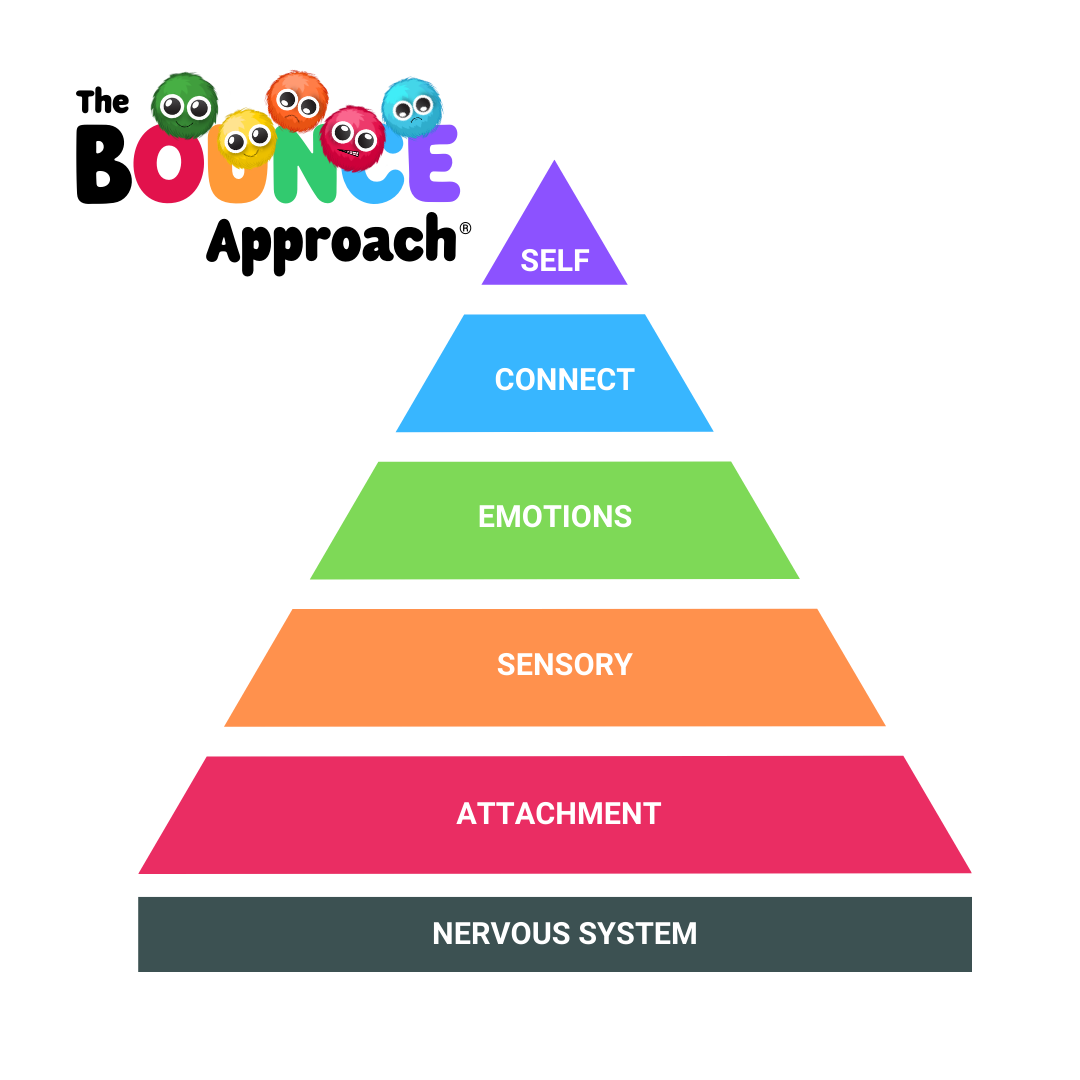
The BOUNCE Approach®
🖤 B — Body and Nervous System (Inside Tool)
- Help children notice body clues (tension, racing heart) as signals of underlying thoughts.
- Use grounding or sensory regulation before exploring beliefs.
❤️ O — Openness to Connection and Attachment (In-Between Tool)
- Explore beliefs with curiosity, not confrontation.
- Stay relational: “I wonder if a part of you believes…” rather than correcting.
🧡 U — Understanding Sensory Differences (Outside Tool)
- Use visual, structured tools like LEGO bricks to make abstract thoughts concrete.
- Offer sensory-safe ways to process — building, breaking, reshaping rather than only talking.
💚 N — Navigating Emotions (Inside Tool)
- Link feelings to beliefs: “When you feel this knot in your tummy, what might your mind be saying?”
- Use colour mapping to show how beliefs shift emotional states.
💙 C — Connection to Self and Others (In-Between Tool)
- Explore how beliefs affect relationships (“When I think I’ll mess up, I don’t want to join in”).
- Rehearse alternative beliefs together — building new “thought structures” side by side.
💜 E — Esteem and Identity (Inside Tool)
- Replace unhelpful beliefs with affirmations like “I can learn through mistakes.”
- Celebrate progress in noticing, naming, and reshaping beliefs.
Adult Focus:
- Children may not be able to say their beliefs directly — notice them through play, behaviour, and body signals.
- Provide safe metaphors and symbols rather than direct questioning.
- Focus on building, breaking down, and rebuilding — not on “fixing” the child.
Next Steps
- Explore further learning:
- IFS / Parts Approach — helping children externalise inner voices and beliefs.
- Play-Doh Feelings — symbolic, tactile ways to explore emotions linked to beliefs.
- Drawing Feelings — colour-based ways to express and reframe negative thoughts.
- Get the Resource: Inspired by LEGO: Belief & Cognitive Distortions Bundle — includes Belief Statement Cards, adapted CBT prompts, LEGO-inspired visuals, and processing guides.
- £7.99 for non-members (click here)
- FREE for Professional and School Members
- Join the Learning Portal: Access 80+ trainings, printable tools, and interventions to help children safely explore thoughts, beliefs, and self-talk. Click here to learn more
👉 Because what children build in their minds shapes how they feel in their bodies — and this resource helps them rebuild safety, one brick at a time.