
Resources
Ready-to-use packs to explore together with a child or young person, one session at a time.
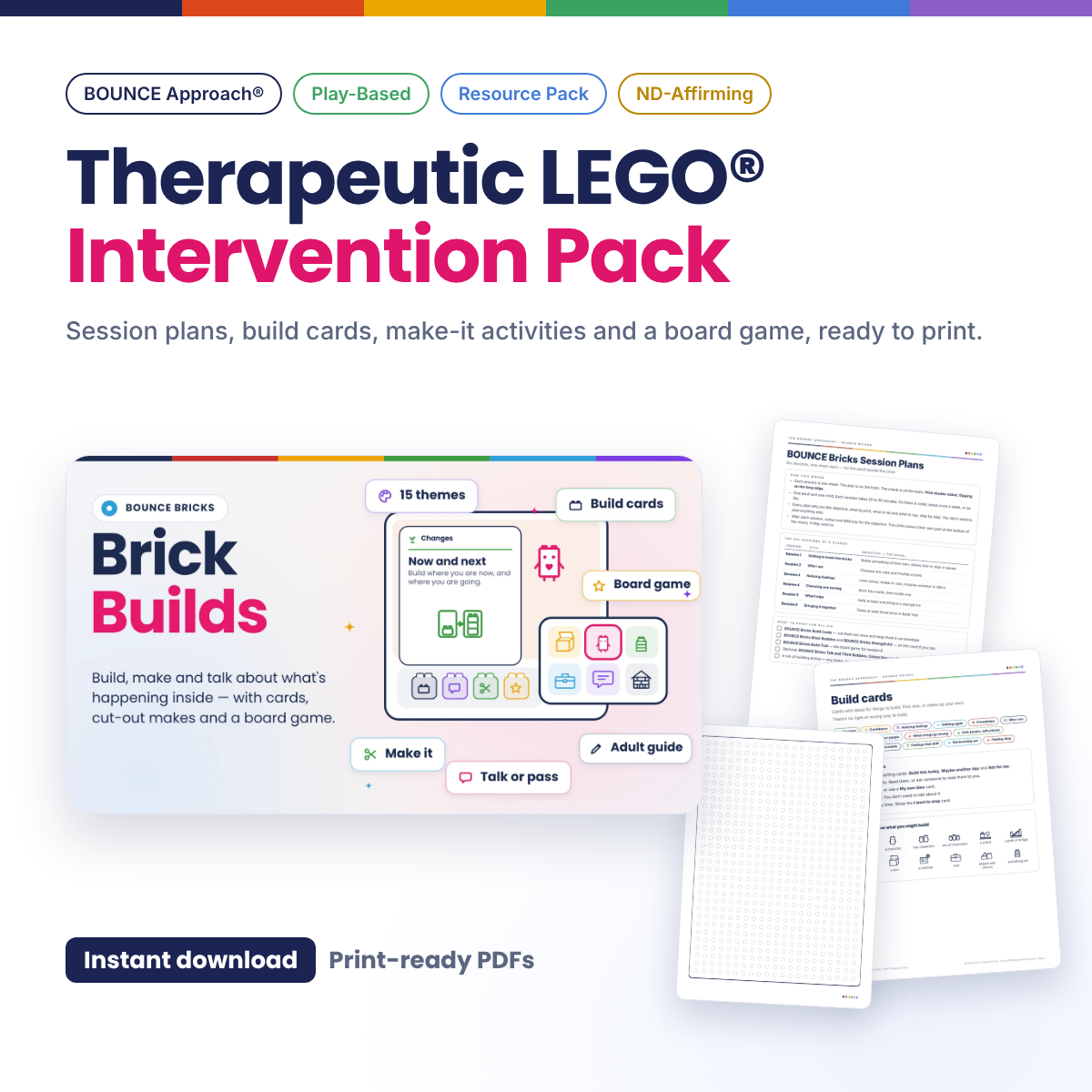
Therapeutic LEGO® Intervention Pack
Six ready-to-use therapeutic LEGO® sessions for social, emotional and mental health support, with build cards across 15 themes, make-it activities and a board game.
- Session plans and an adult guide
- Build cards, brick buddies, and talk and think bubbles
- Strength kit and the Build Trail board game
- Make-it extras: build dice, mats, a build book and more
Free for Annual and Team members, along with every refreshed pack as it lands. See membership
More packs to buy
Single packs to buy and download. More are coming back soon.

- A fold-up passport book in their own words
- 30 picture cards, 12 passport stamps and luggage tags

- Where a feeling is, and how big it feels, with or without words
- 5 body maps, 30 feeling faces in 3 sizes and an adult guide


123 more resources, for members only
Programmes, printable packs, slides, make-your-own tools, interactive activities and all-in-one sets, all included with membership. Join to use them in the Learning Portal, with new resources added as they land.
PSHE Learning Journeys
A full year of PSHE lesson plans, for Annual members. The training comes first.

All-in-one sets
Slides, an online activity and a printable pack for one topic, all together.
 Members only
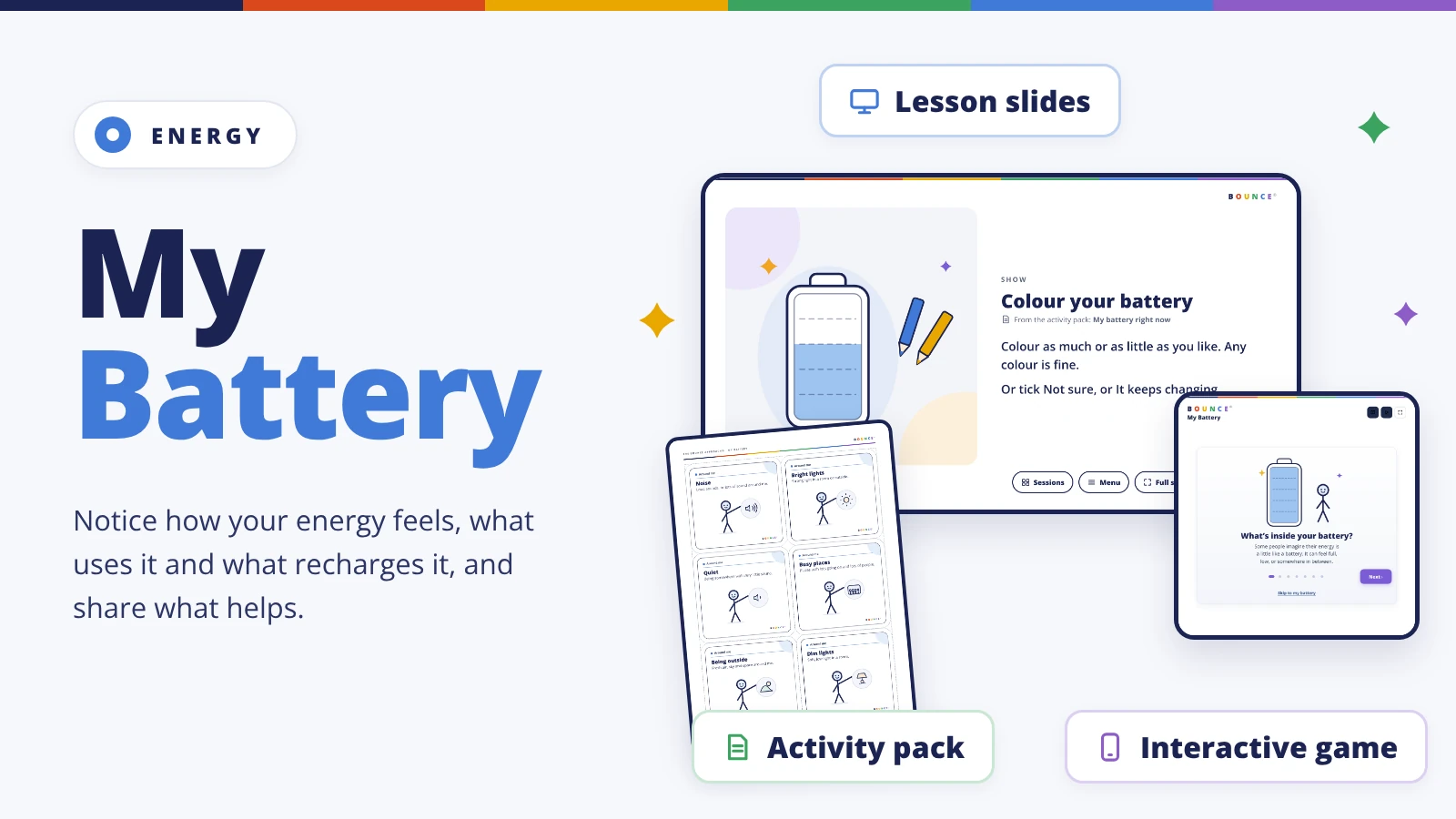
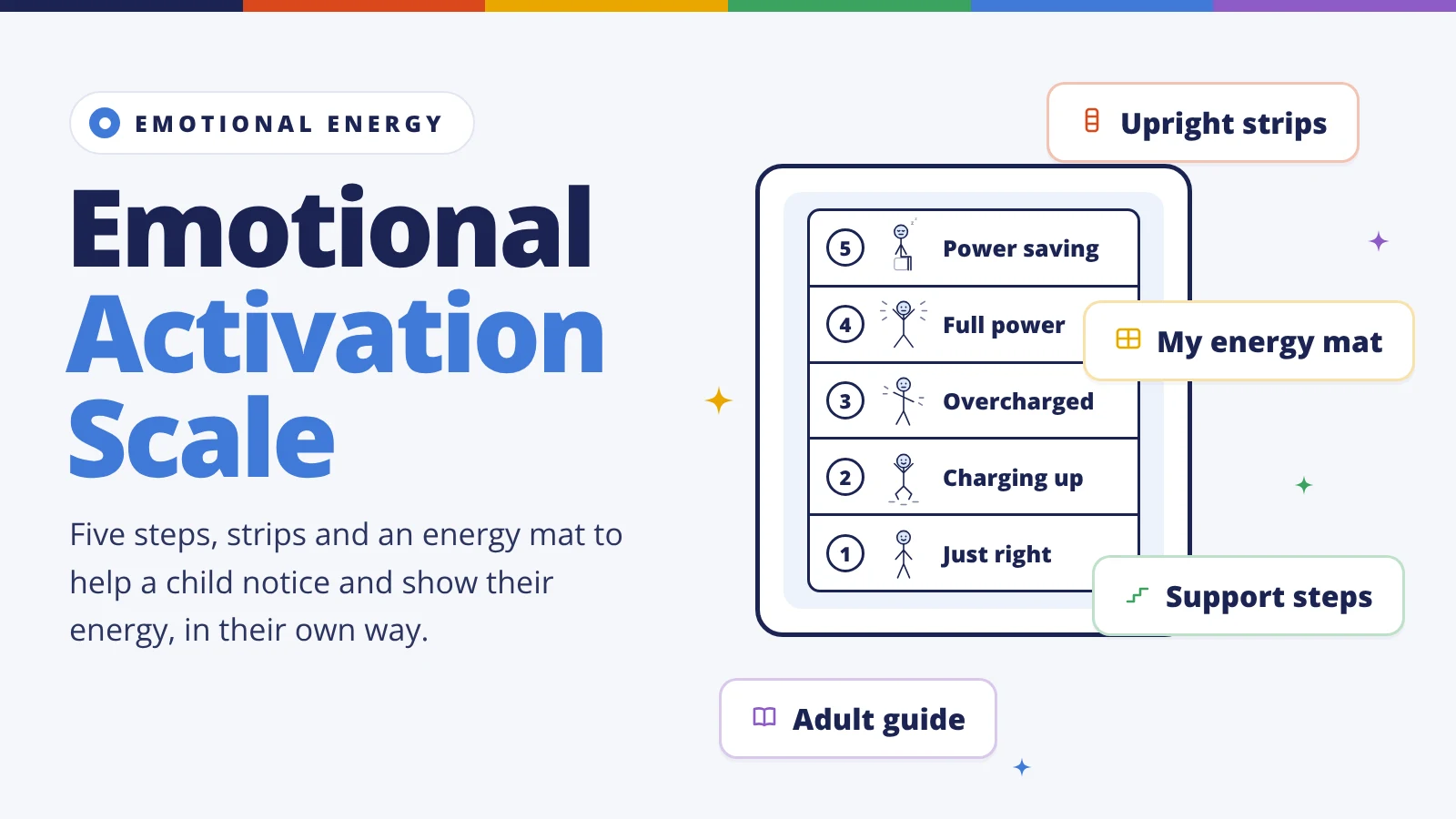
- Help children and young people notice how their energy goes up and down, what uses it, what recharges it and what helps.
 Members only
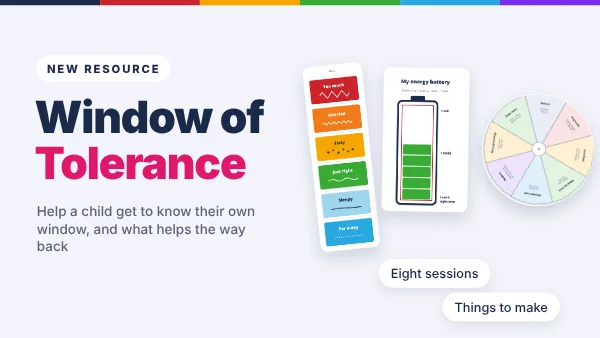
- Help a child or young person get to know their own window, notice when they are outside it, and find what helps them back.
 Members only
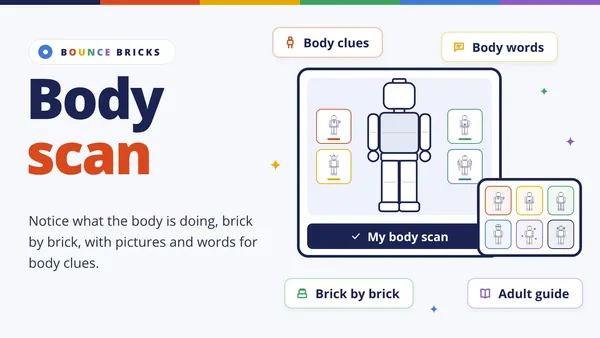
- Help children and young people notice what their body is doing, brick by brick, and find where in their body they feel their emotions.
 Members only
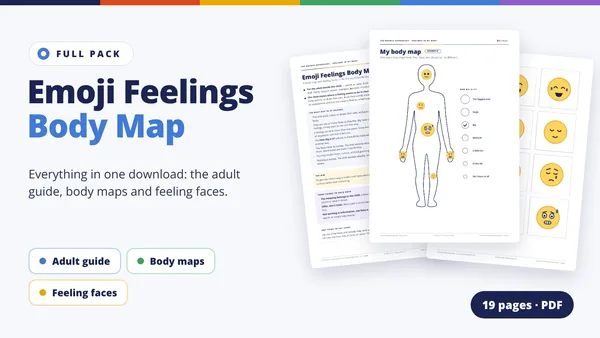
- Help children and young people show where they feel their emotions in their body, and how big those feelings are.
 Members only
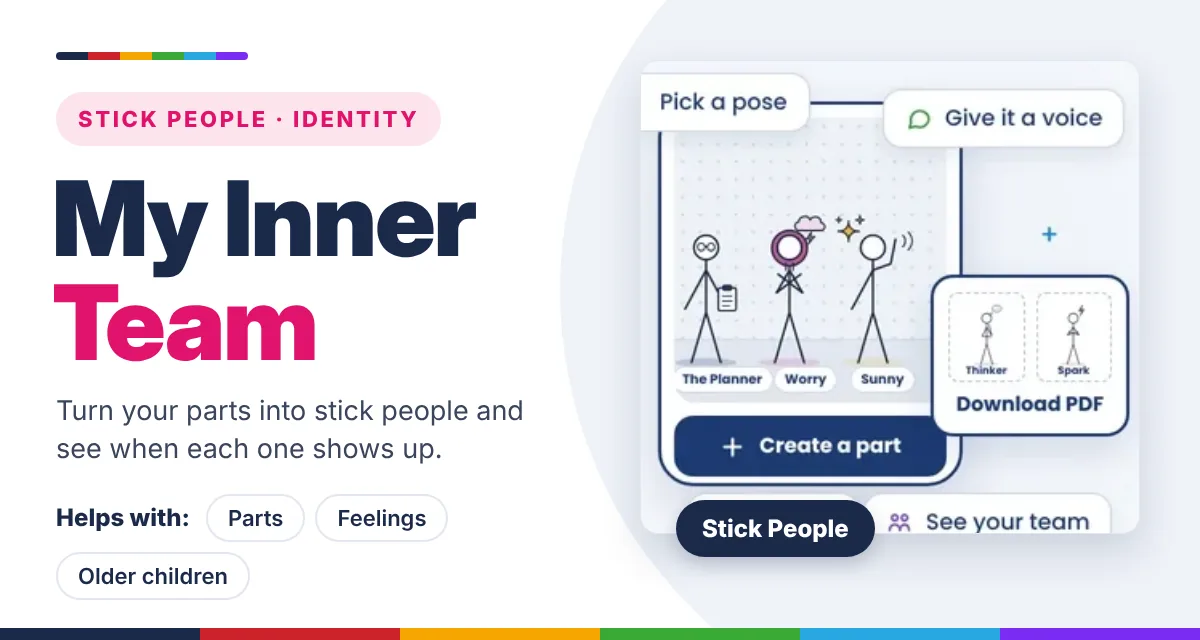
- Help a child or young person meet their parts with curiosity, and find a quality like calm or courage that might help.
 Members only
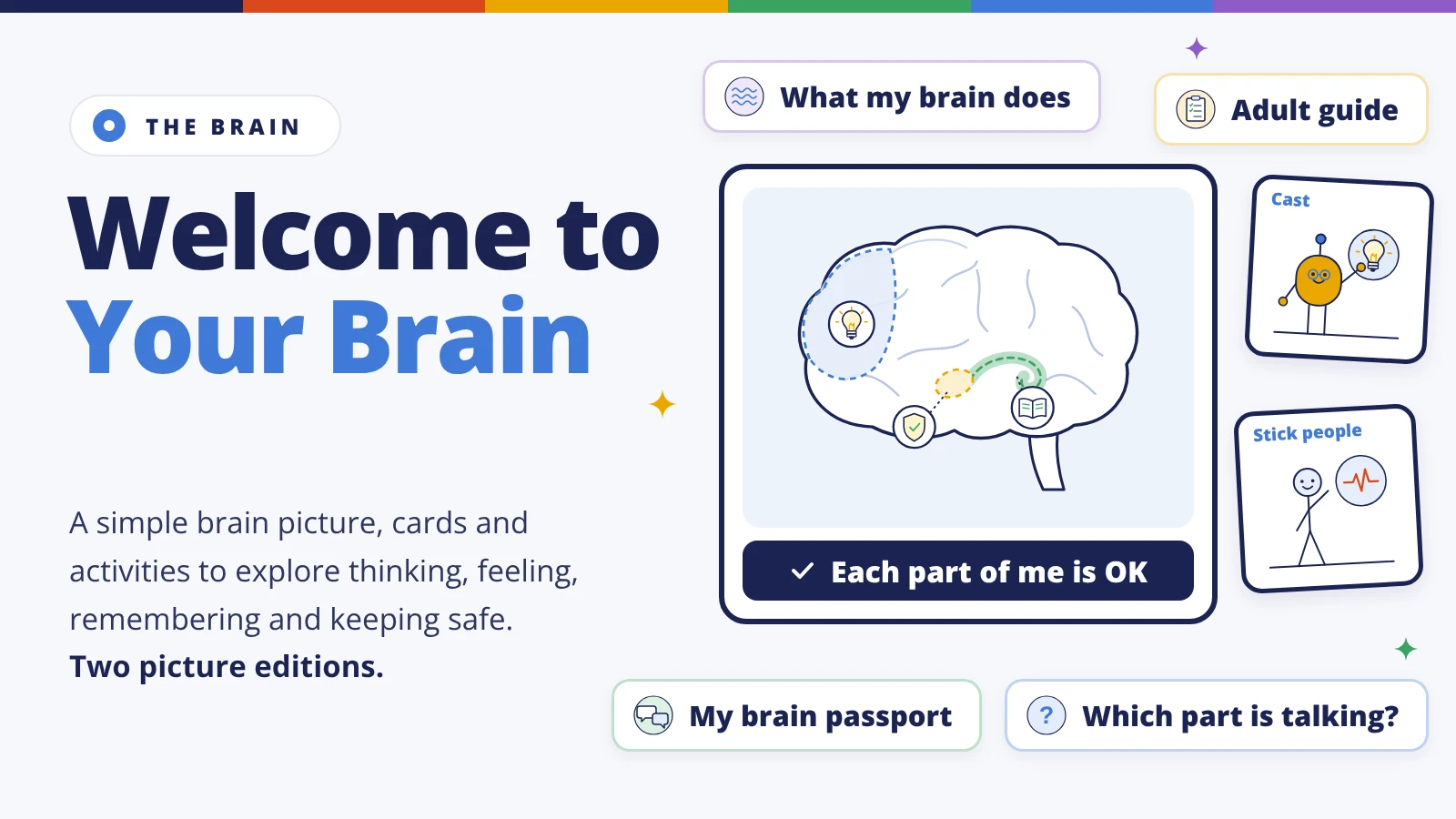
- Help a child or young person explore what their brain does, which part is talking, and what might help.
 Members only
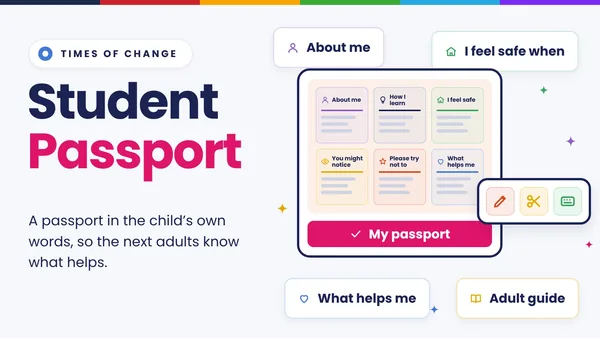
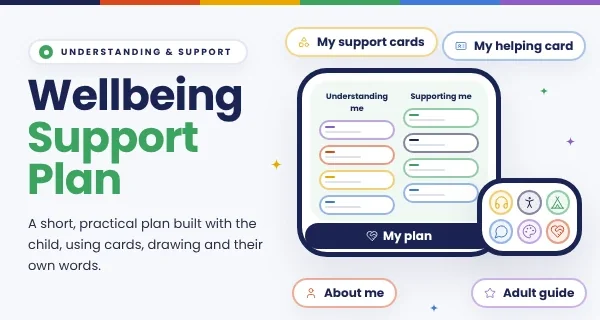
- Help a child or young person share who they are, what helps them and what they need, in their own words.
 Members only
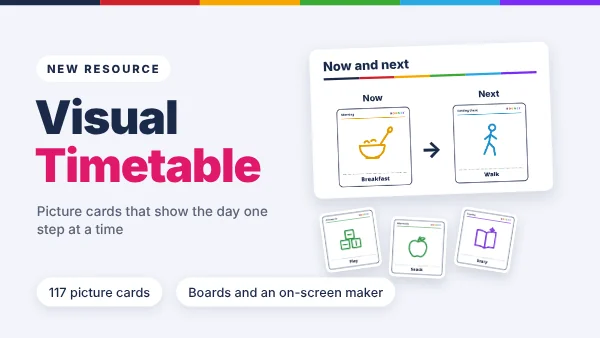
- Help children and young people see what is happening in their day, so it feels more predictable and less worrying.
 Members only
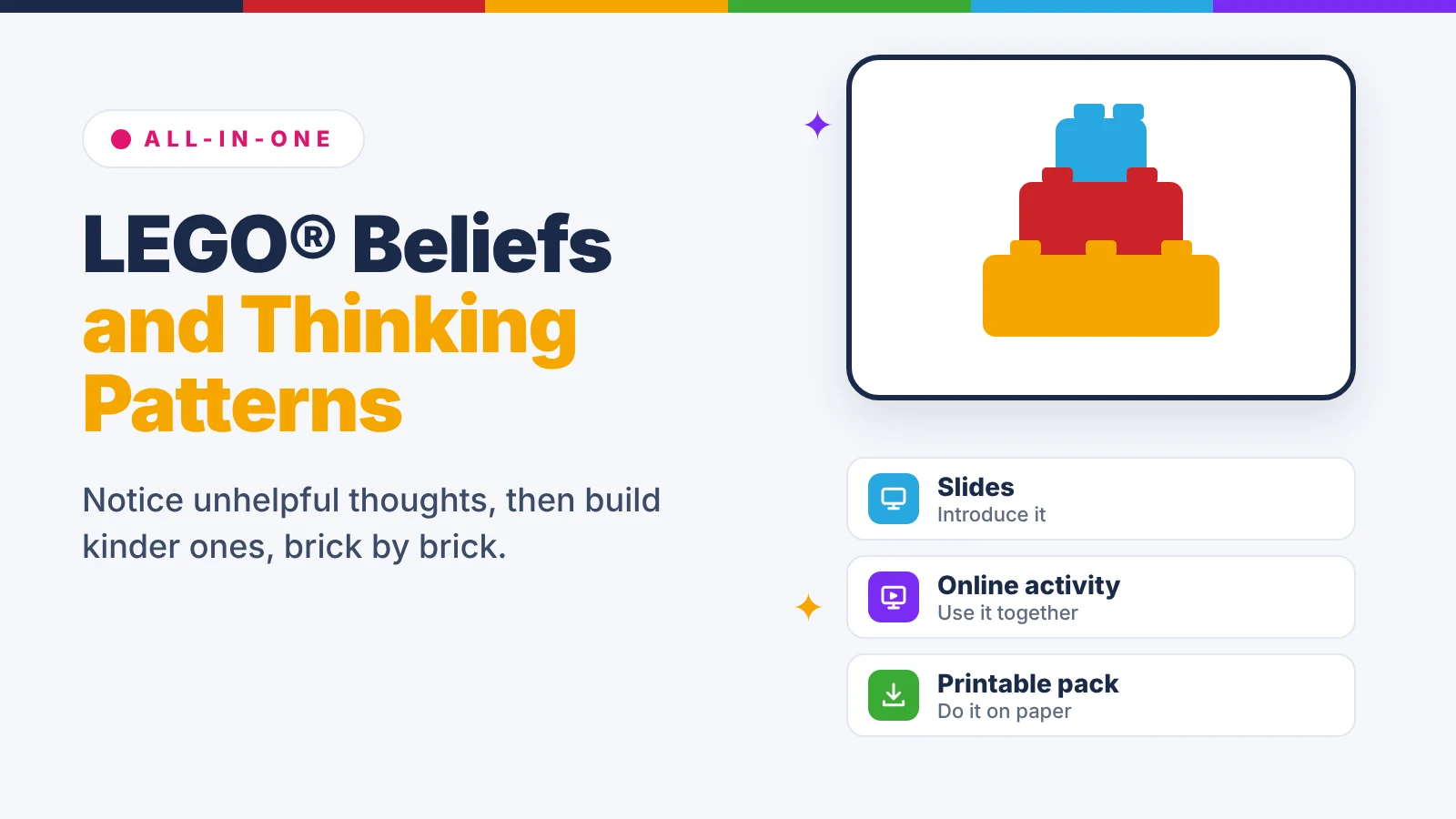
- Help children and young people notice unhelpful thoughts and beliefs, then build kinder ones, brick by brick.
 Members only
- Help children and young people who love Minecraft notice thoughts that get stuck, and find kinder ones.
 Members only
- Help children and young people understand their anger, what builds it and what comes before the eruption, and plan what helps.
 Members only
- Help children and young people notice how big a feeling is, show it on the scale and find what helps at each step.
 Members only
- Help children and young people find a word or a picture for how they feel, in their own way.
 Members only
- Help children and young people notice their strengths, choose an animal for them and see their own superpowers.
 Members only
- Help children and young people see what is taking up their attention, then make the steps visible so help can fit.
Make your own
Design cards, scales, timetables and displays to print.
 Members only
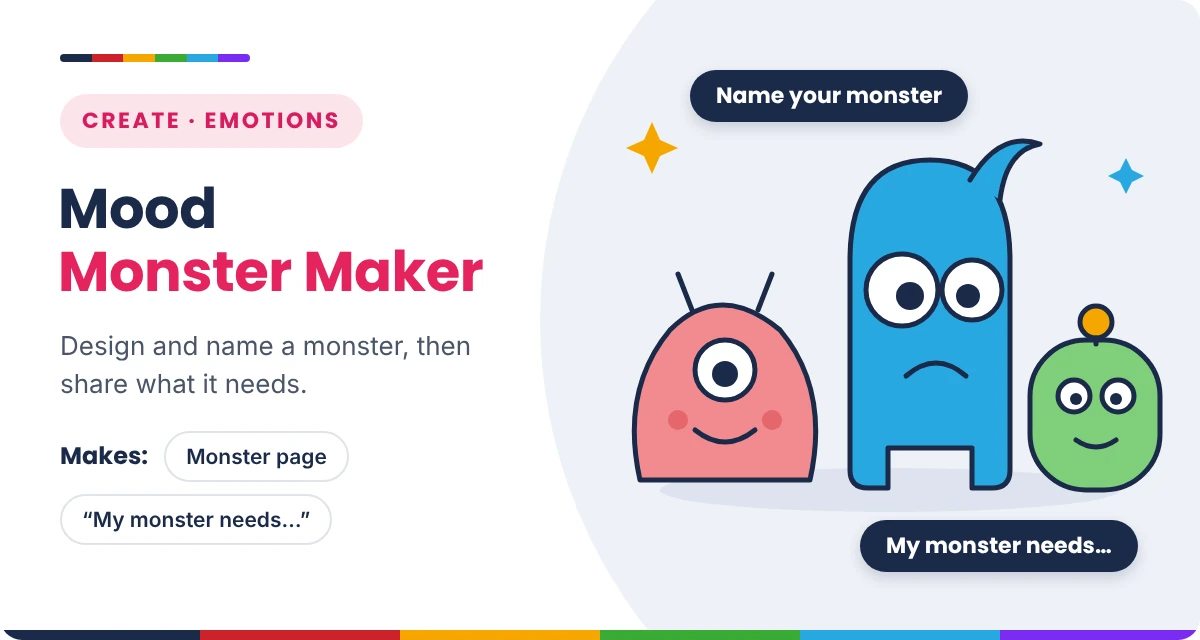
- Design and name a monster together
- Add what the monster needs and all about it
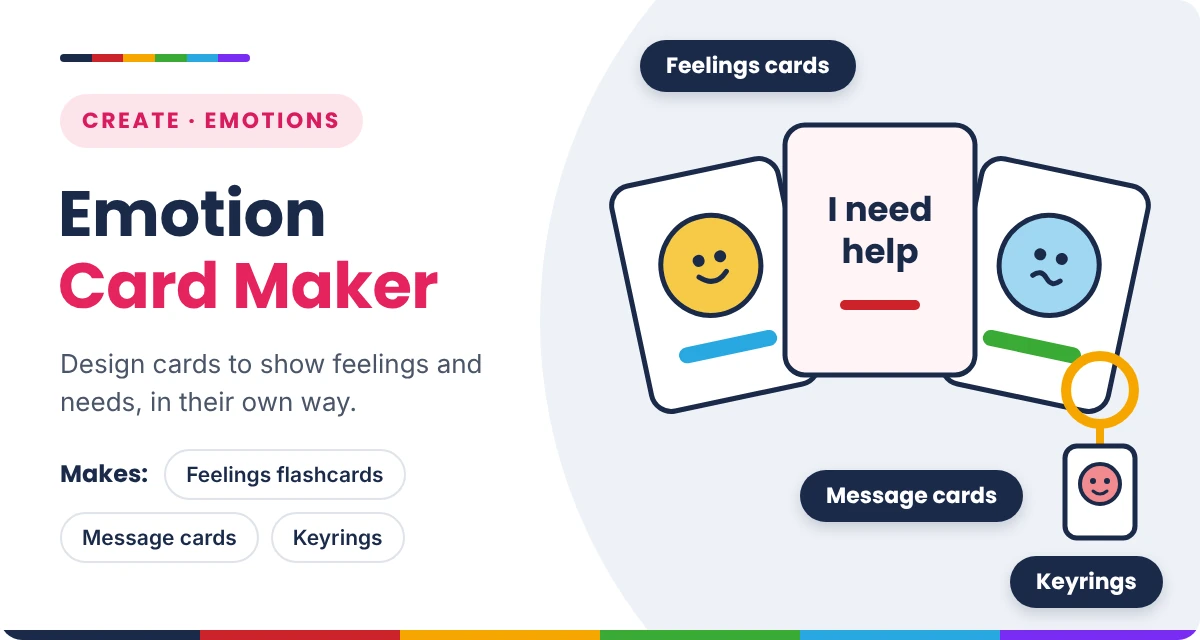 Members only
- Choose the characters, feelings and messages
- Make cards like “I need help” or “Please give me some space”
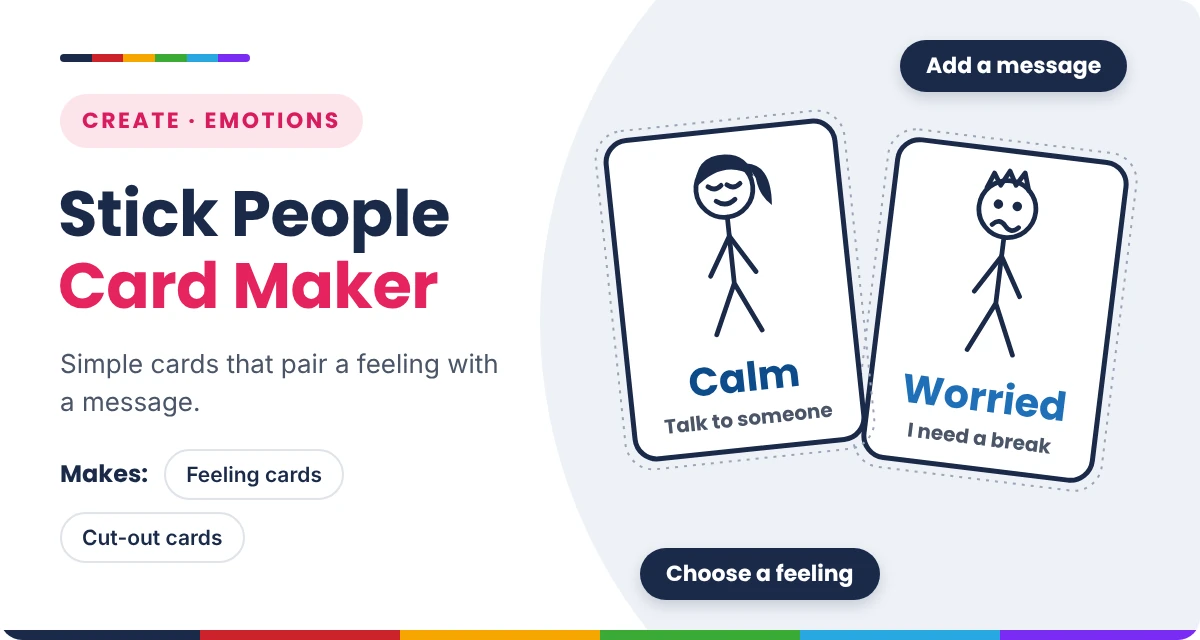 Members only
- Choose a stick person and a feeling
- Add a message, like “Talk to someone”
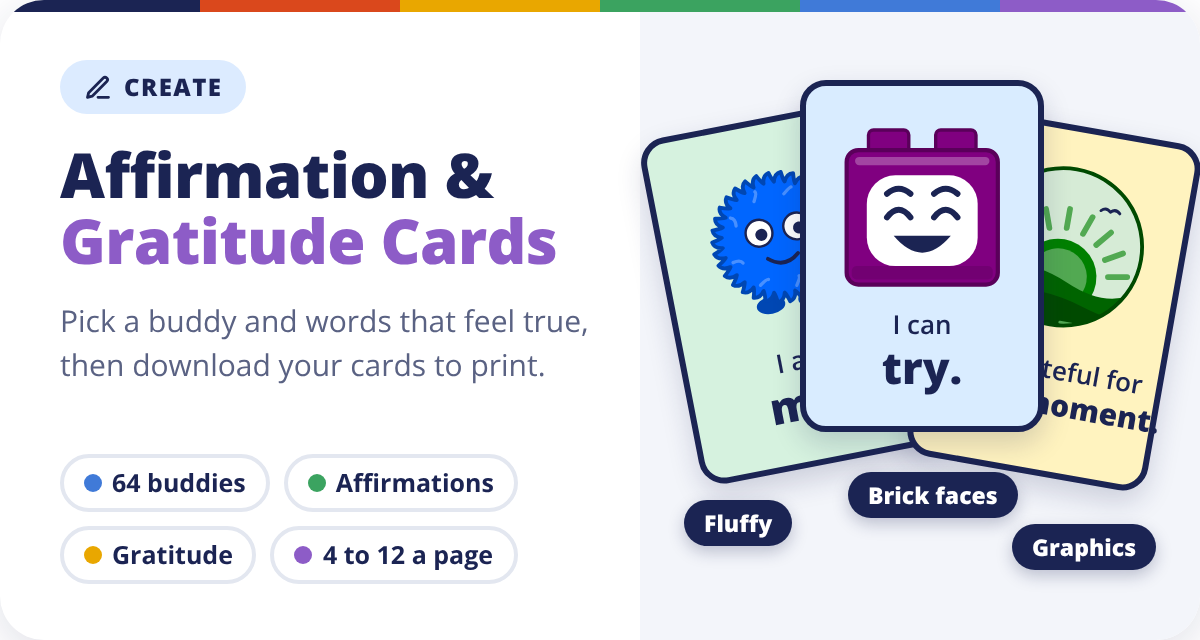 Members only
- Choose from 64 buddies: fluffy, brick faces or graphics
- Pick affirmations or gratitude words that feel true
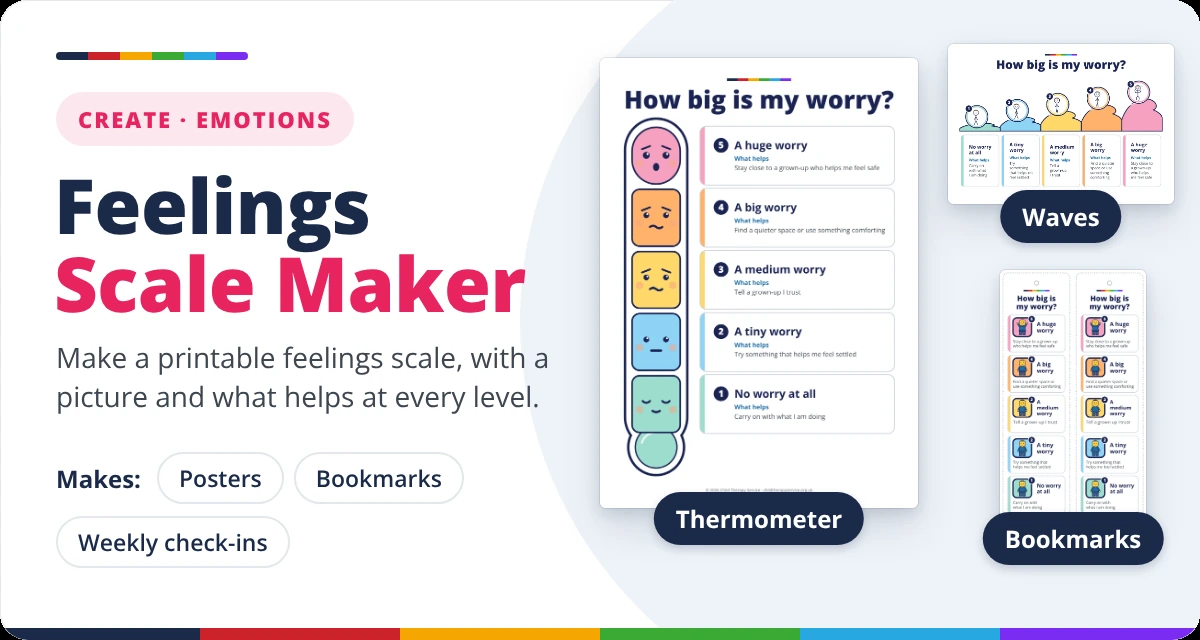 Members only
- Choose a thermometer or waves scale with 3, 4 or 5 levels
- Add a picture, words and what helps at each level
 Members only
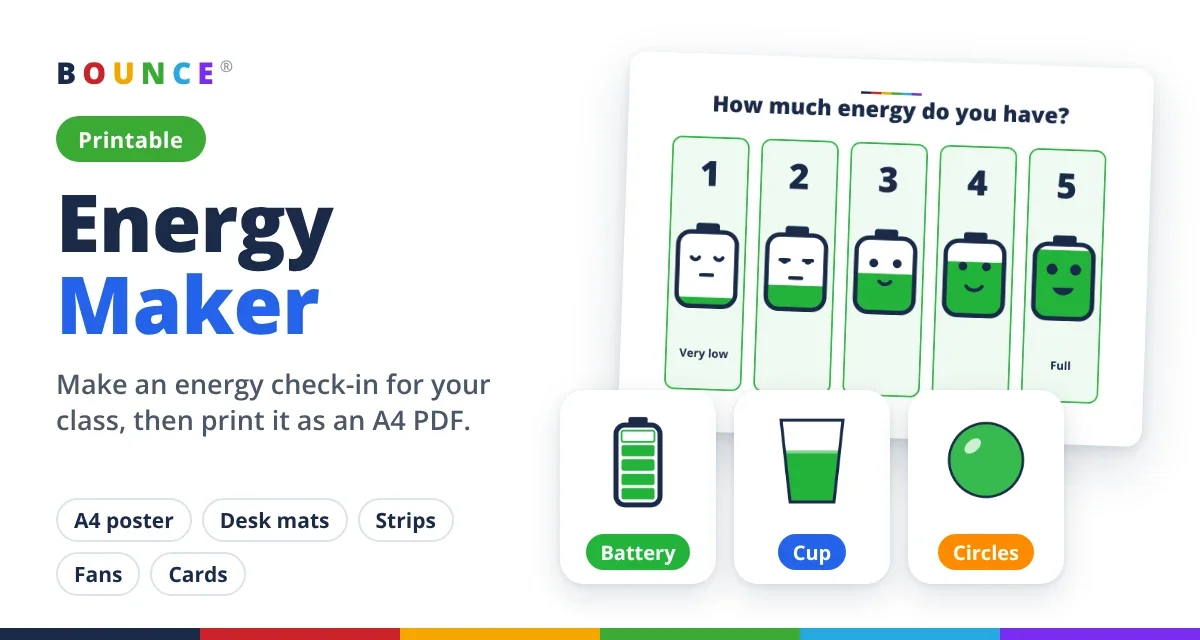
- Choose a battery, cup or circles
- Add feeling words and what helps
 Members only
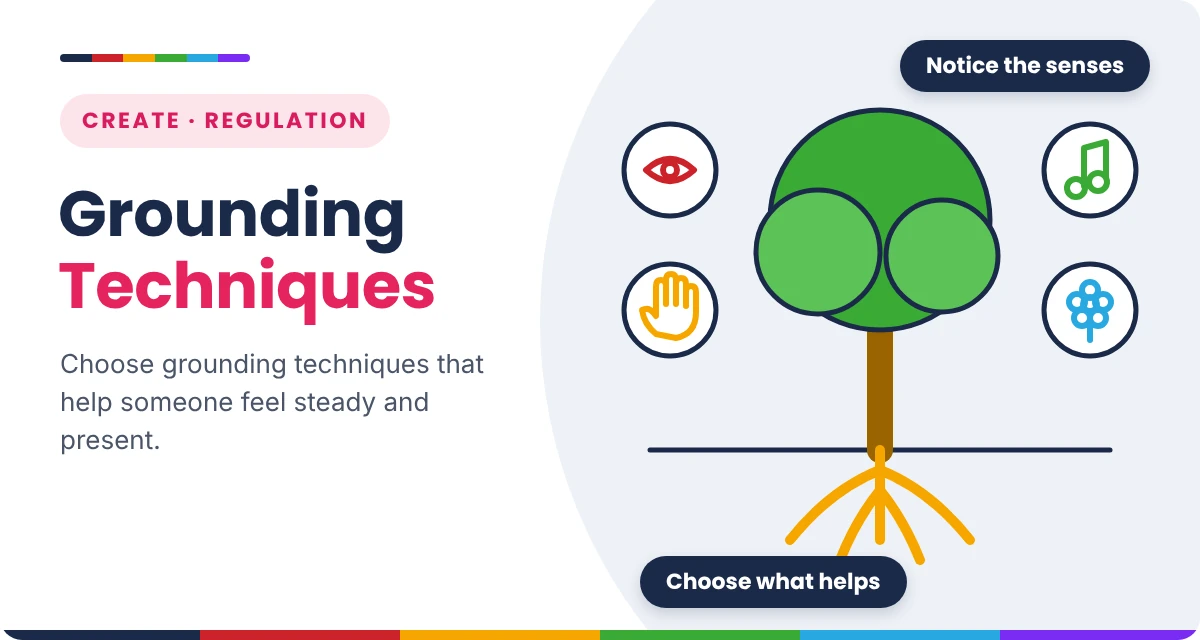
- Explore grounding techniques together
- Choose the ones that help
 Members only
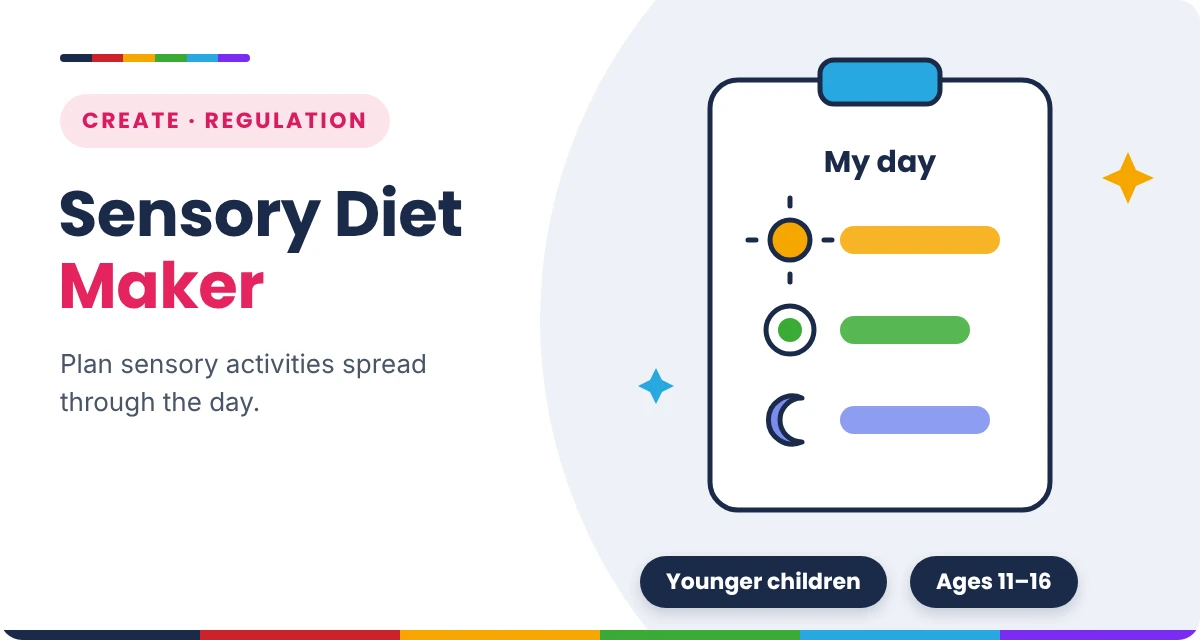
- Choose the sensory activities
- Plan when they happen in the day
 Annual members
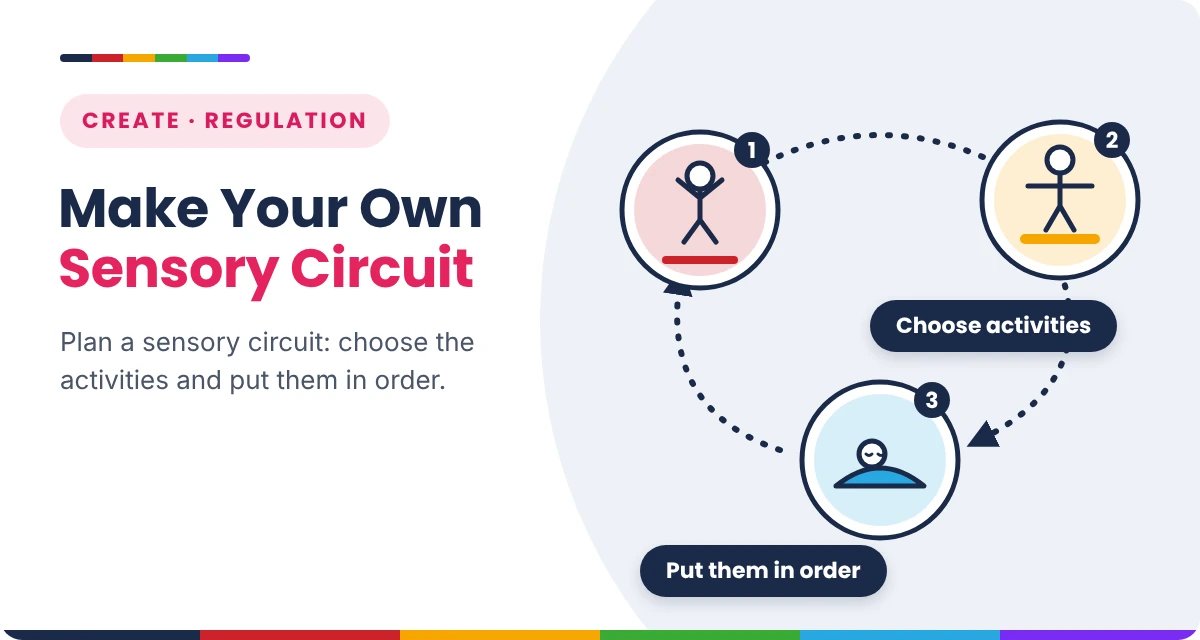
- Choose the activities
- Put them in order
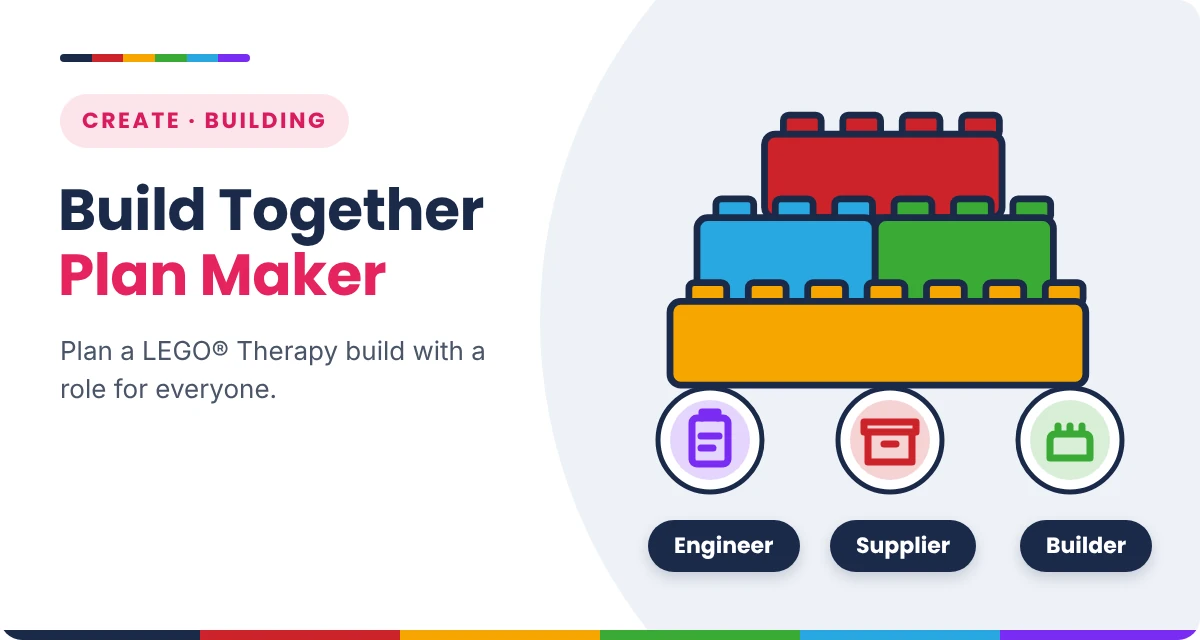 Annual members
- Plan the LEGO® Therapy build
- Give everyone a role
 Members only
- Choose the beats and build a pattern
- Go faster, slower, louder or softer together
 Members only
- Choose the needs and pictures
- Make cards like “I need a break” or “I need help”
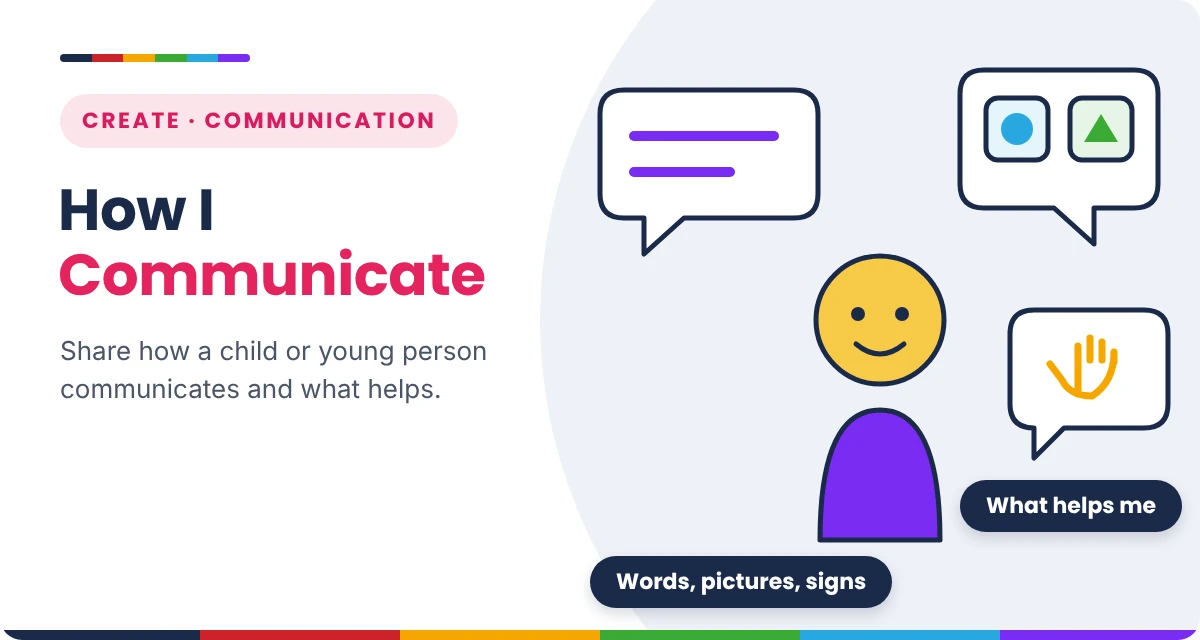 Members only
- Explore how they communicate
- Add what helps and what doesn’t
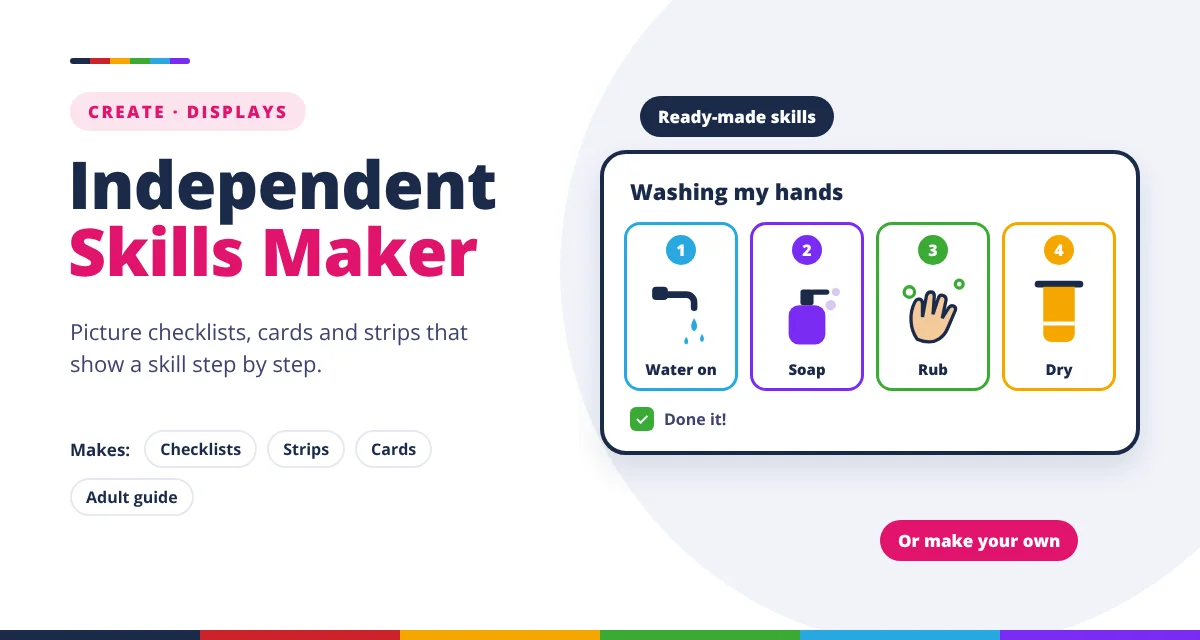 Members only
- Start from a ready-made skill or make your own
- Choose buddies or stick people, in colour or black and white
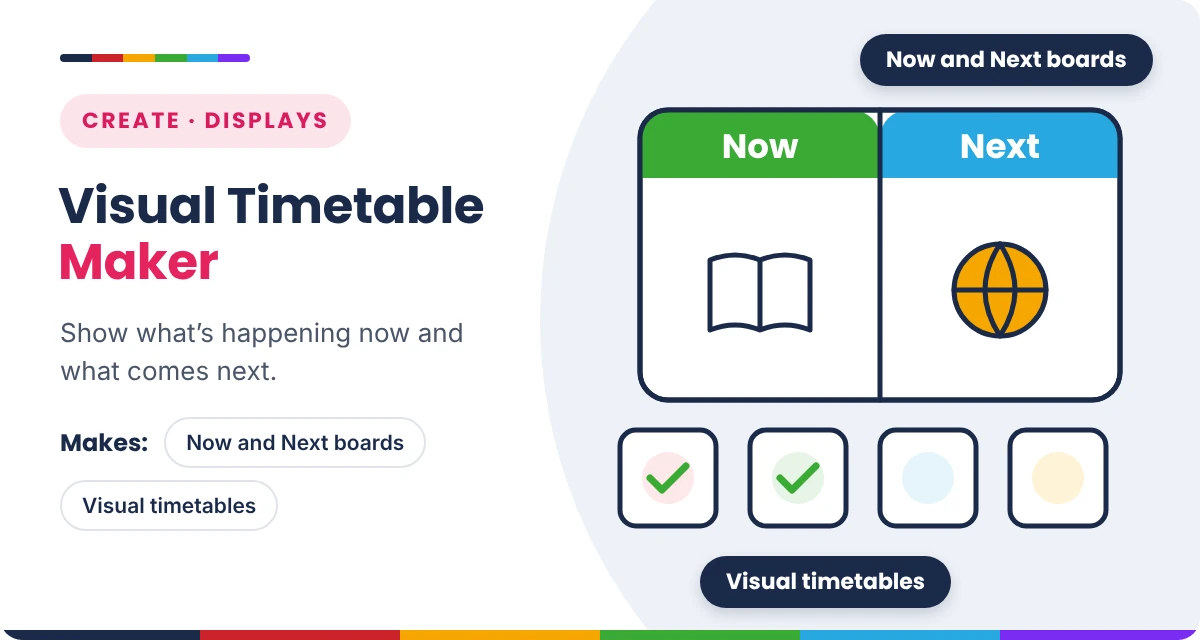
Neurodivergent-affirming
Understanding how each child or young person works best, in their own words.
 Members only
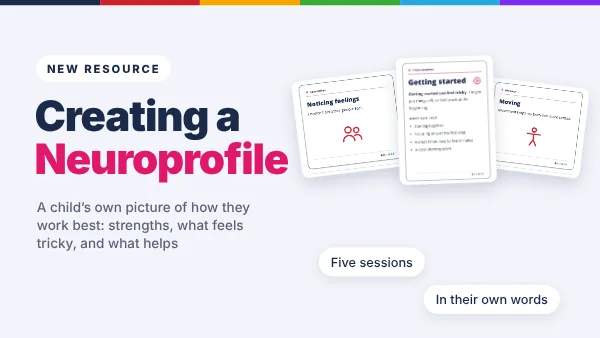
- Understanding how a child works best
- Agreeing helpful adjustments
- Understanding neurodivergence, from lived experience
- A checklist for a more affirming environment
 Members only
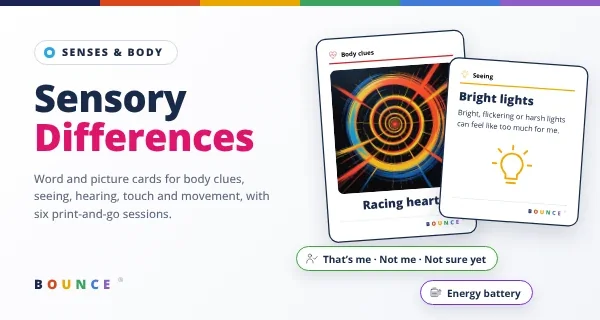
- Loud noises, touch or busy places
- Finding what helps their body
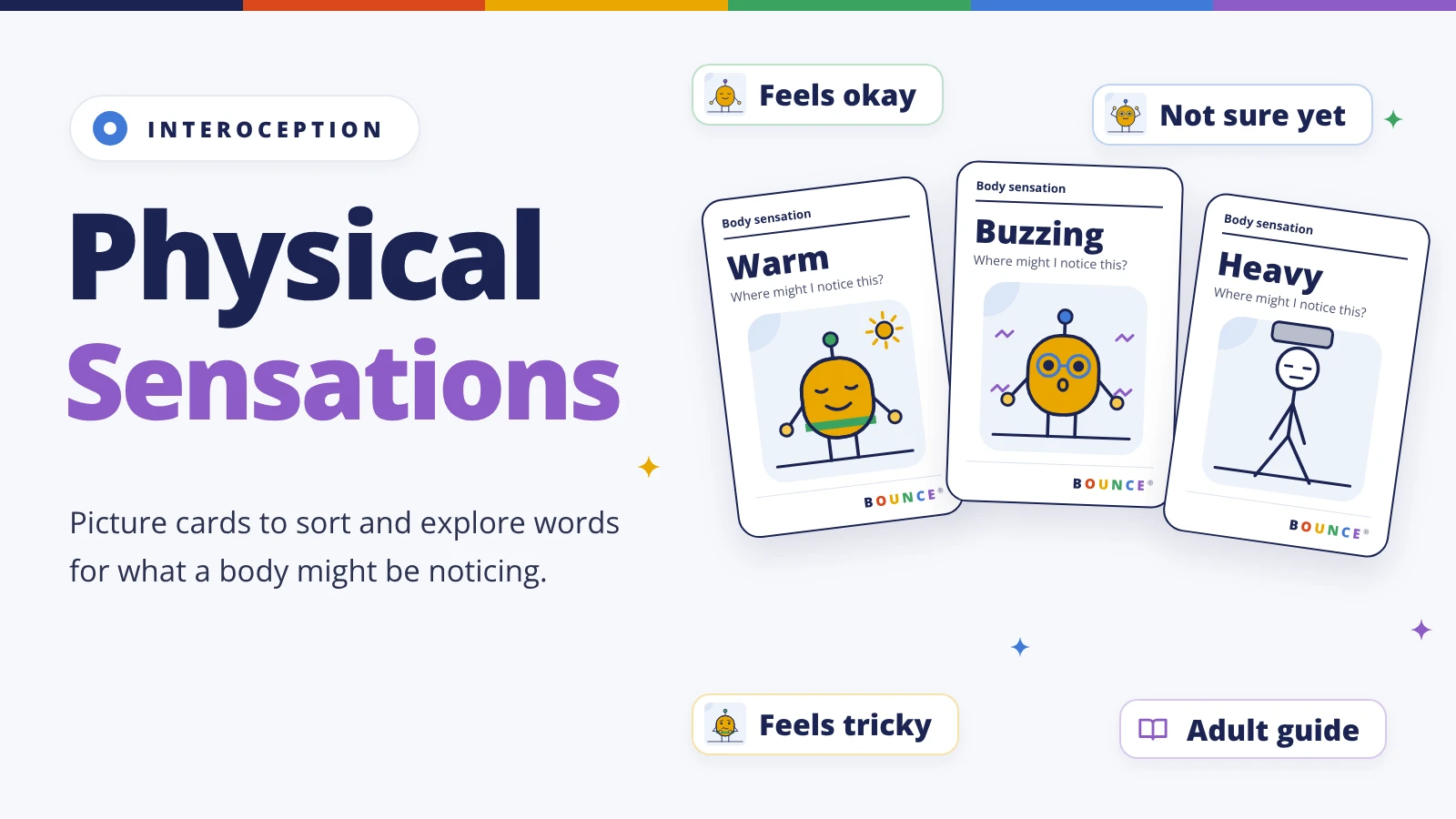
Body scans, maps and sensations
Gentle ways to notice what the body is doing, what it feels like and where feelings show up.
Calm, body and routines
Regulation, movement, the senses and making the day easier to see.
Members only- Big reactions or shutting down
- Understanding energy and feelings
Members only- Changes and transitions
- Making the day easier to see
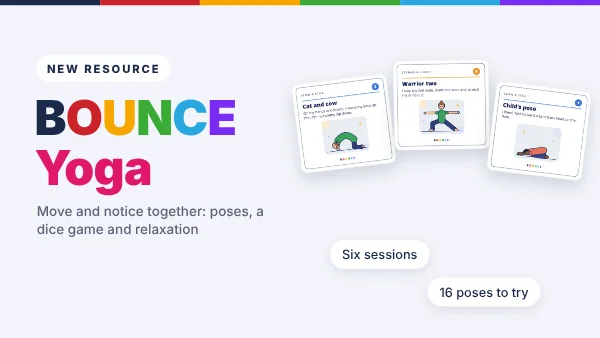 Members only
- Getting to know their own body
- Calming and lively movement
Members only- Colour a battery to show energy now and through the day
- Energy cards to sort, What I need cards, a battery passport and four session plans
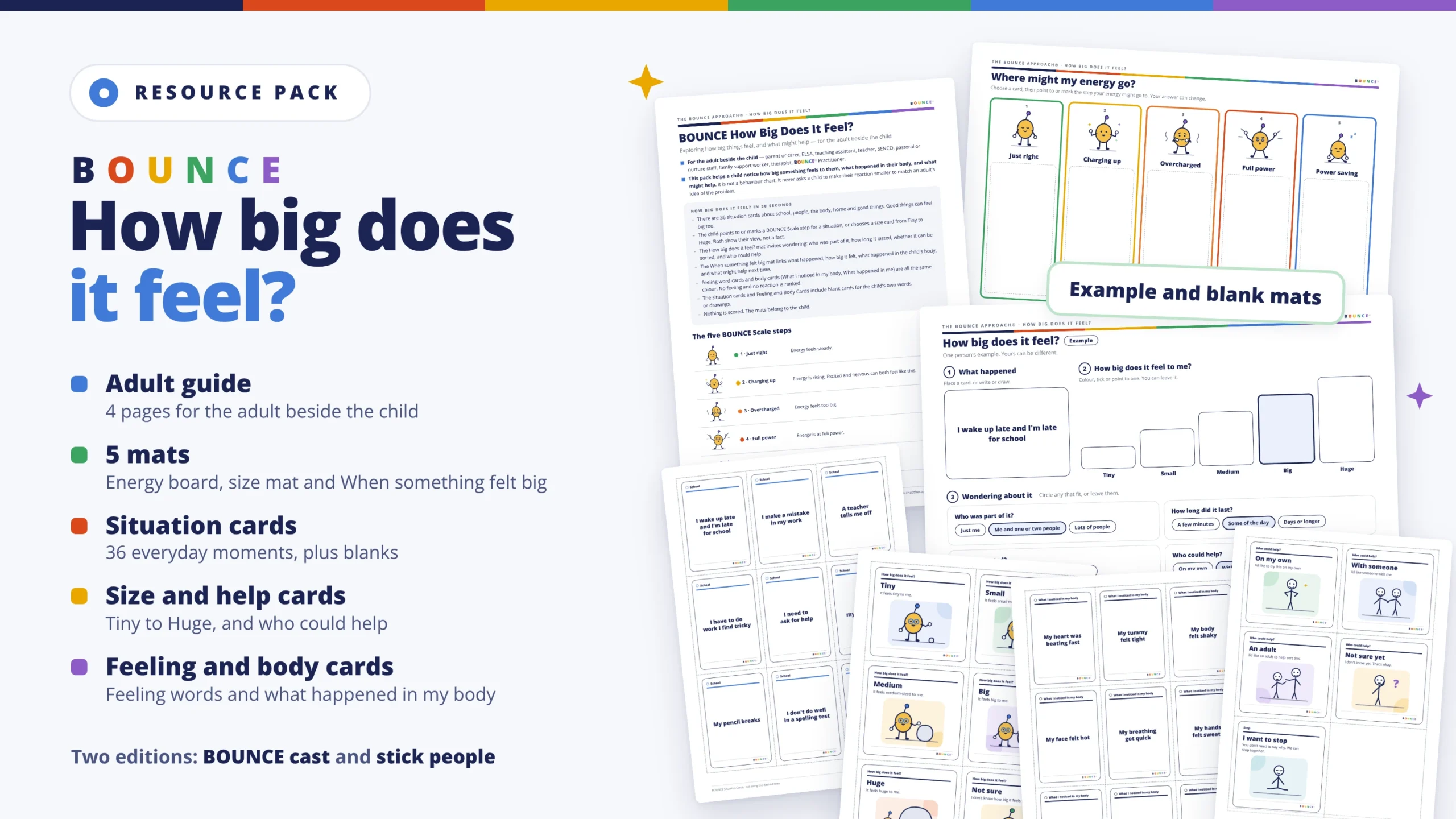 Members only
- Notice how big something feels, what happened in the body and what might help
- 36 situation cards, five mats, size and help cards, and feeling and body cards
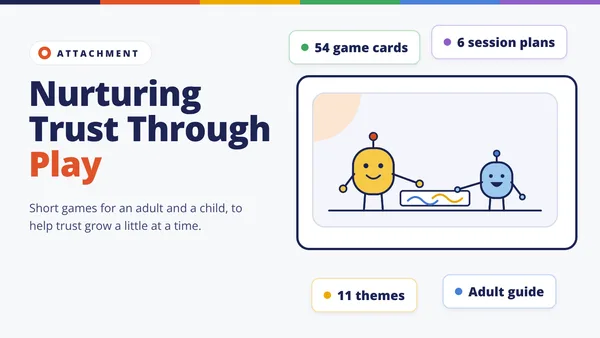
Attachment and trust
Feeling safe with people and places, one small step at a time.
Thoughts, feelings and self-worth
Gentle ways to notice and wonder.
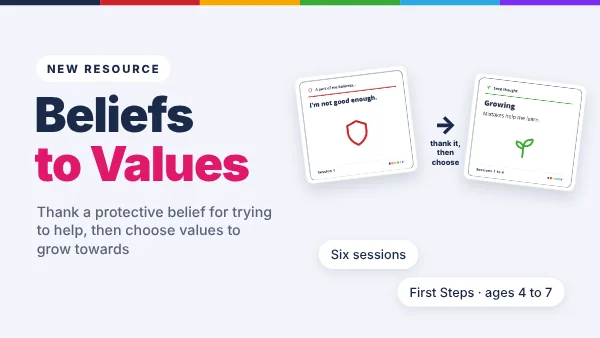 Members only
- Harsh “not good enough” thoughts
- Worry about getting things wrong
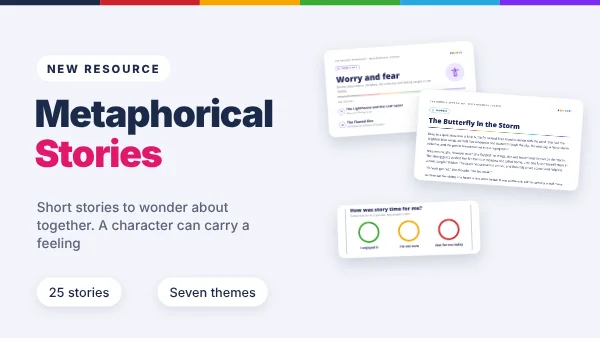 Members only
- Feelings that are hard to name
- Children who love stories
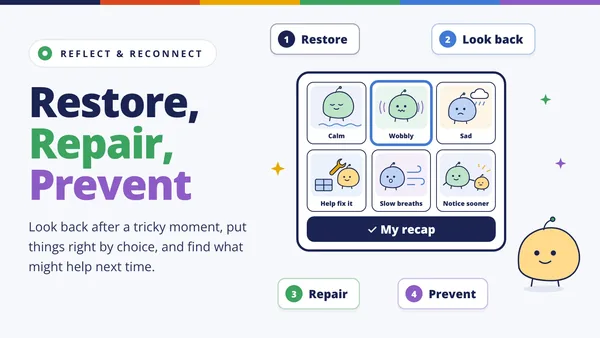 Members only
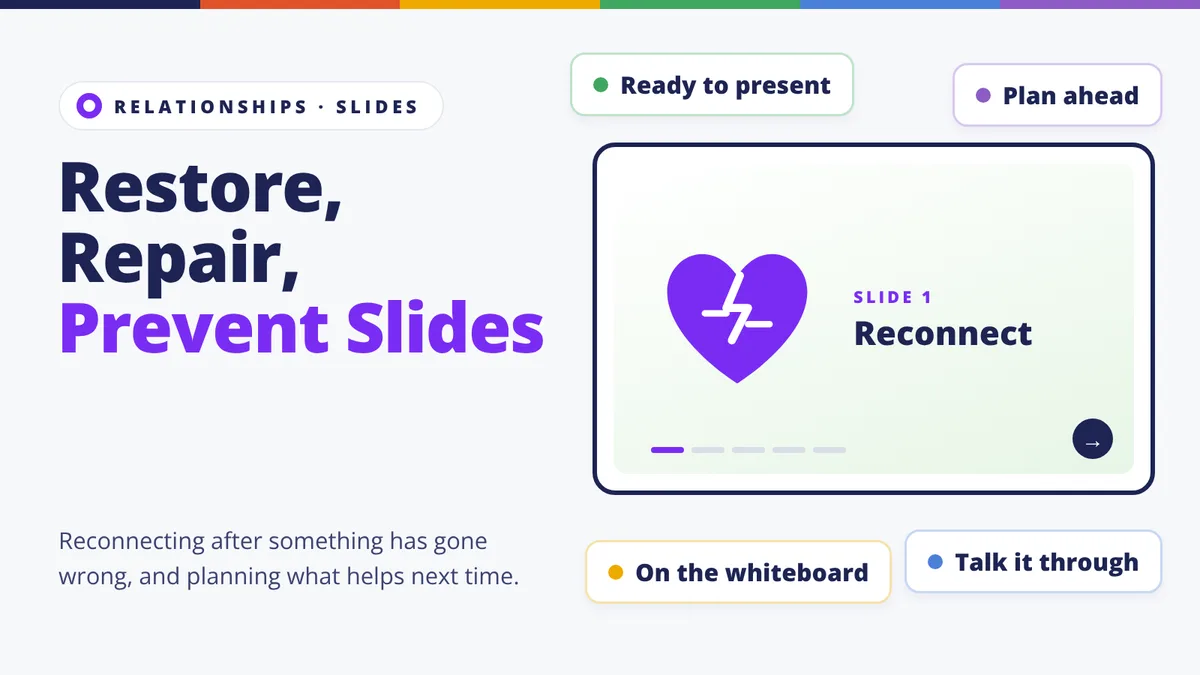
- Looking back after a tricky moment, together
- Putting things right by choice, and what might help next time
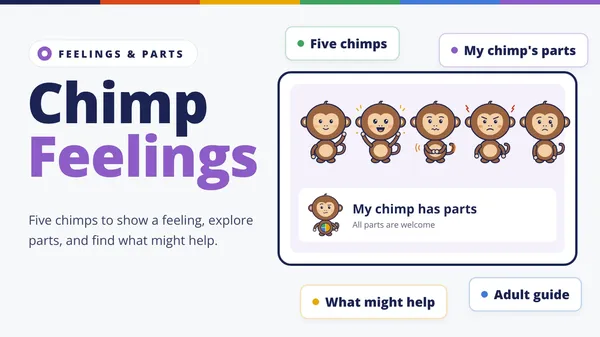 Members only
- Five chimps to show a feeling, explore parts and find what might help
- Mat, posters, faces, fans, I need cards and what might help cards
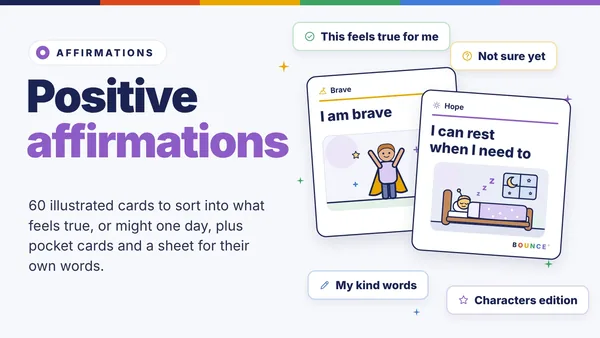 Members only
- 60 illustrated cards to sort into what feels true
- Pocket cards and a sheet for their own kind words
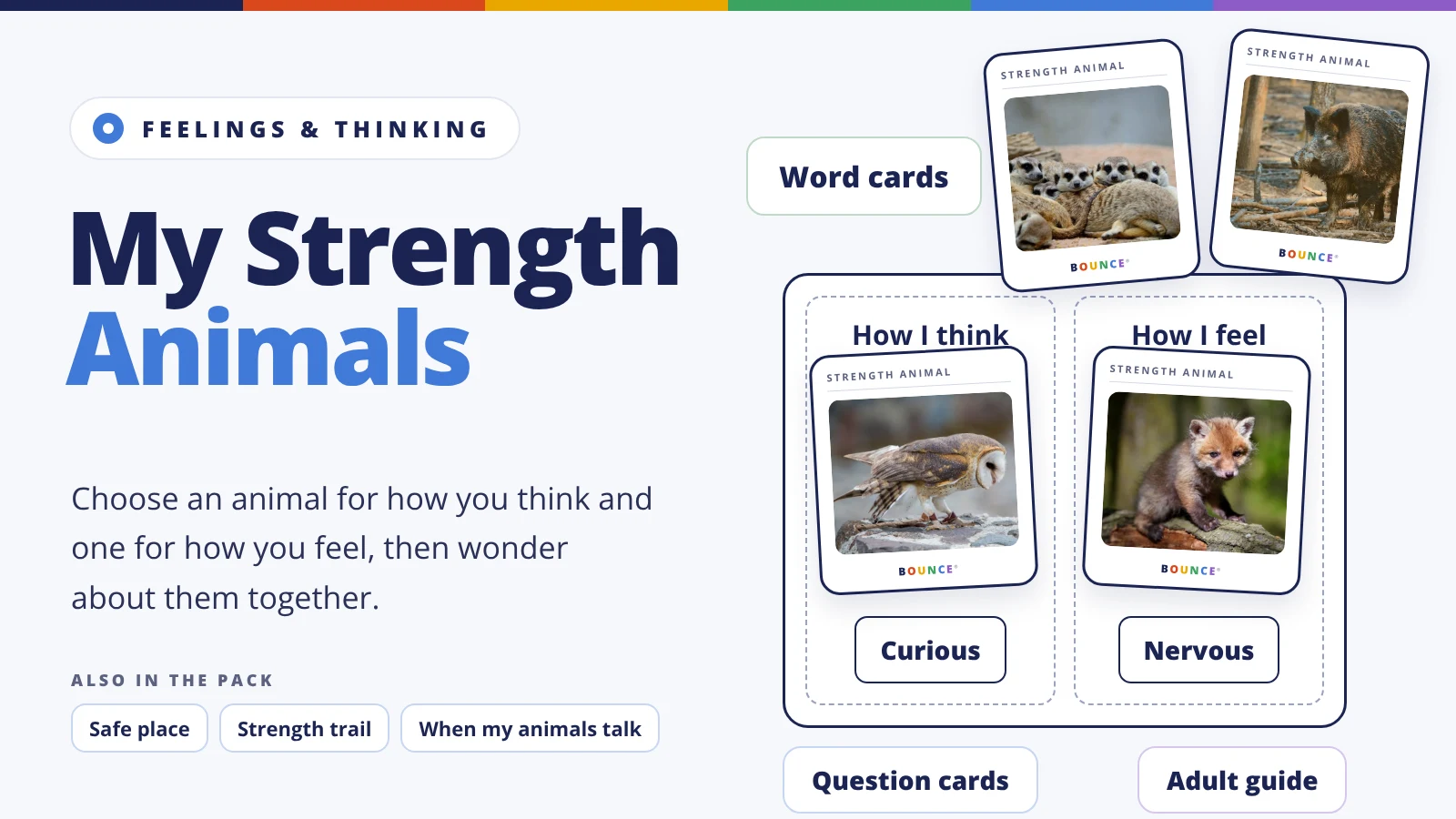 Members only
- Choose an animal for how you think and one for how you feel, then wonder about them together
- 41 animal photo cards, a mat, feeling and body words, question cards and an adult guide
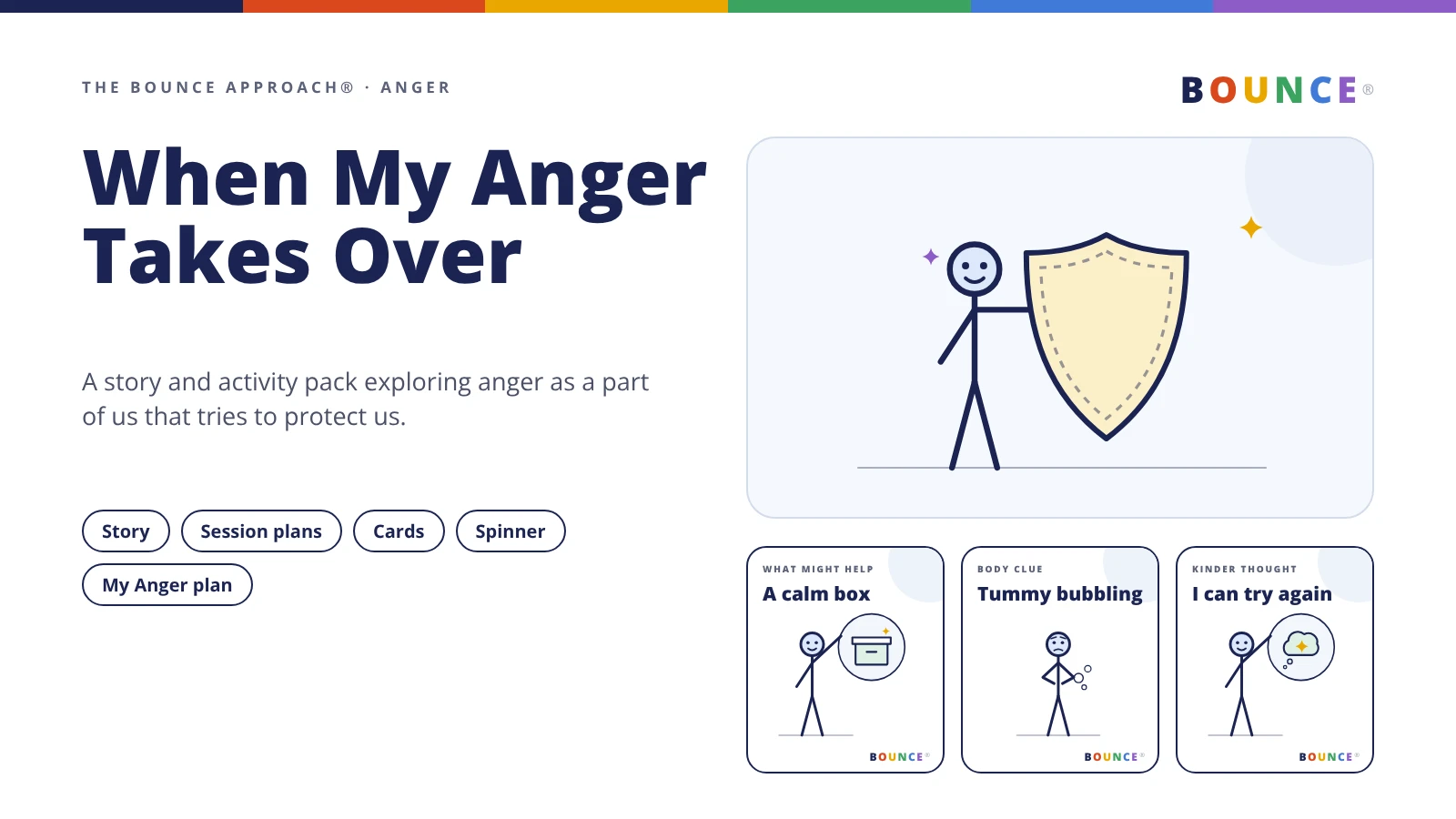 Members only
- A story about anger as a part of us that tries to protect us, like a shield
- Session plans, body clue, thought and action cards, a spinner, Design my shield and My Anger plan
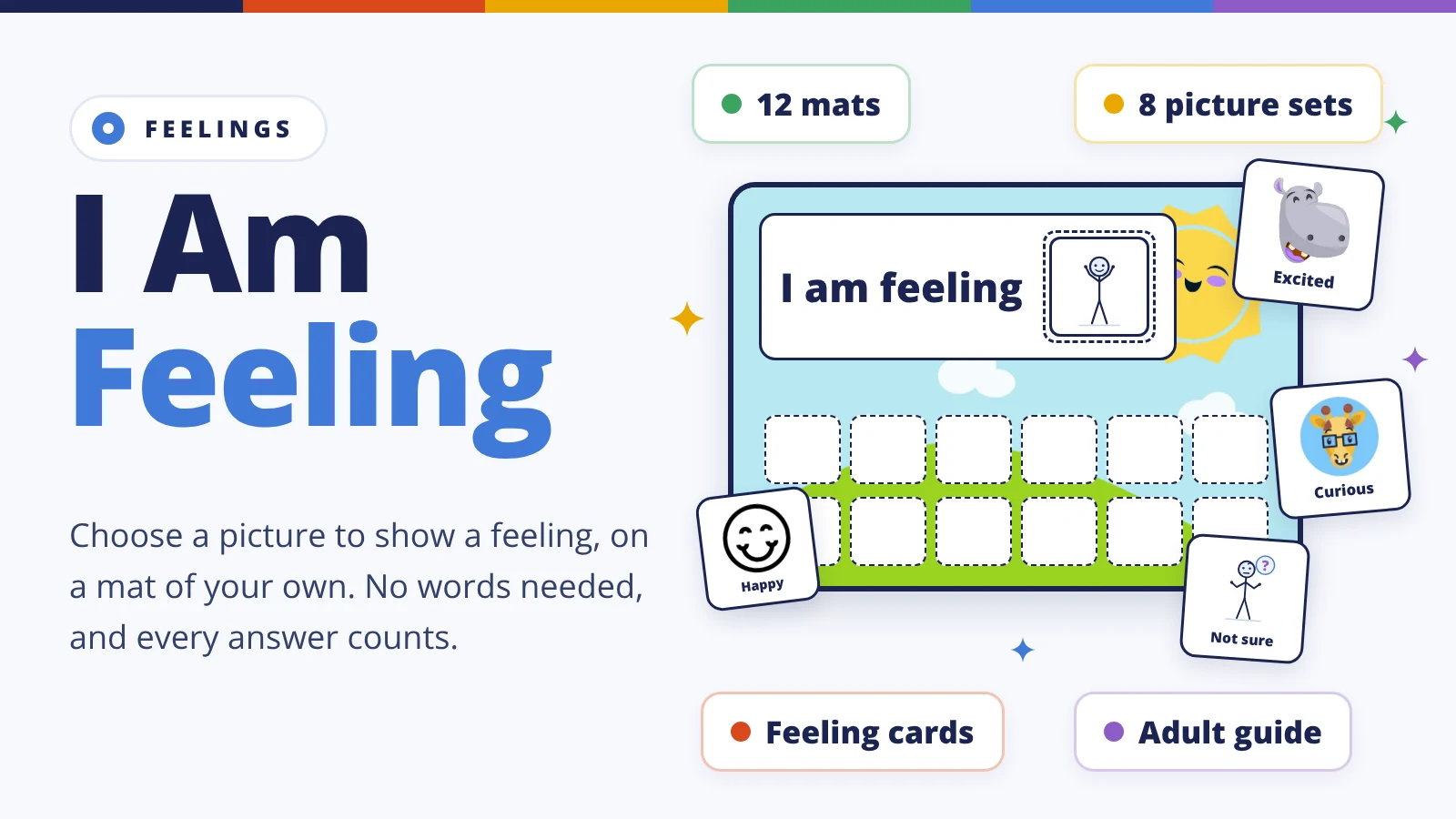 Members only
- Choose a picture to show a feeling, on a mat of your own. No words needed
- 12 mats, 8 picture sets of feeling tiles, feeling cards, session plans and an adult guide
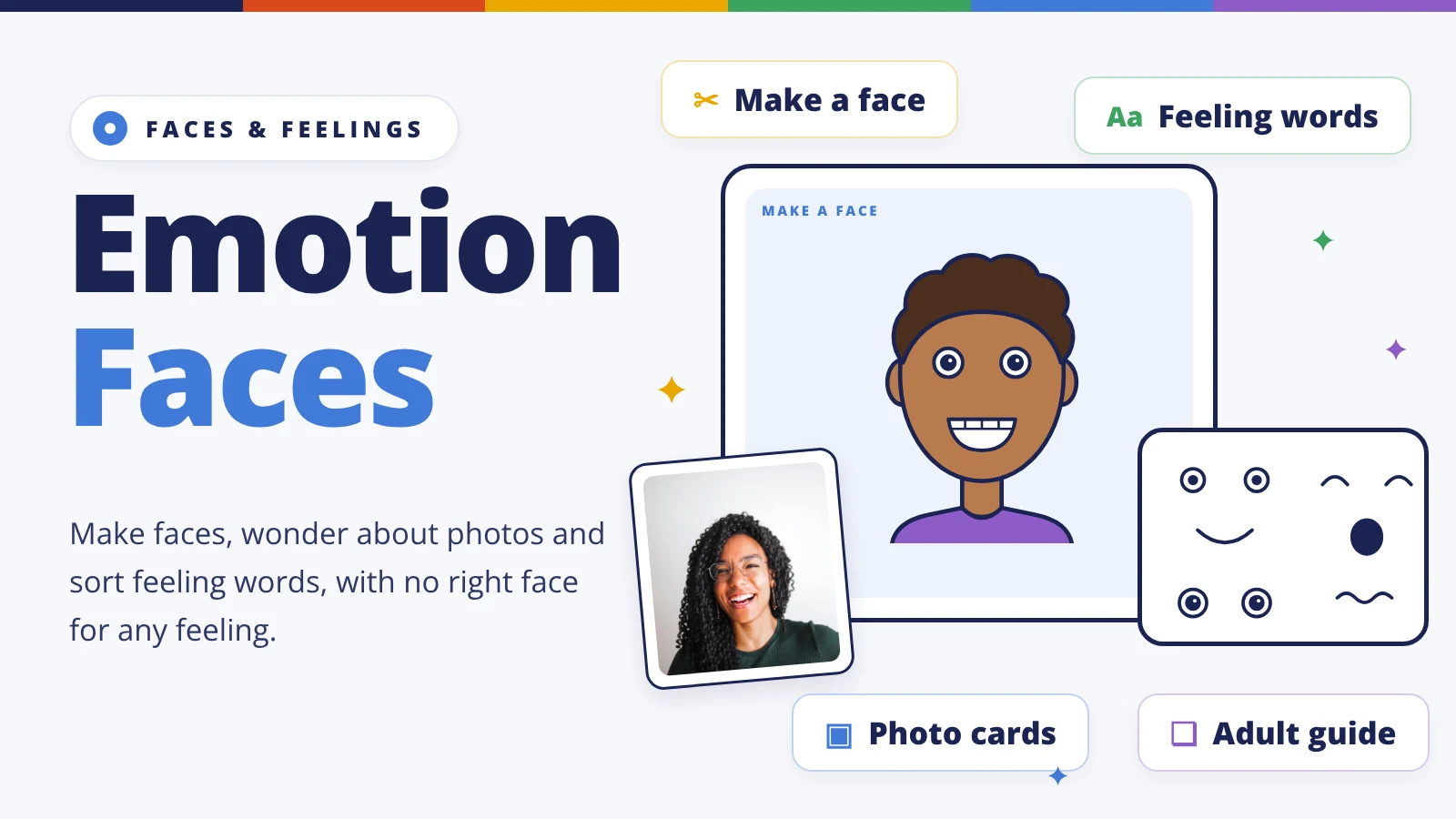 Members only
- Make faces, wonder about photos and sort feeling words, with no right face for any feeling
- Make a face pieces, photo face cards, feeling word cards, session plans and an adult guide
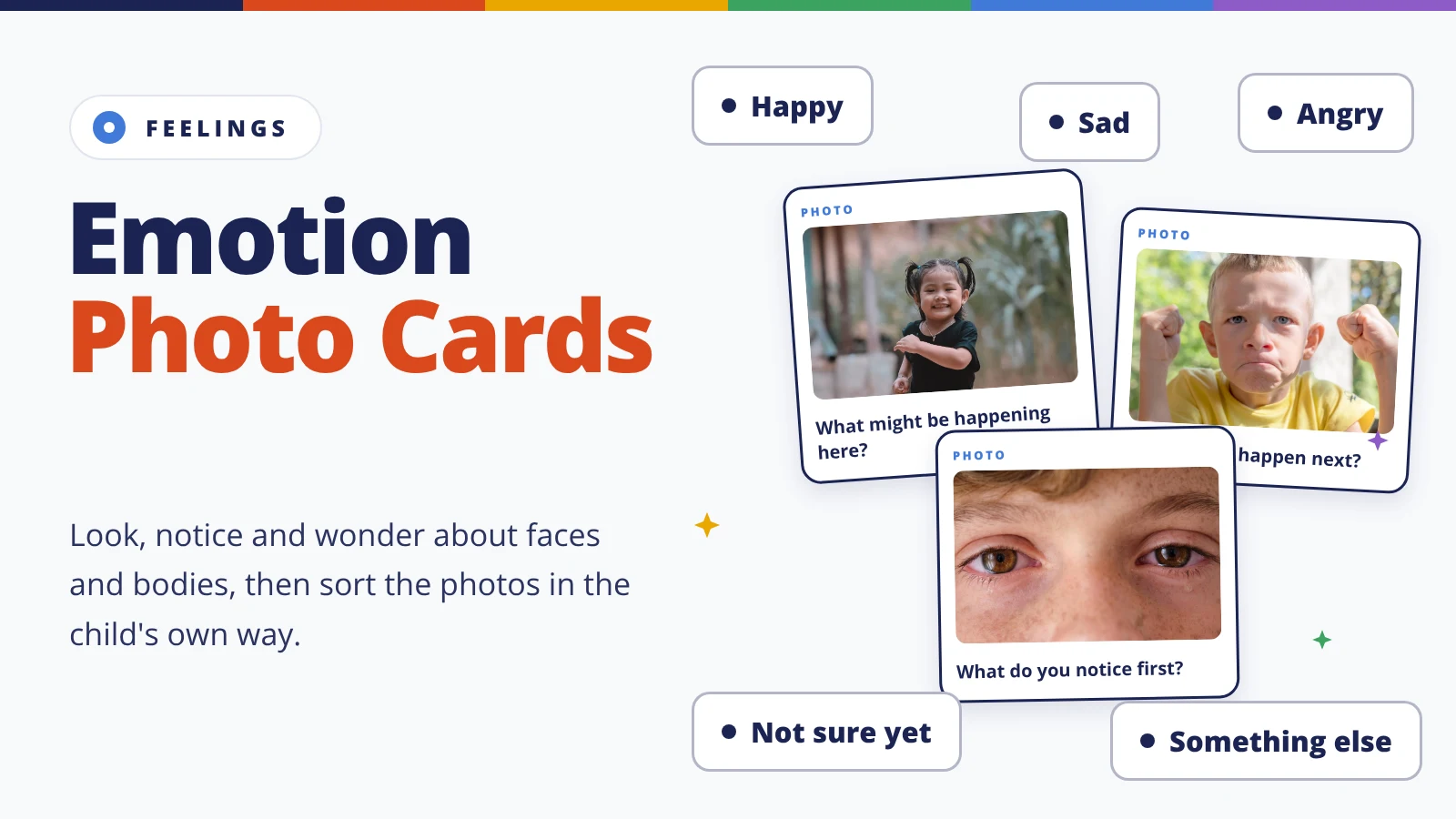 Members only
- Look, notice and wonder about faces and bodies, then sort the photos in the child's own way
- 28 photo cards of children's faces and bodies, five sorting cards and an adult guide
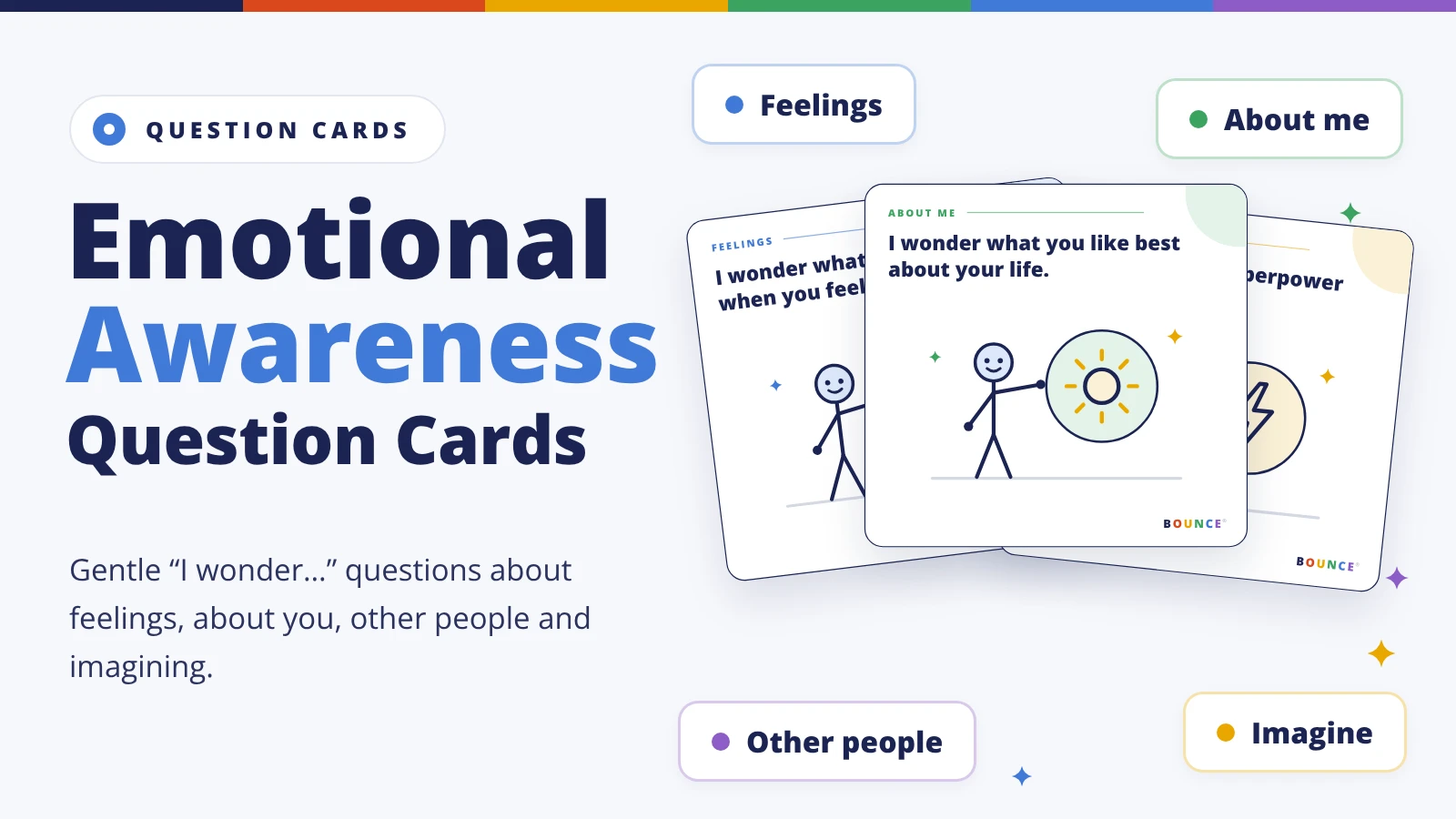 Members only
- Gentle “I wonder…” questions about feelings, about you, other people and imagining
- Question cards in five groups, with Pass and I want to stop cards
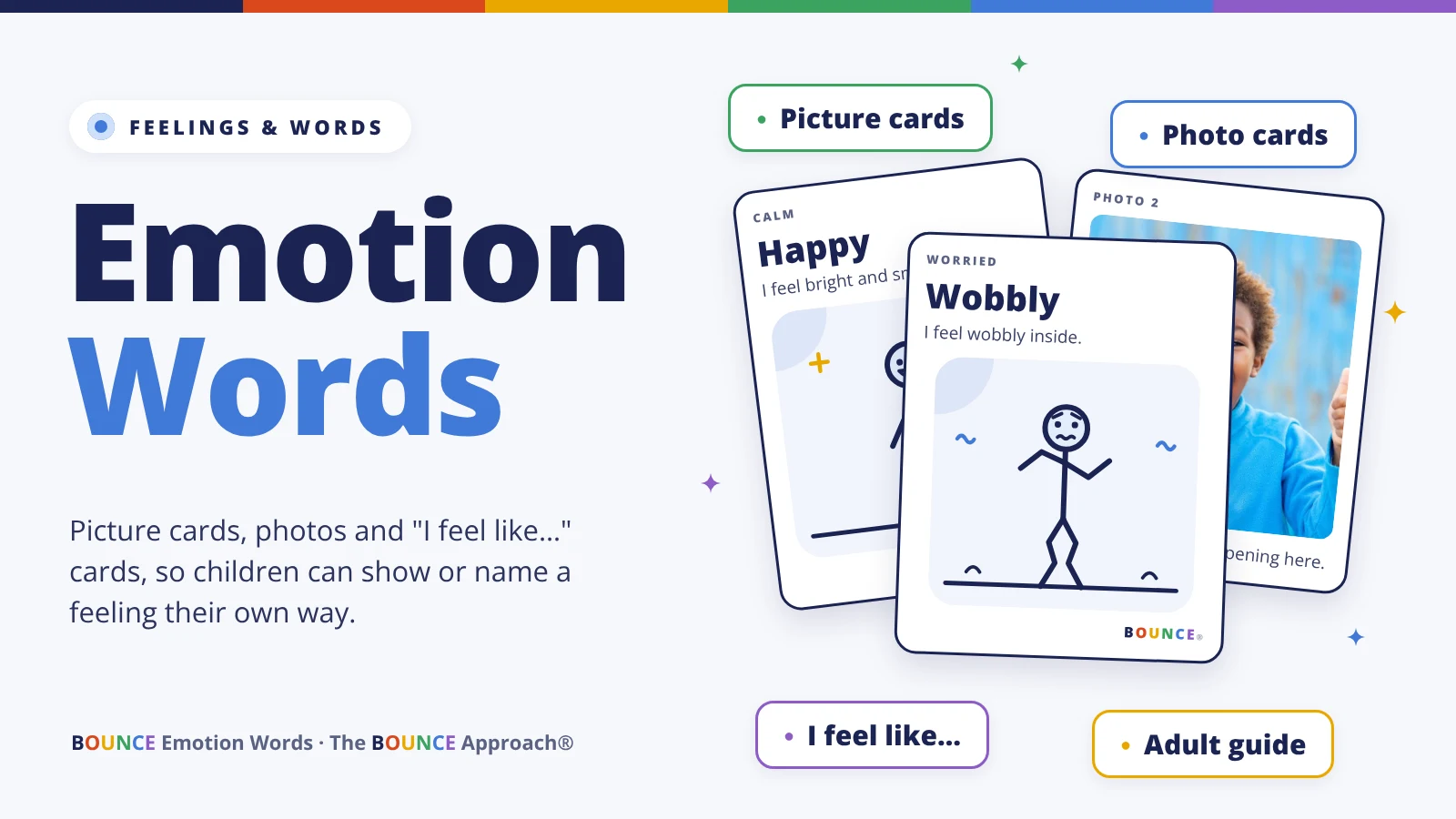 Members only
- Picture cards, photos and “I feel like…” cards, so children can show or name a feeling their own way
- 45 feeling words, 27 photos, four session plans, feelings bingo and a mini-book
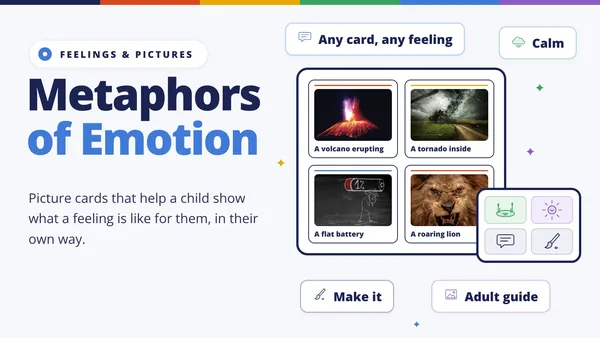 Members only
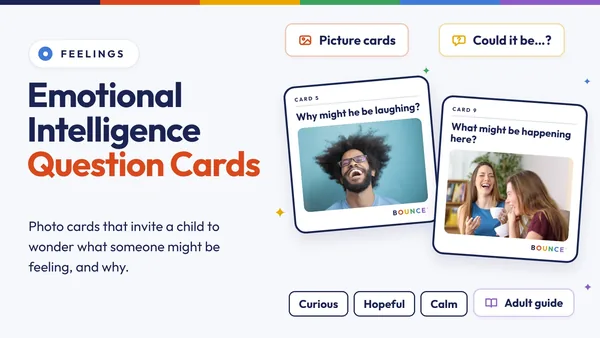
- Picture cards for what a feeling is like
- Any card, any feeling, in their own way
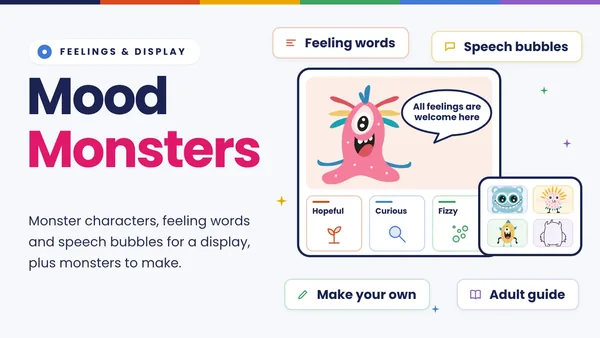
For children who love building and gaming
LEGO® style and MINECRAFT style packs.
 Members only
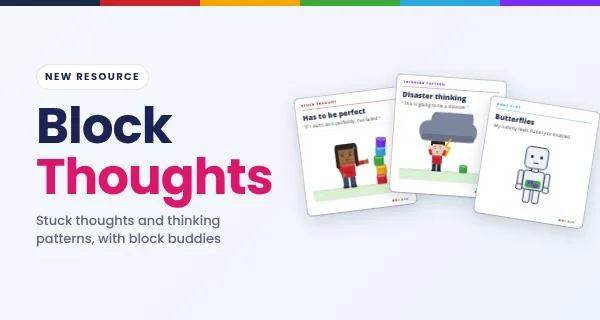
- Thoughts that get stuck
- Children who love Minecraft
 Members only
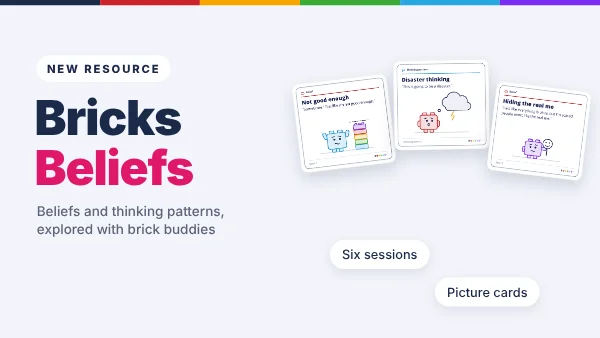
- Worrying or “not good enough” thoughts
- Children who love building
 Members only
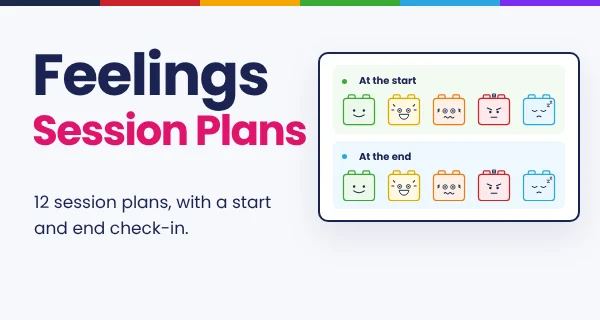
- Building who I am, in a small group
- Children who love building
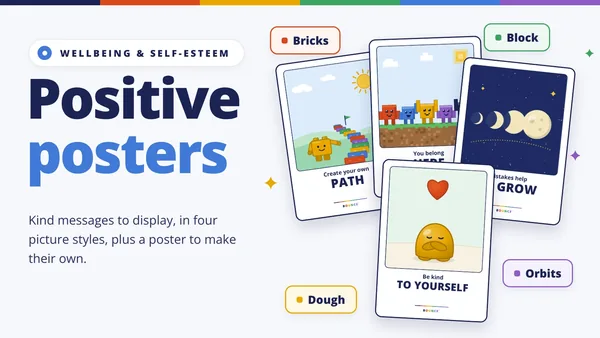
Lesson slides
Ready-made slides to present in sessions and classrooms.
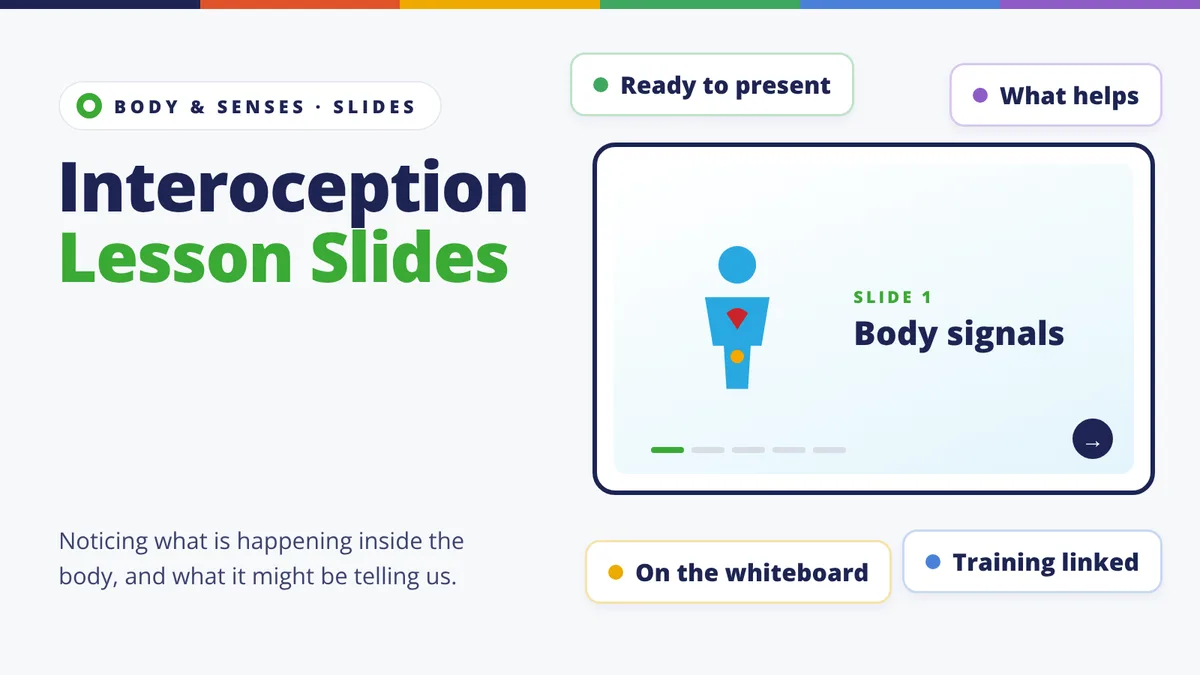 Members only
- Gives children and young people words for what their body is telling them
- Helps them notice early signs and choose what helps sooner
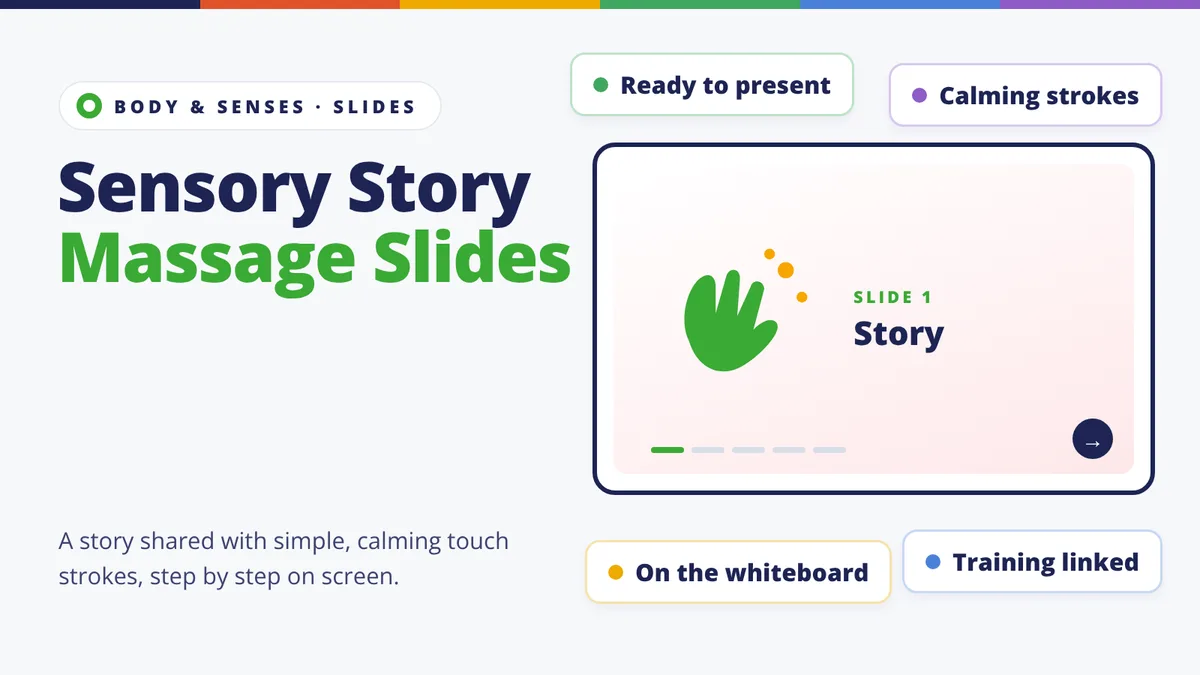 Members only
- Builds calm, connection and trust through gentle, predictable touch
- A settling way to start or end a session or the day
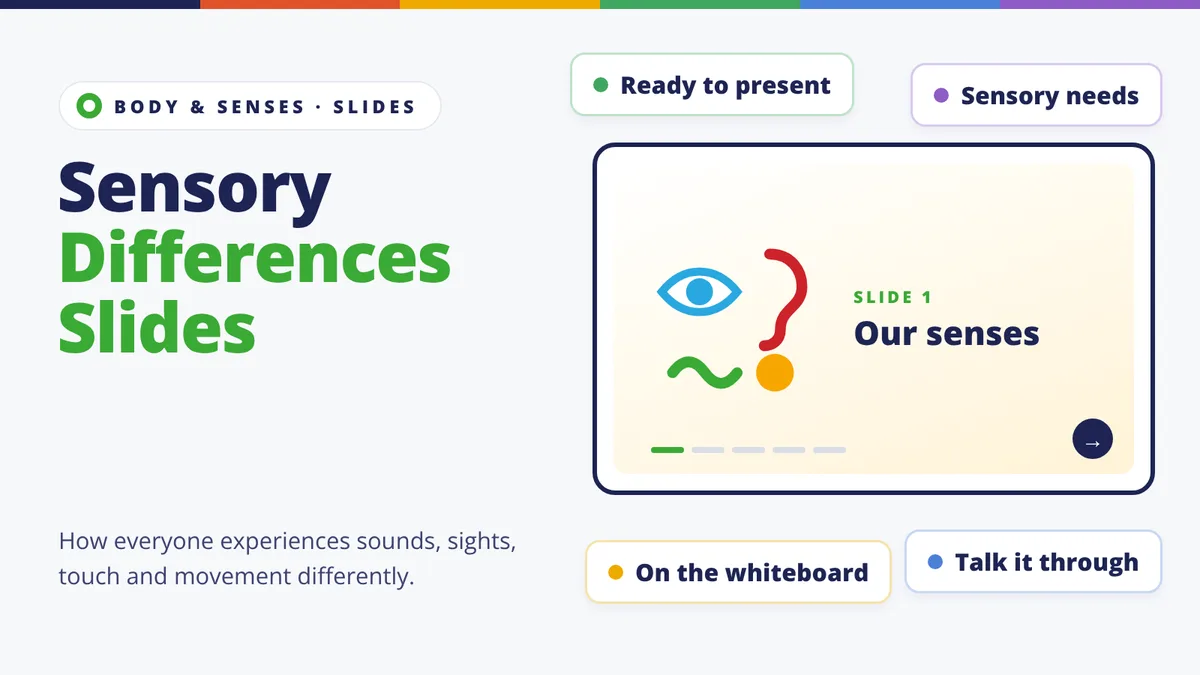 Members only
- Helps you understand why some sounds, sights or textures feel too much or not enough
- Gives ideas for small changes that make the day feel easier
 Members only
- Uses movement and breathing to help bodies settle and focus
- Easy to lead with a group, with no experience needed
Members only- Gives children and young people a simple way to show how much energy they have
- Helps them notice what drains and recharges them, and ask for what they need
 Members only
- Explains big feelings in a way that carries no shame or blame
- Helps children and young people find what calms things down
 Annual members
- Helps children and young people see their strengths and who is on their side
- Builds confidence and a sense of belonging
 Members only
- Lets children and young people explore hard feelings at a safe distance
- Opens conversations that can feel too tricky to have directly
 Members only
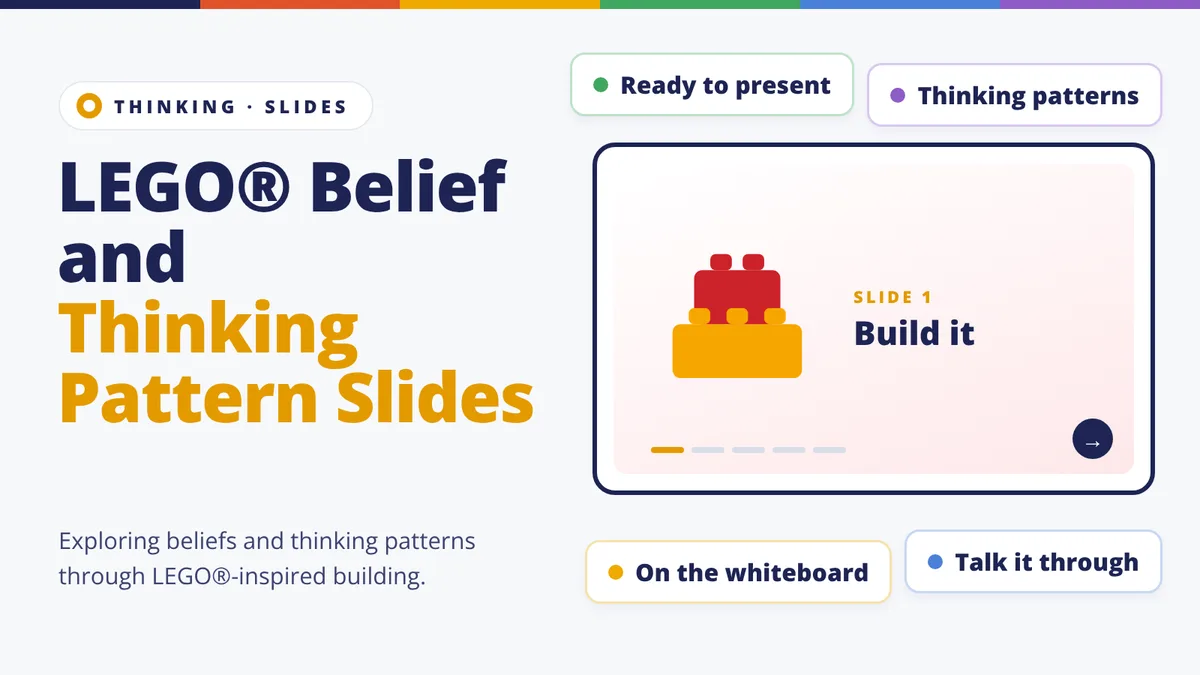
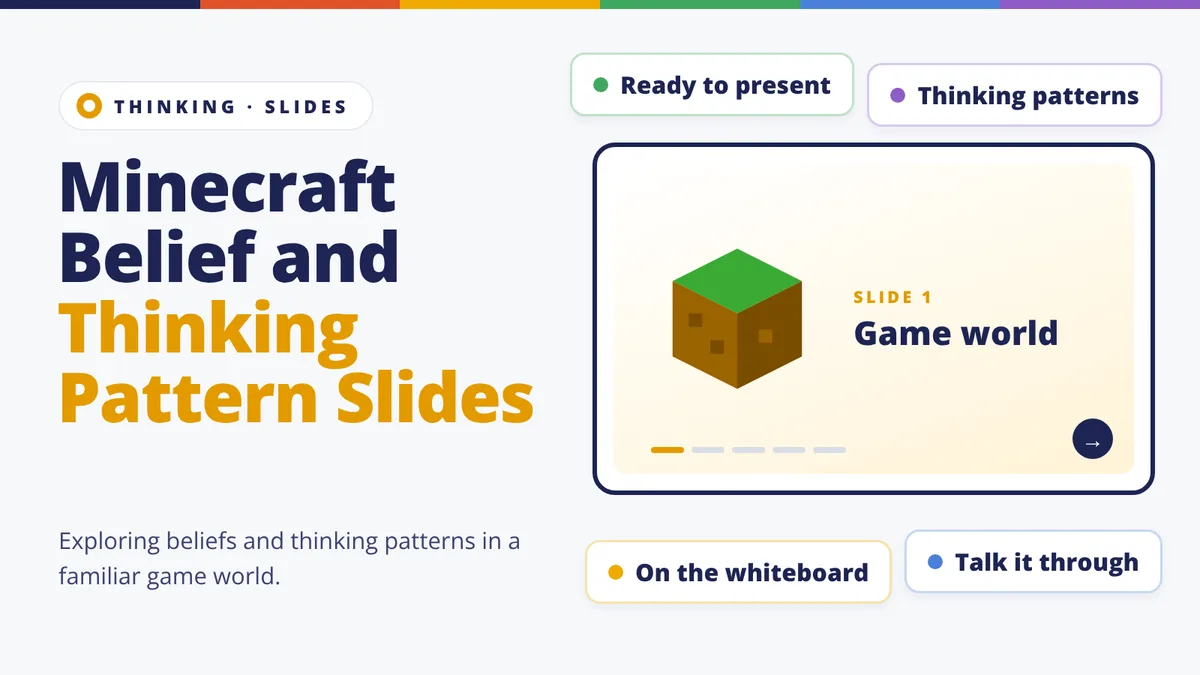
- Makes thoughts and beliefs something you can see and build
- Helps notice unhelpful thinking and build kinder alternatives
Planning and review
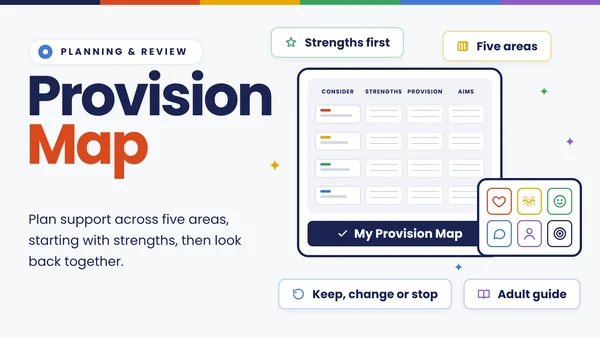
Plan support together, starting with strengths, then look back together.
Assessment tools
A quick, gentle check of how a child or young person is doing, before and after support.
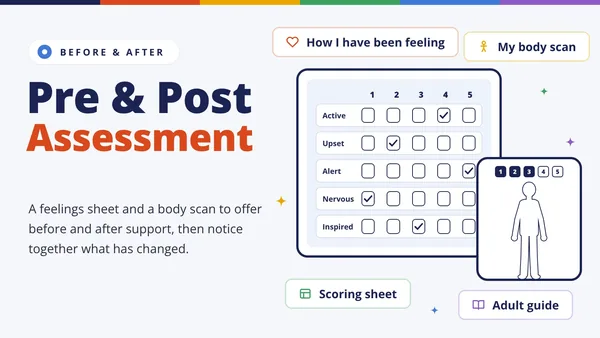
- A quick picture of how a child has been feeling
- A first and second check, before and after support
- A quick check of how a young person feels about themselves
- Track changes in self-esteem over time
Interactive: Body and the Nervous System
Online activities to use together on screen.
 Members only
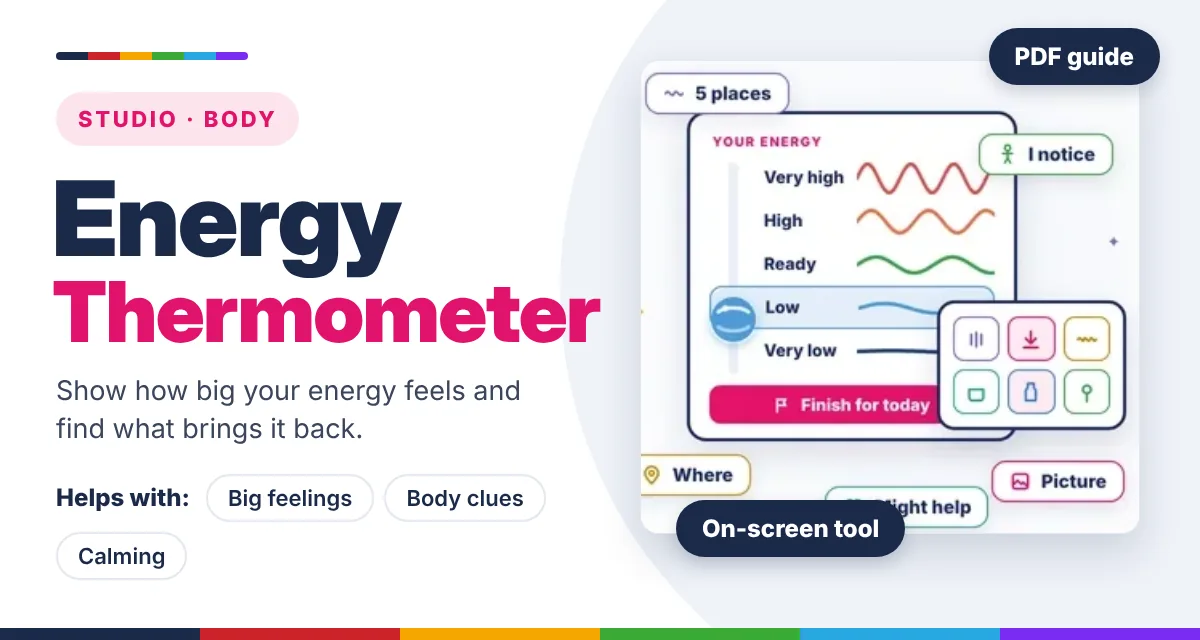
- Helps to see emotions as energy, high or low, notice what is happening in the body at each level and find what helps bring it back to just right.
 Members only
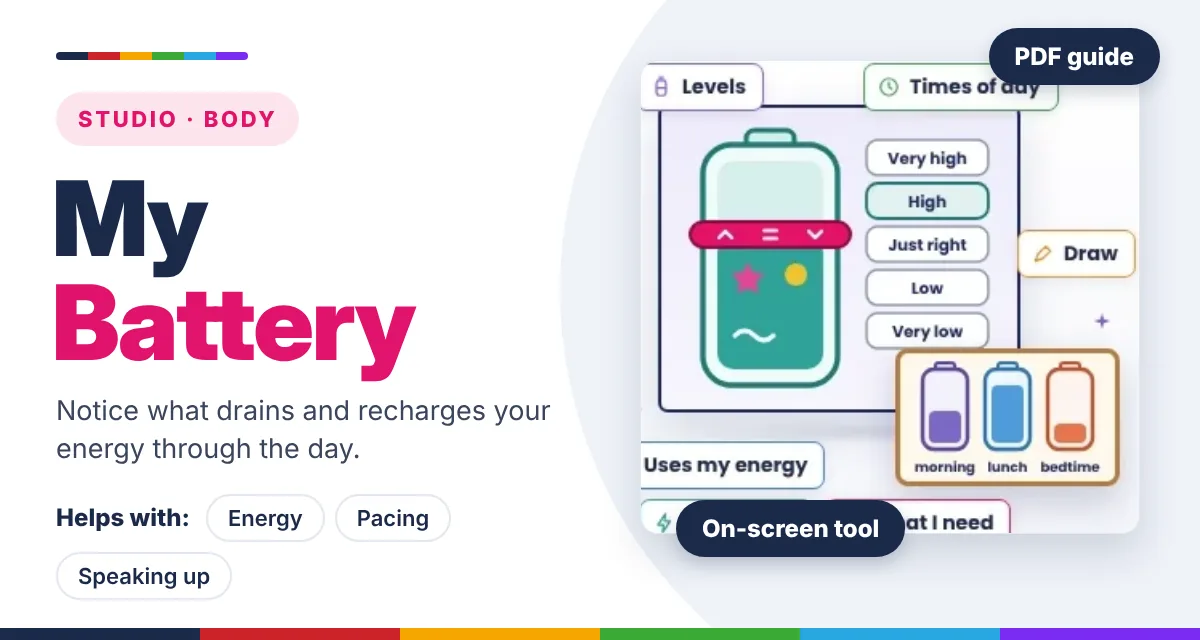
- Helps to notice what drains and recharges energy through the day, including lessons and social situations, so they can recognise their limits, speak up for their needs and pace themselves.
 Members only
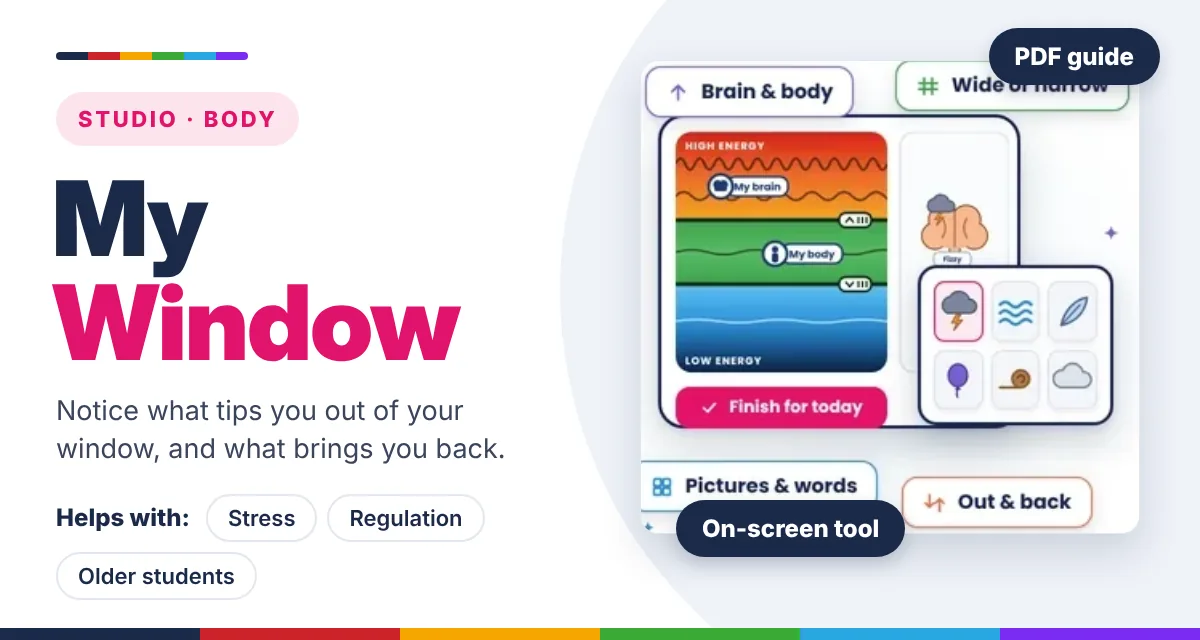
- Helps to understand their own window of tolerance: what stresses their mind and body, what tips them out of their window and what brings them back.
 Members only
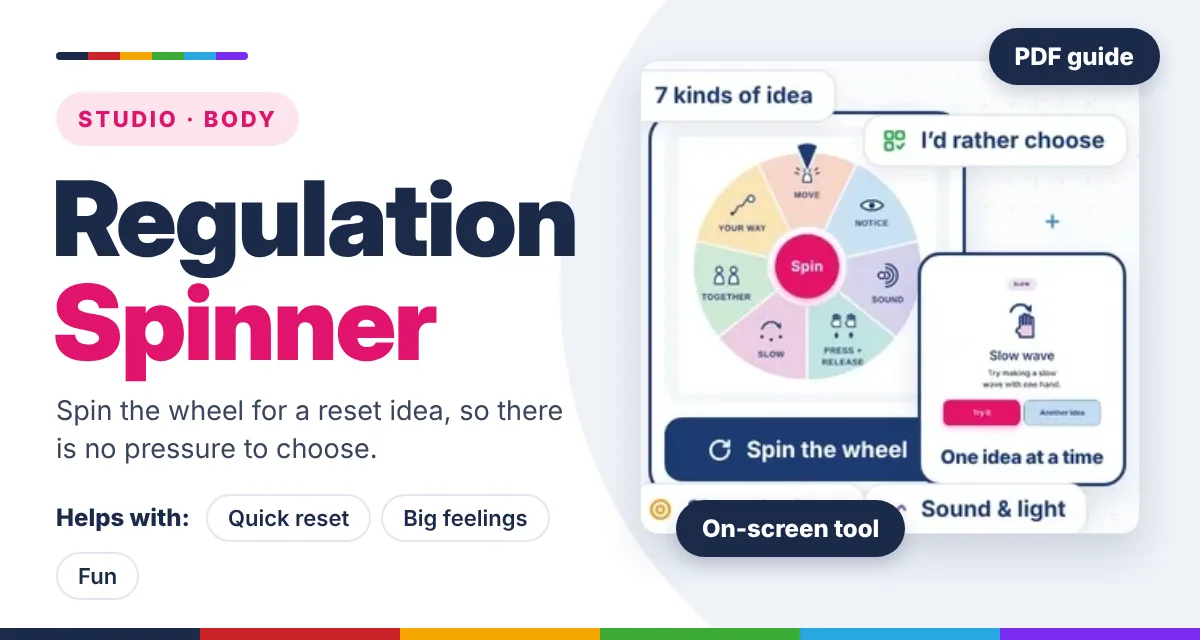
- A fun, game-like way to reset the nervous system in the moment. The spinner picks a strategy from the reset toolbox, taking the pressure off choosing when they are dysregulated.
 Members only
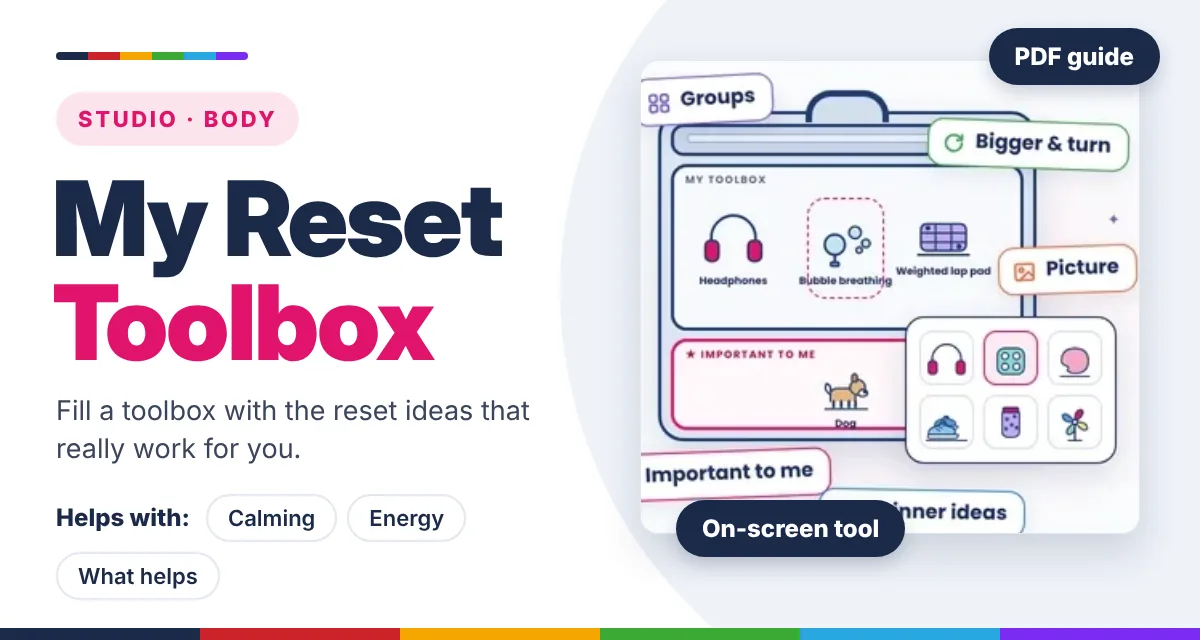
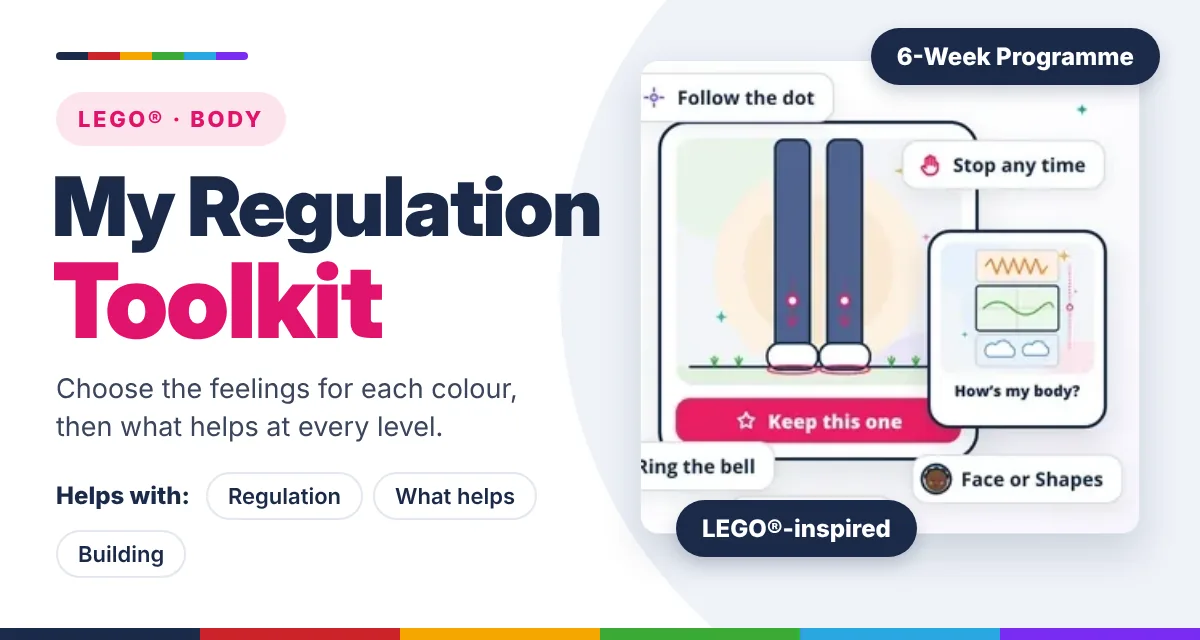
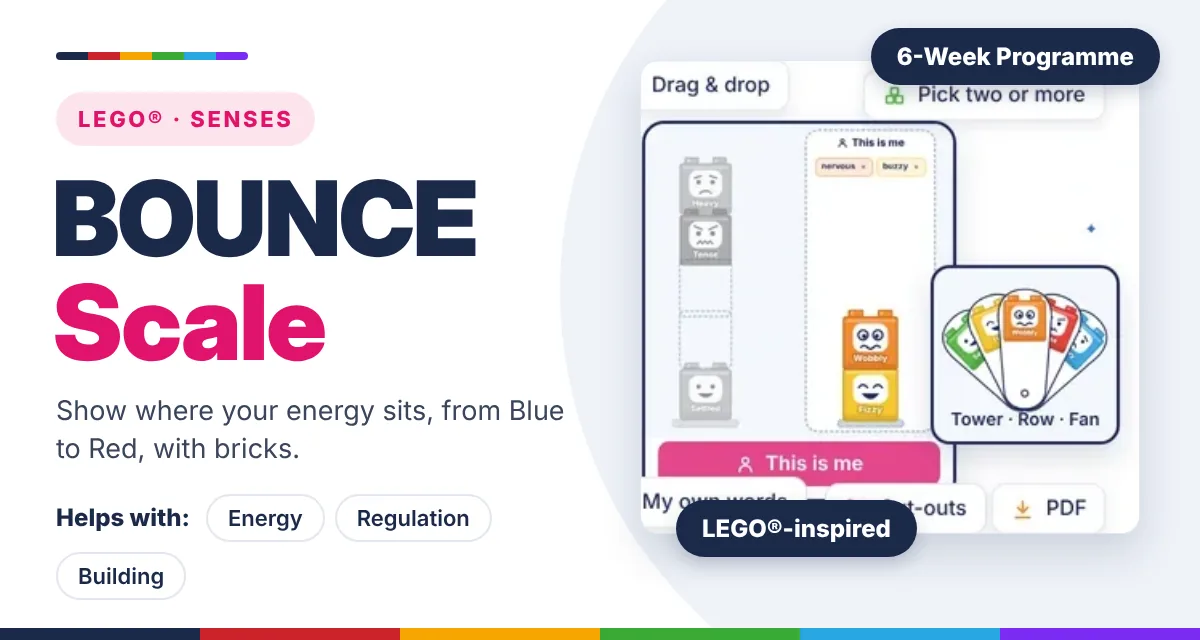
- Helps to build a personal toolbox of reset ideas to reach for when emotions feel too big or energy has been drained, made from the strategies that genuinely work for them.
Interactive: Openness and Trust
Online activities to use together on screen.
 Members only
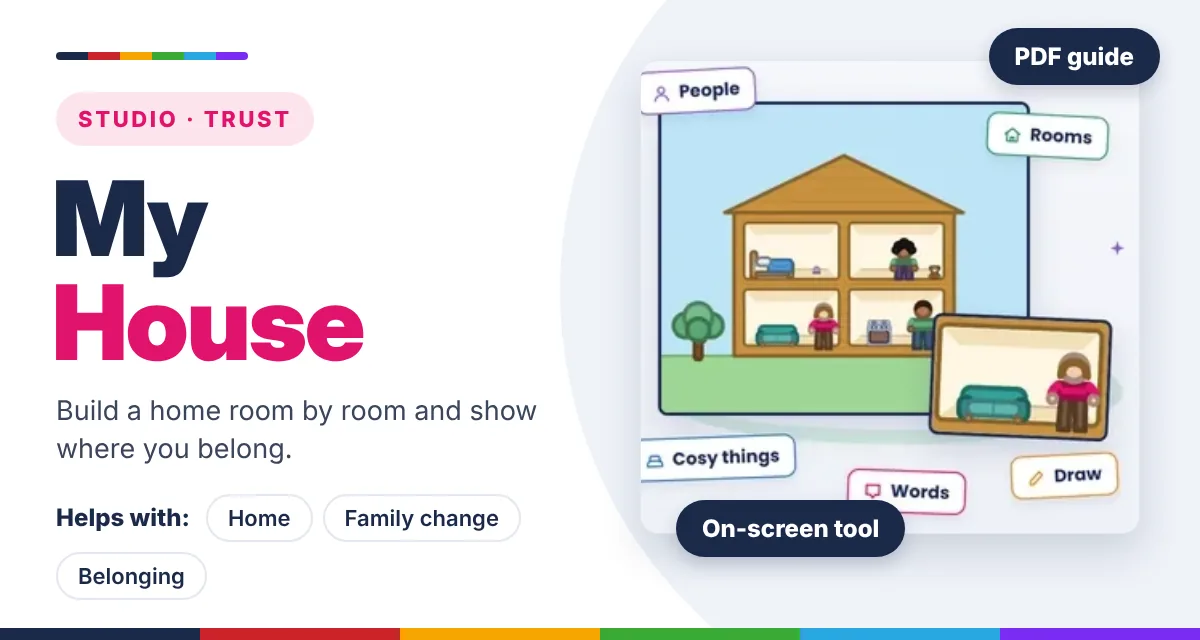
- Helps to feel connected to home and see where they belong in the world, especially when families are going through change such as separation, divorce or moving house.
 Members only
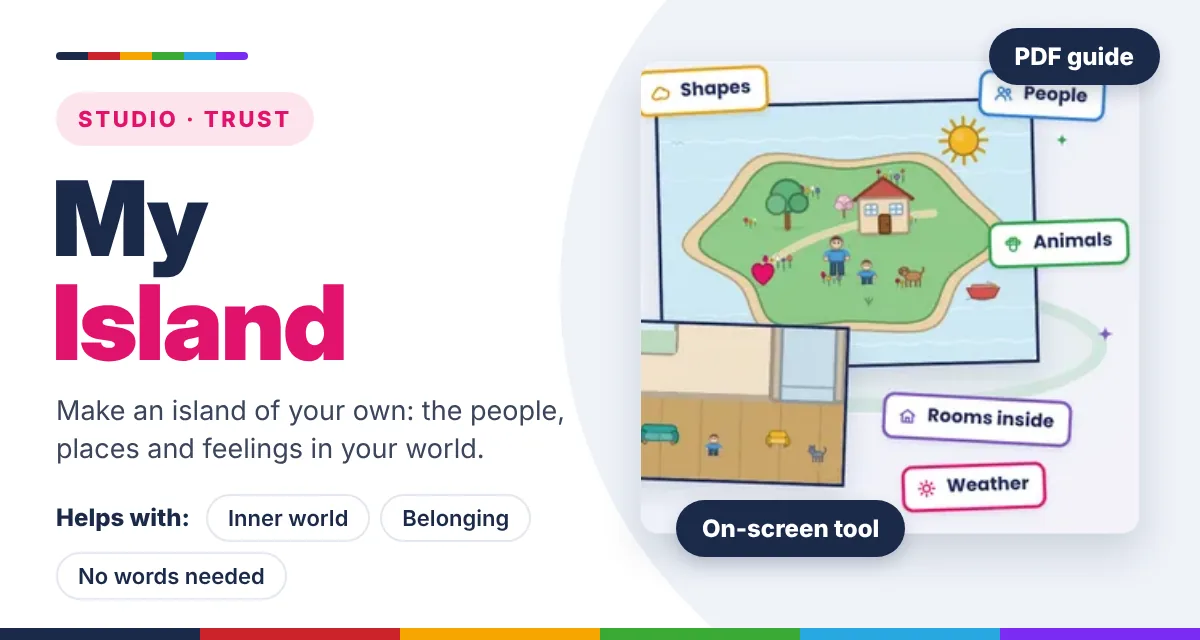
- Helps to explore their inner world: what is around them, how the world feels to them, what is in it and where they feel they belong, without needing to explain it out loud.
 Members only
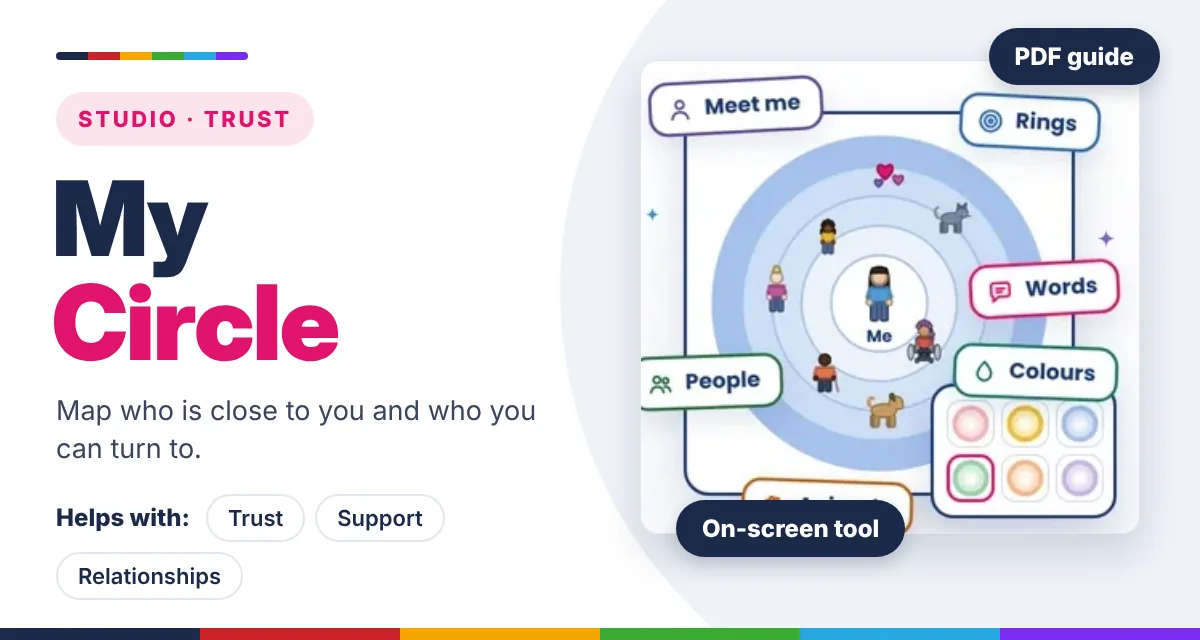
- Helps to map who is close and who is further away in a circle of trust and support, so they can see who they can turn to and know they are not alone.
Interactive: Understanding Sensory Differences
Online activities to use together on screen.
 Members only
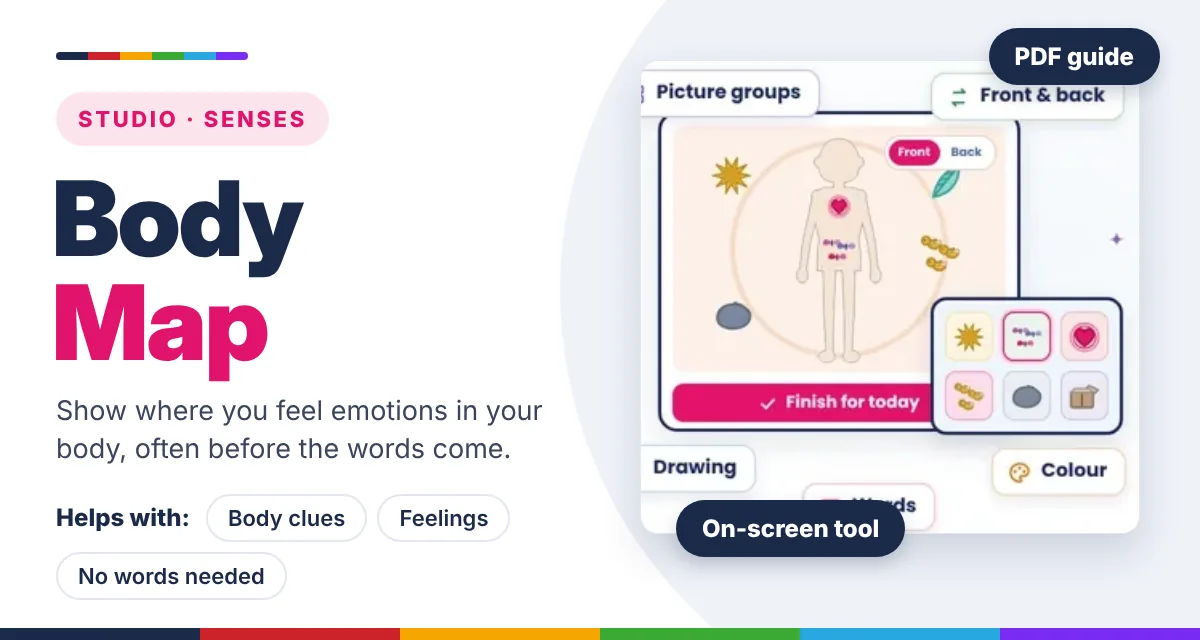
- Helps to understand that emotions are physical sensations, and map where in the body they are felt, often before the words are there.
 Members only
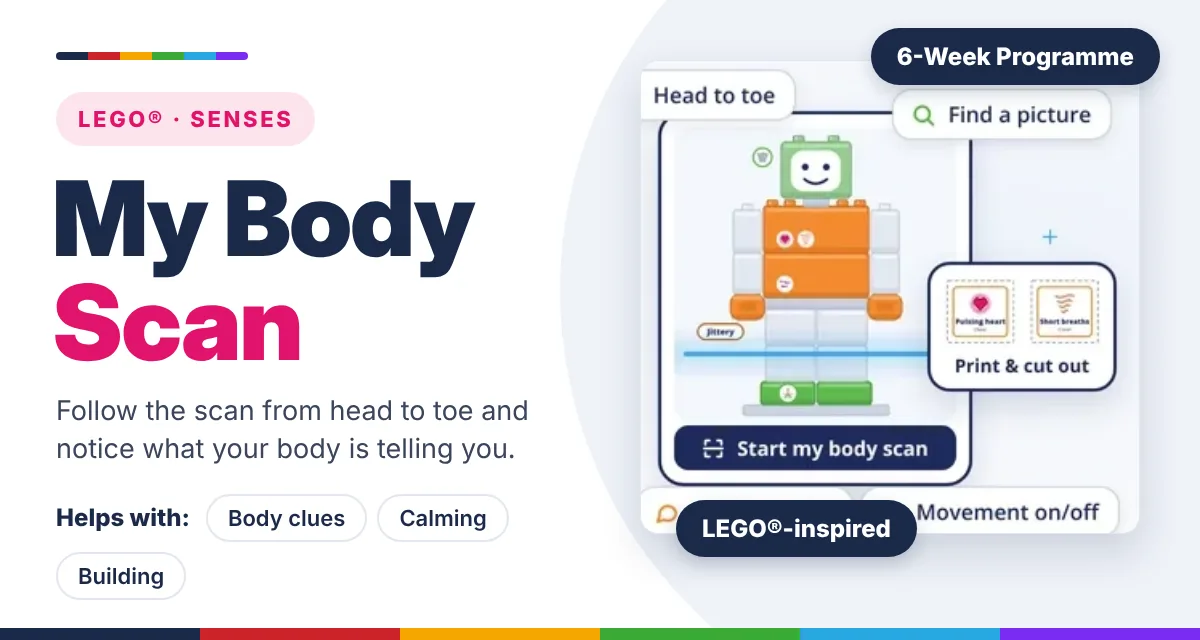
- A Bricks body scan: helps to notice that emotions are physical sensations and find where in the body they are felt.
 Members only
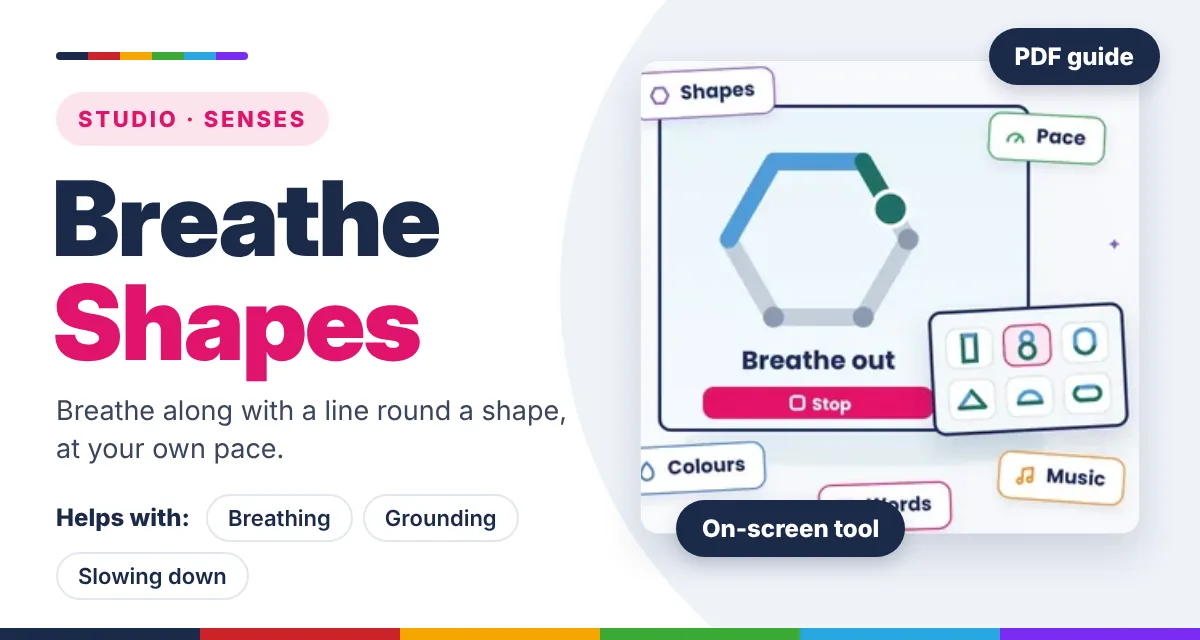
- Breathwork set to a beat: helps to ground in the present moment, slow down and check in with what is happening inside the body, with something to follow rather than instructions.
Interactive: Navigating Emotions
Online activities to use together on screen.
 Members only
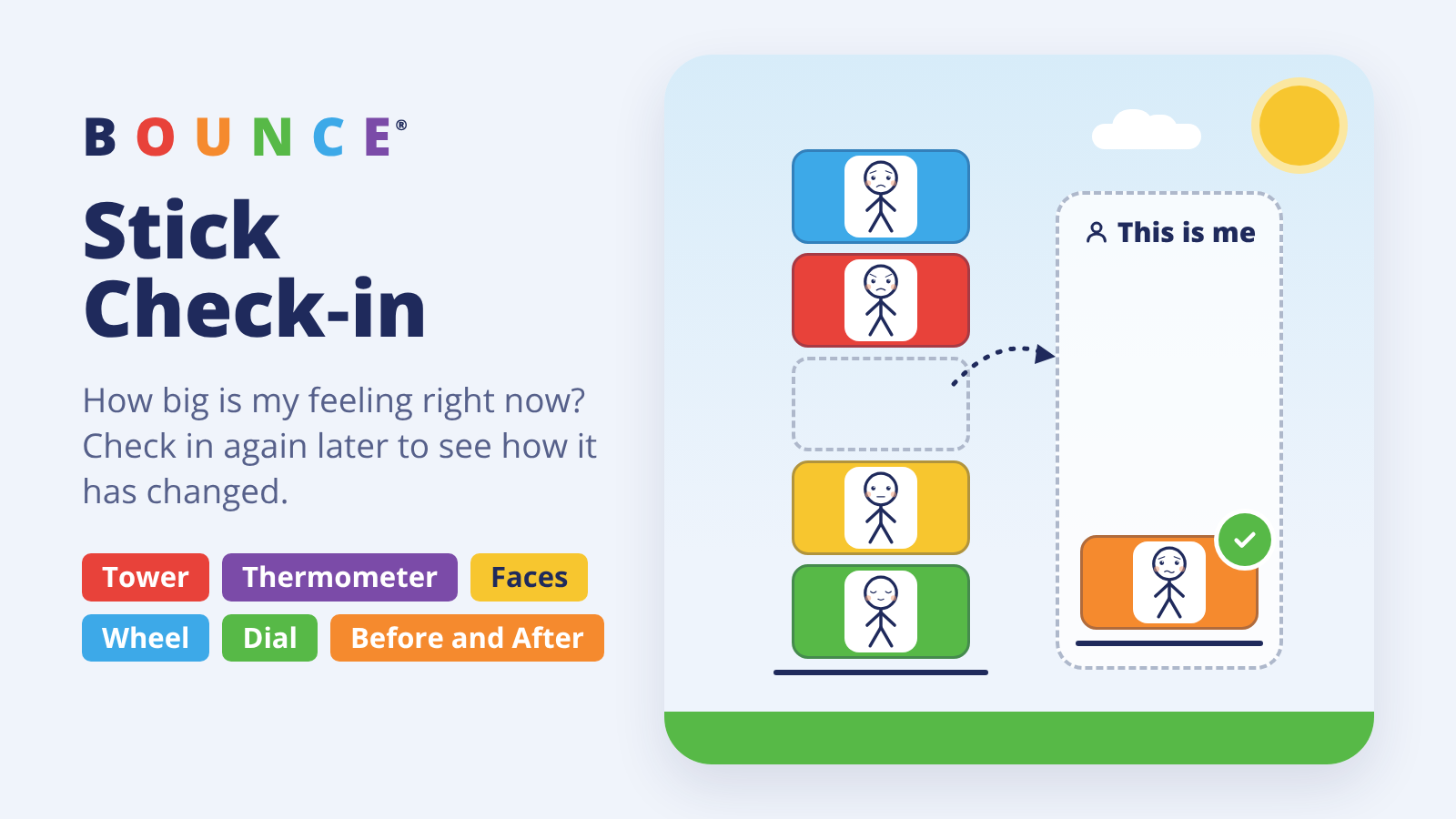
- The stick people version of Check-in: a gentle check-in for when talking about emotions feels overwhelming: helps to show how they are feeling in a metaphorical way, without direct questions.
 Members only
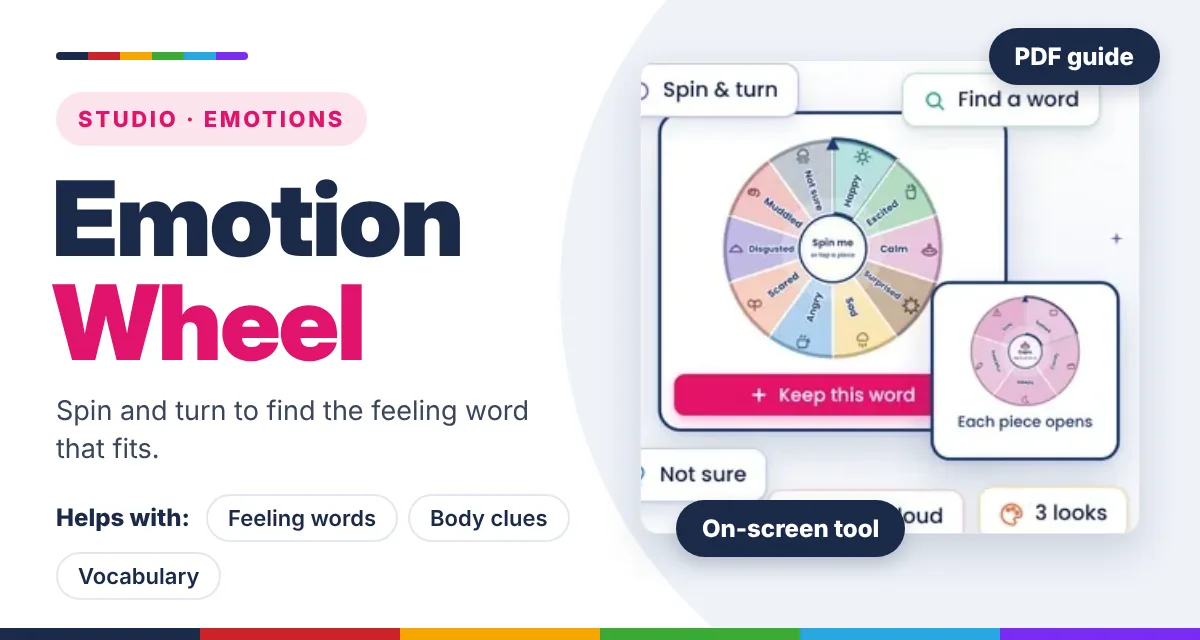
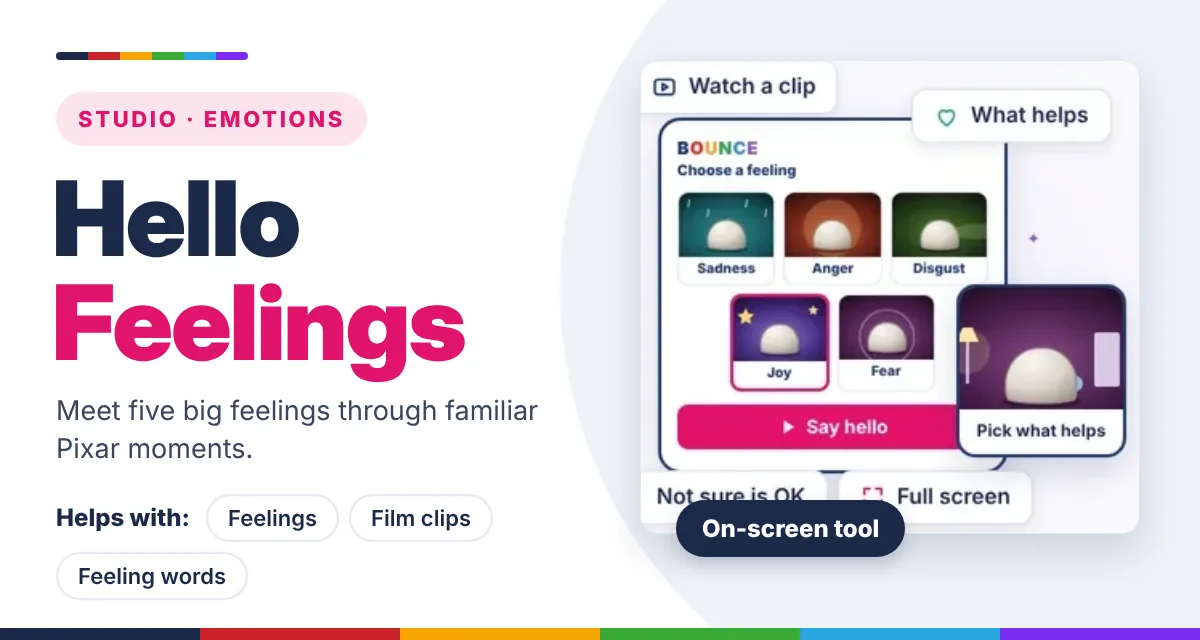
- Helps to turn the physical sensations they notice into emotional vocabulary, widening their feeling words beyond happy, sad, angry and fine.
 Members only
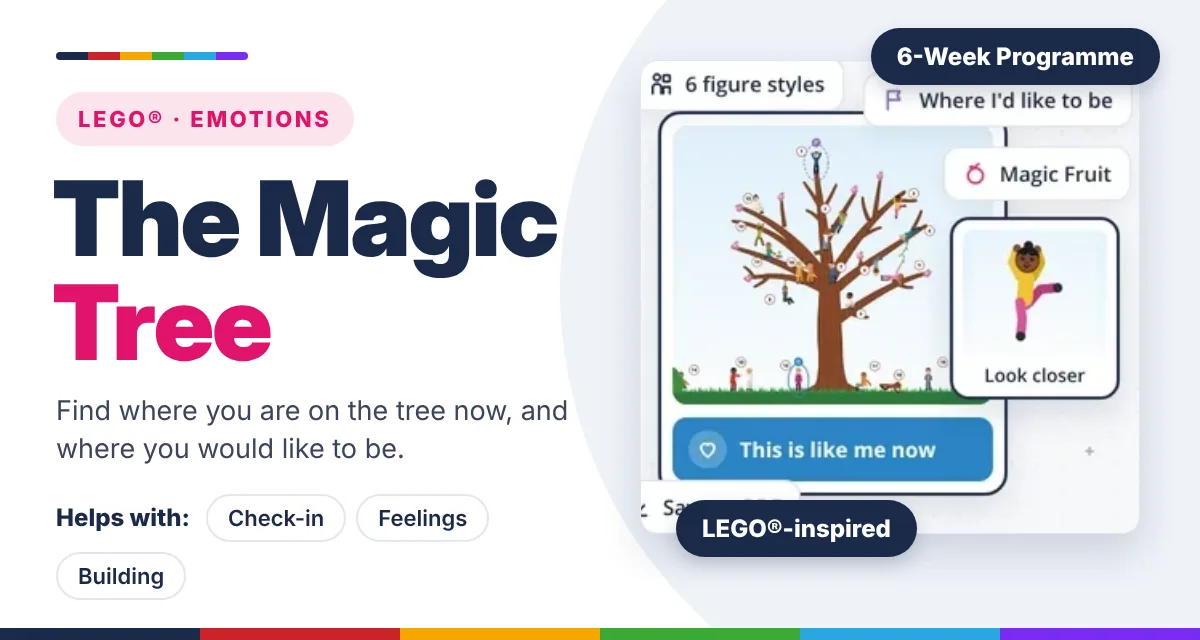
- A Bricks emotional check-in tree: helps to show where they are right now and where they would like to be.
 Members only
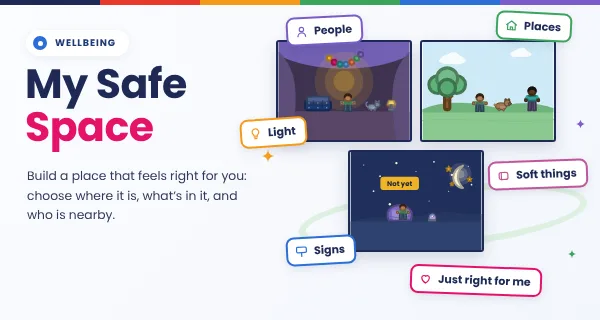
- The Bricks version of My Safe Space: helps to explore what safety means to them and picture their own safe space, so they have somewhere calm to come back to in their mind when things feel overwhelming.
 Members only
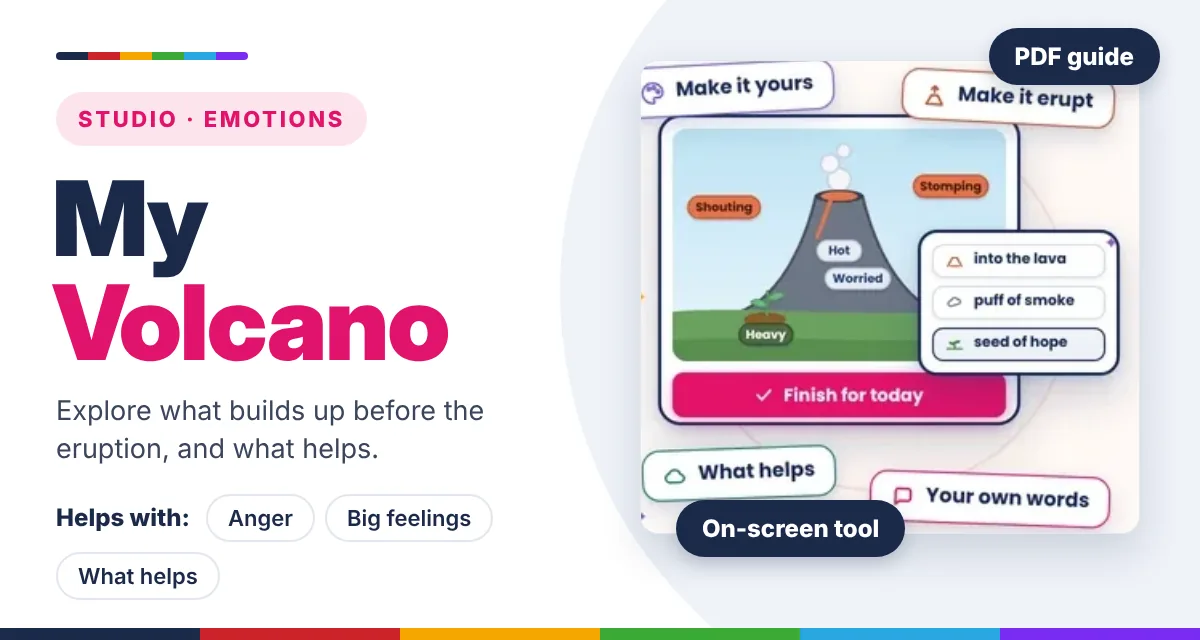
- The stick people version of My Volcano: helps to explore anger in a creative way: what builds it and what comes before the eruption.
 Members only
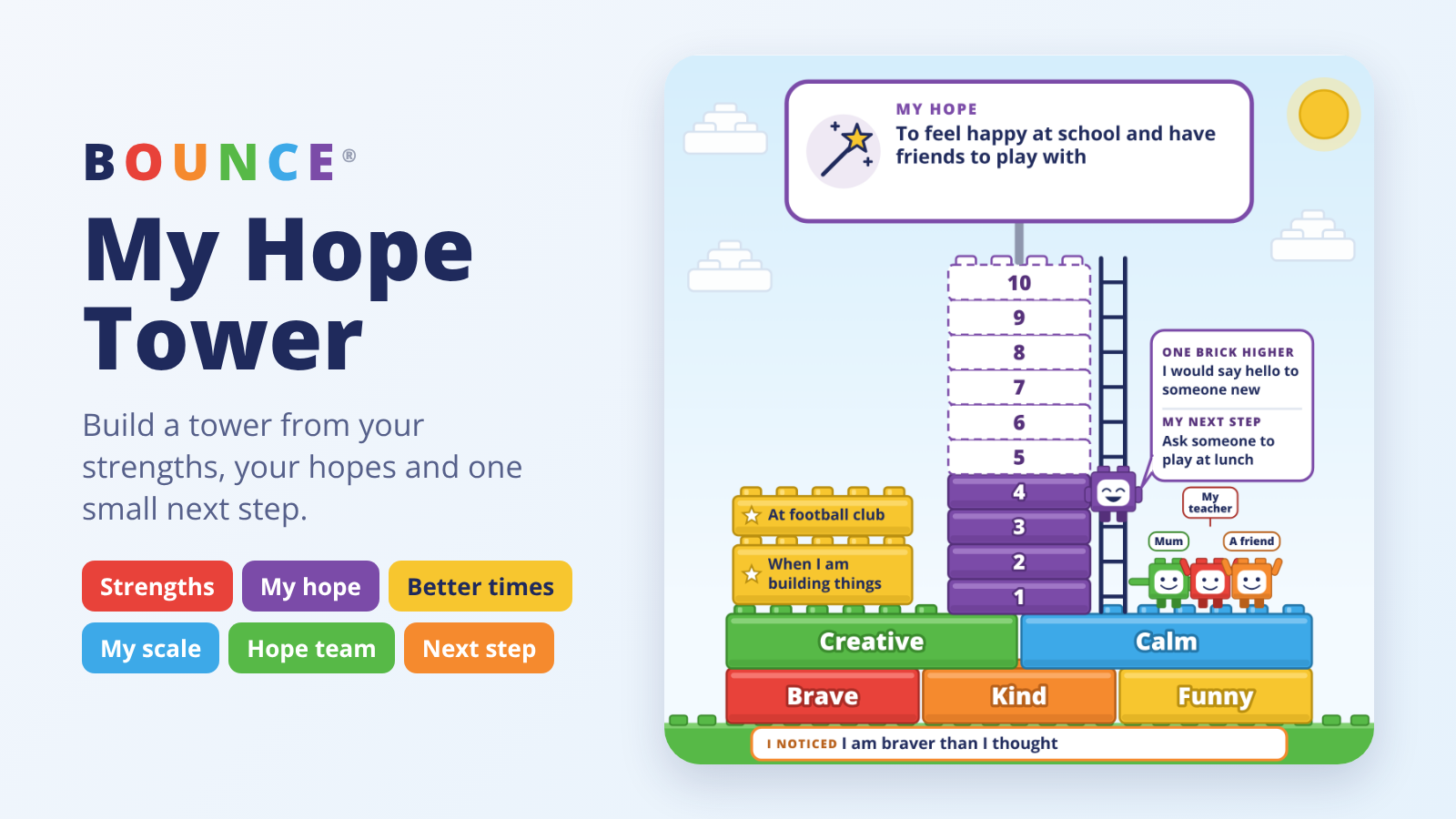
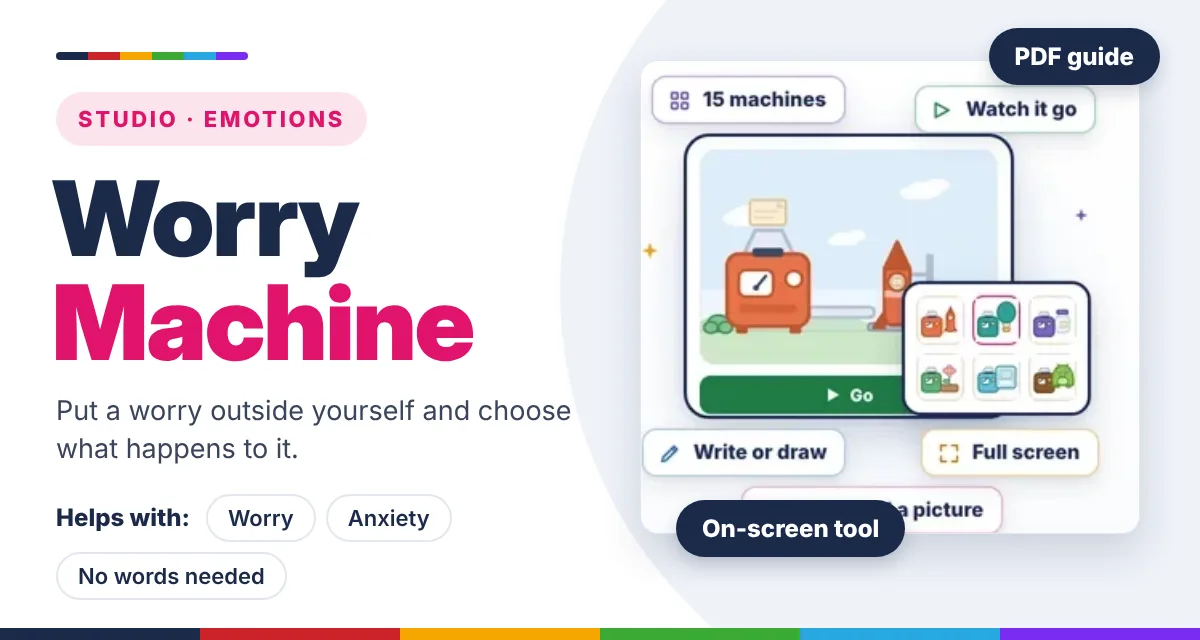
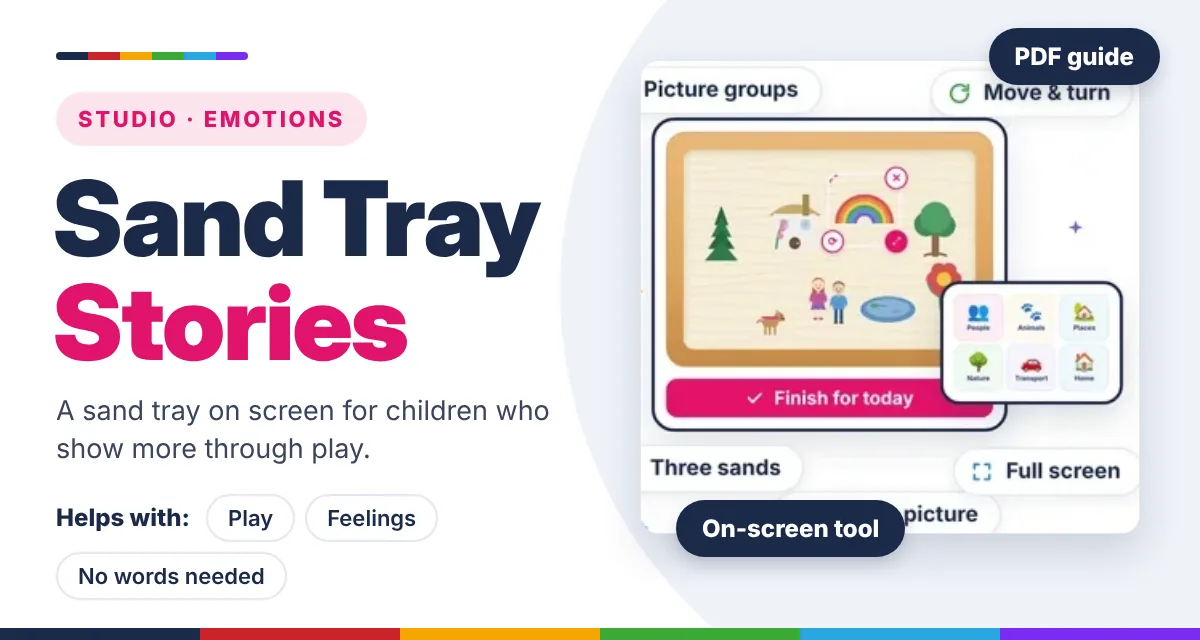
- Helps to put a worry outside themselves and choose what happens to it, without needing to explain.
Interactive: Connection and Communication
Online activities to use together on screen.
 Members only
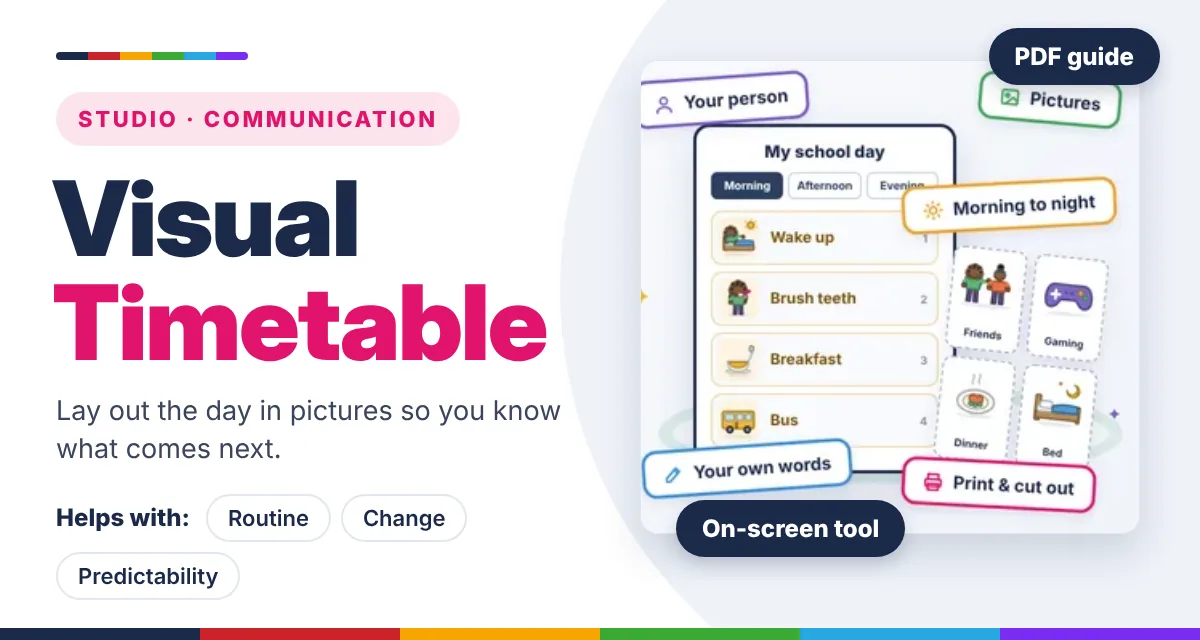
- Helps to make the shape of the day visible and predictable.
 Members only
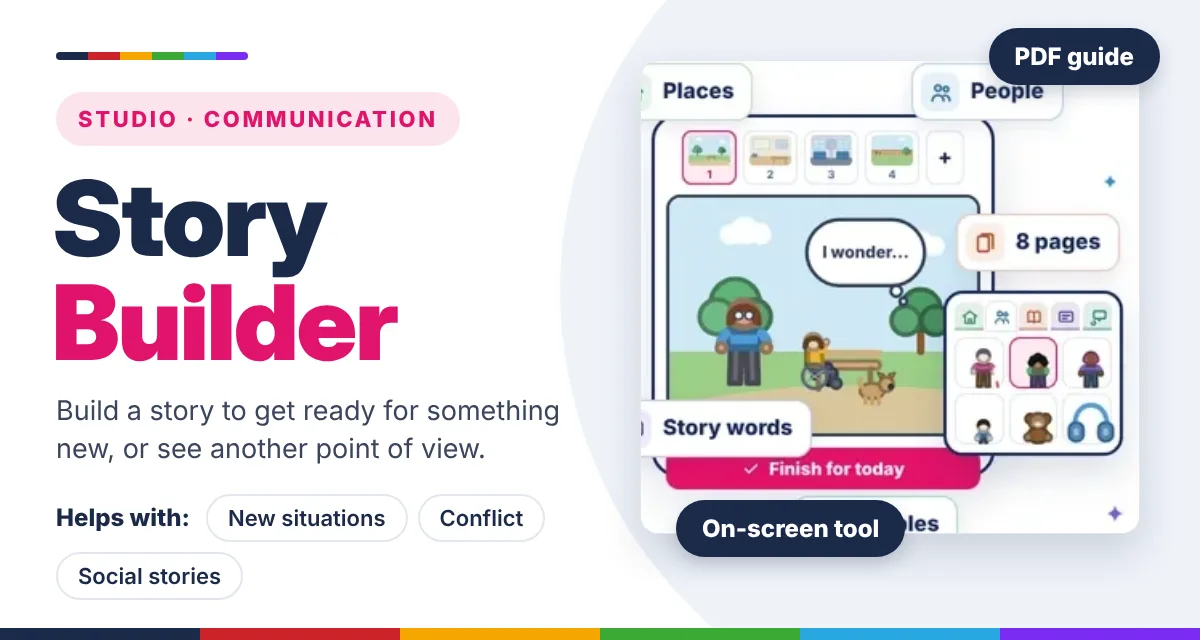
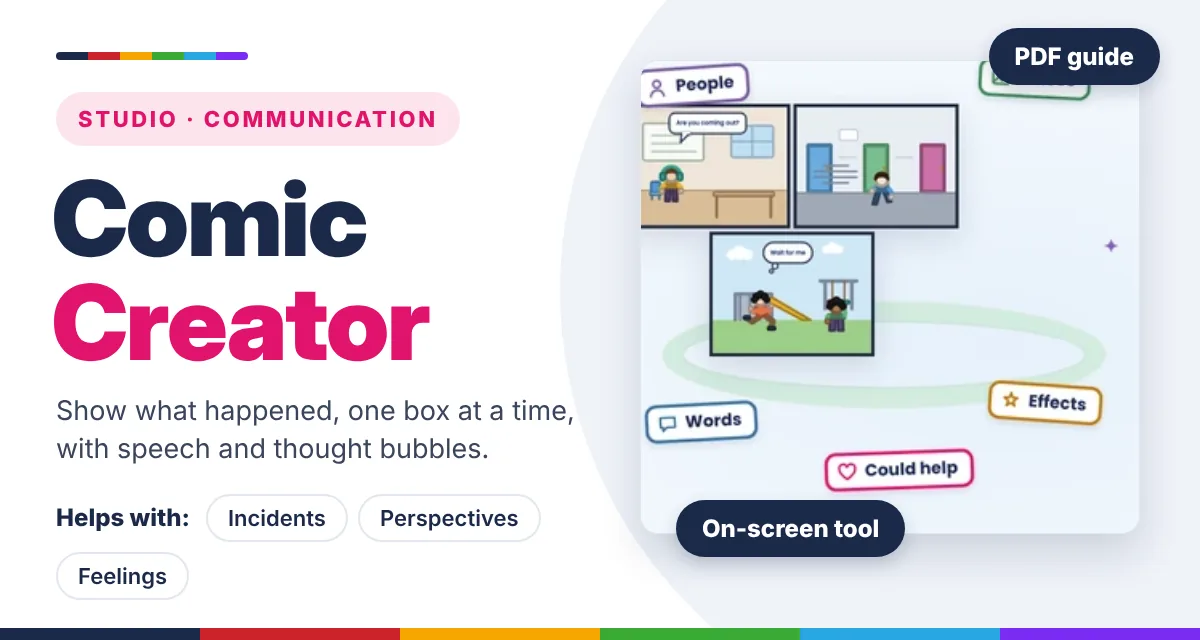
- Helps to build social stories that prepare for unfamiliar situations and reduce the overwhelm of the unknown, and to work through conflict by seeing other people's perspectives.
 Members only
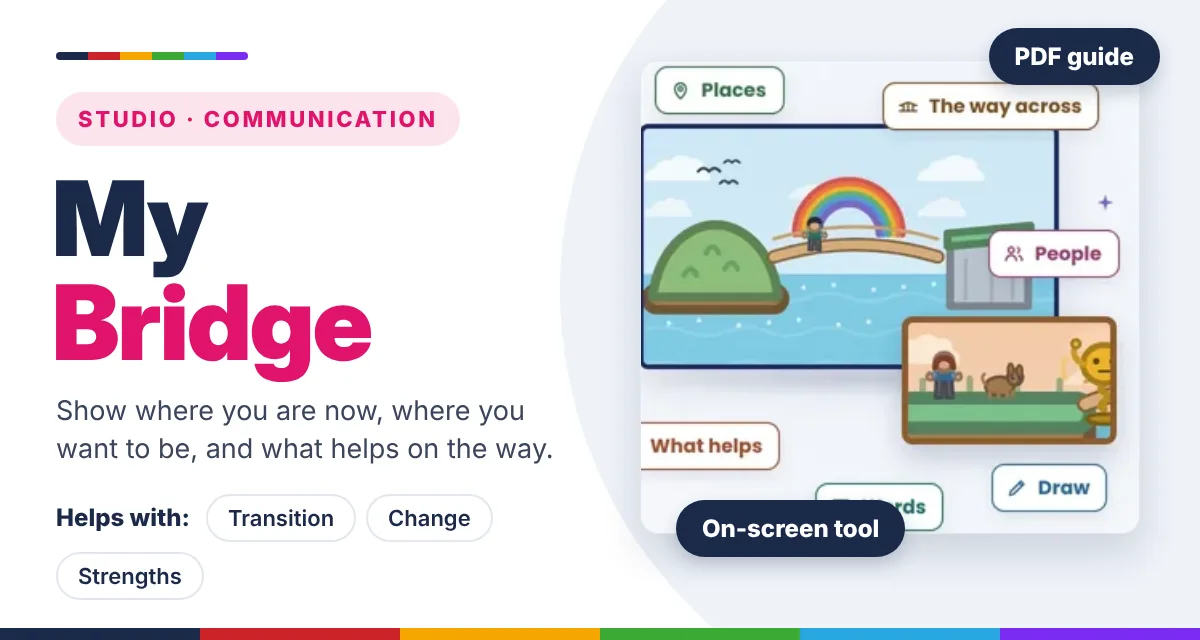
- Helps through transition and change by showing where they are now, where they want to get to, and the resources they will need on the way, such as people, strengths and self-compassion.
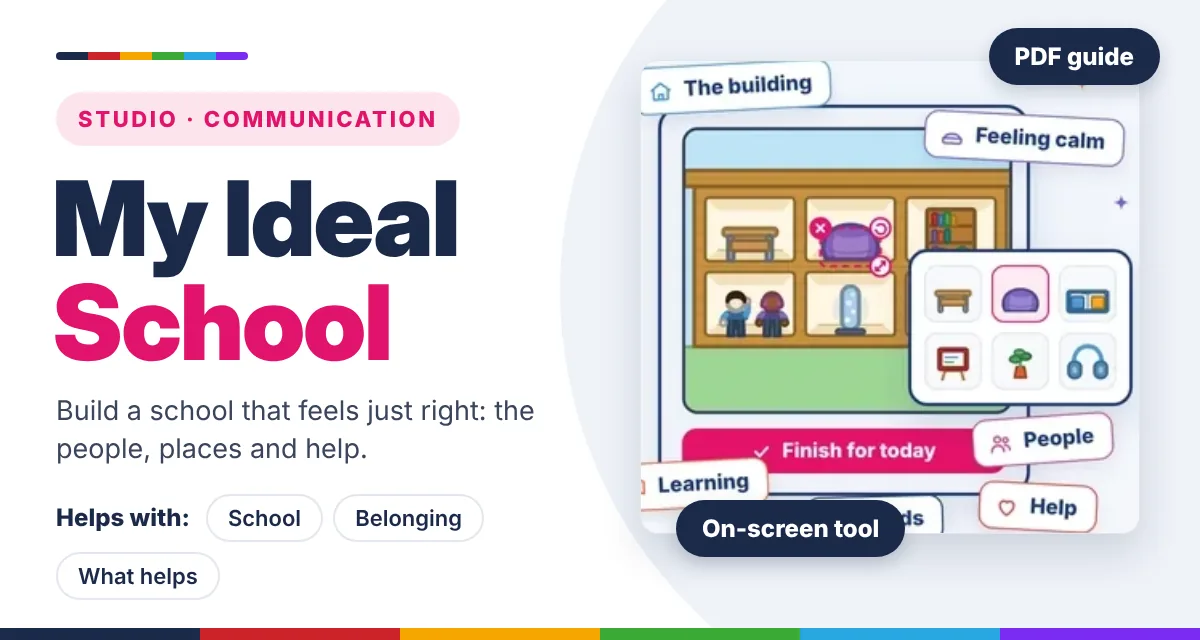
Interactive: Esteem and Identity
Online activities to use together on screen.
 Members only
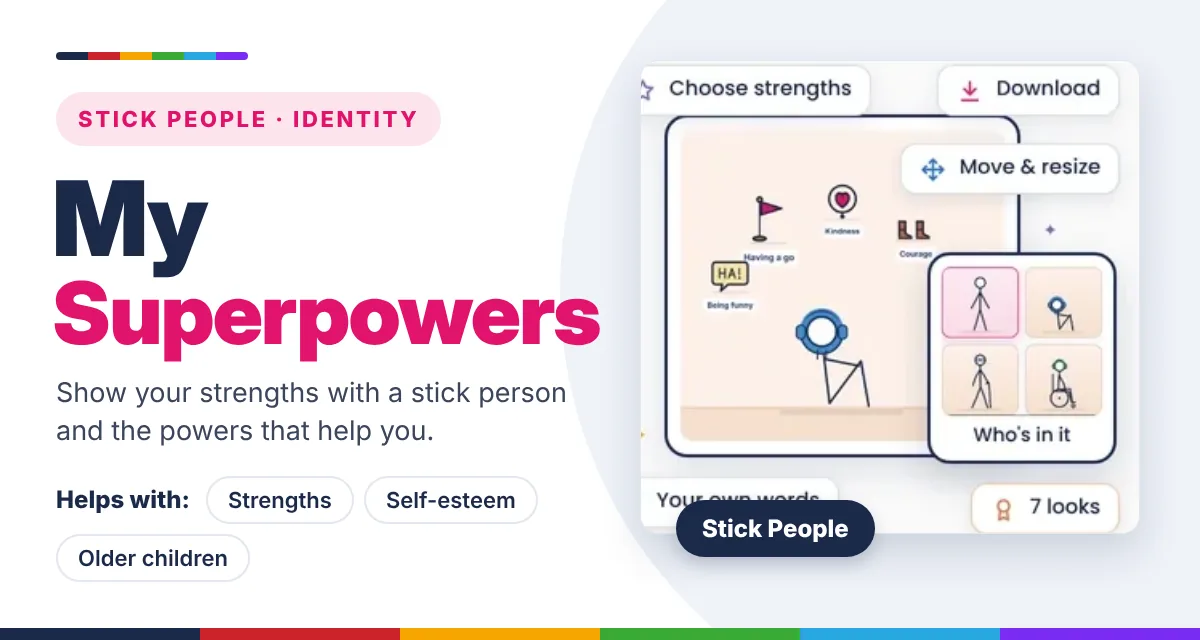
- The Bricks version of My Superpowers: helps to recognise their character strengths, so they can see their worth and value.
 Members only
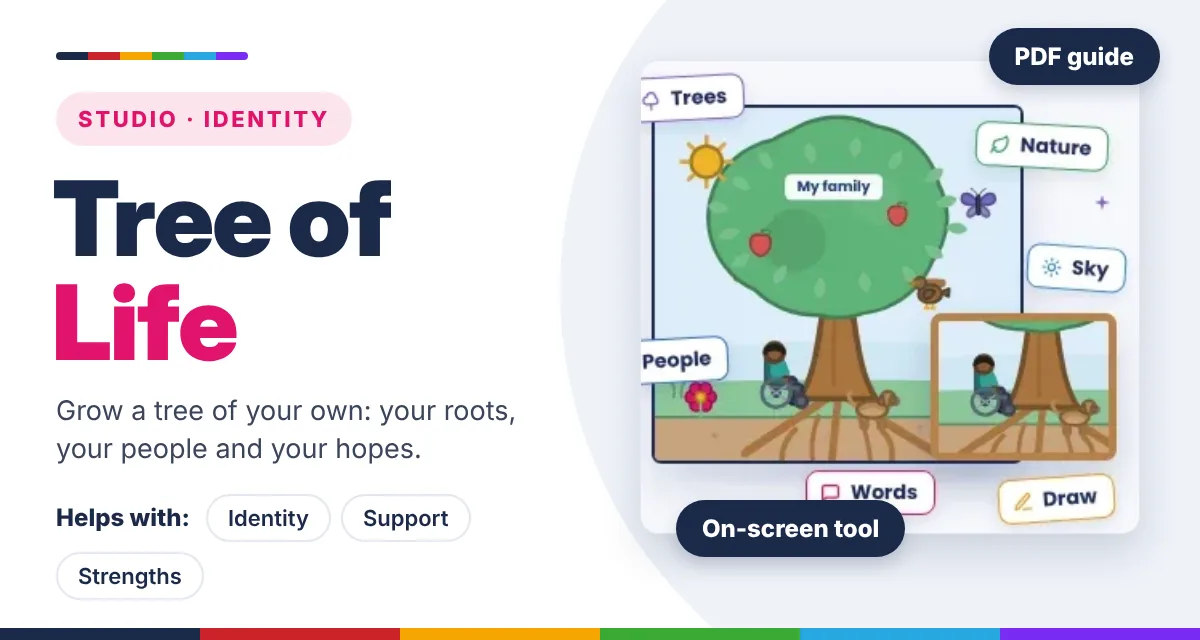
- Helps to find the solid foundation of support beneath them and the resources they can draw on to reach their goals.
 Members only
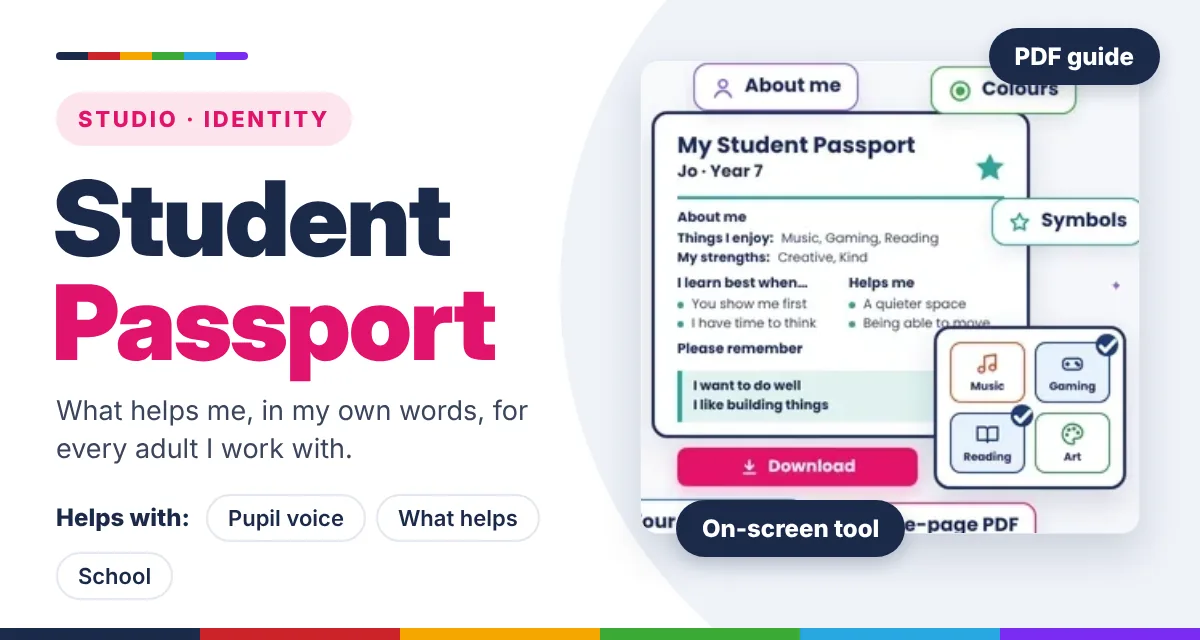
- Helps to set out what helps them, in their own words, for every adult who works with them.
 Members only
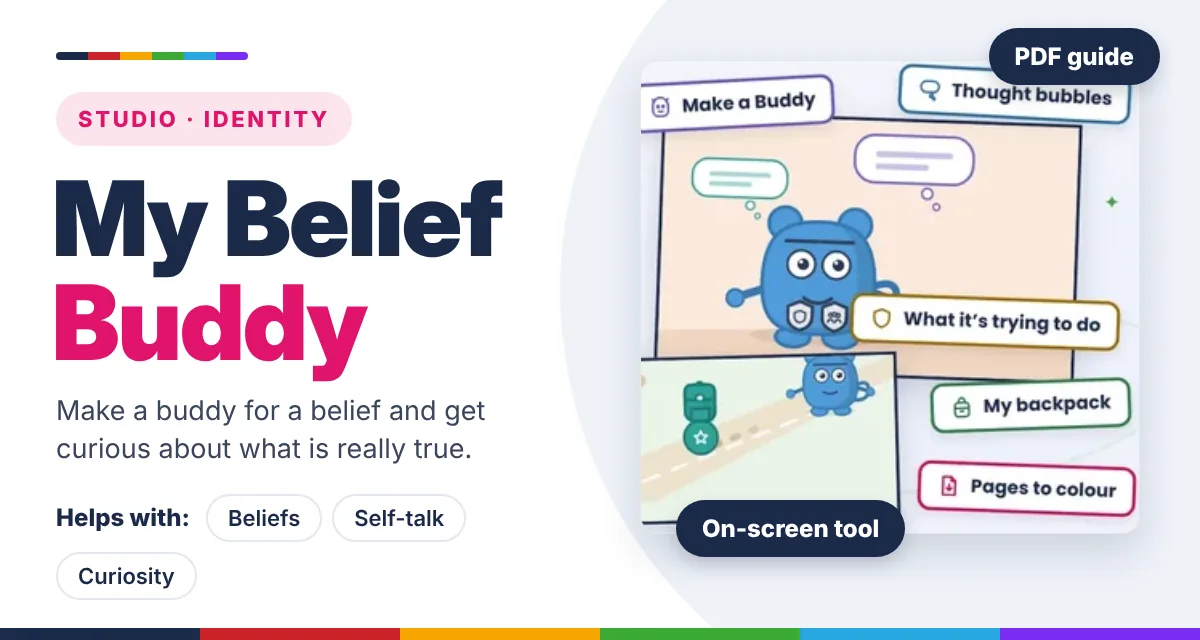
- Helps to notice what they hold true about themselves, so together you can explore what is really true and what isn't.
 Members only
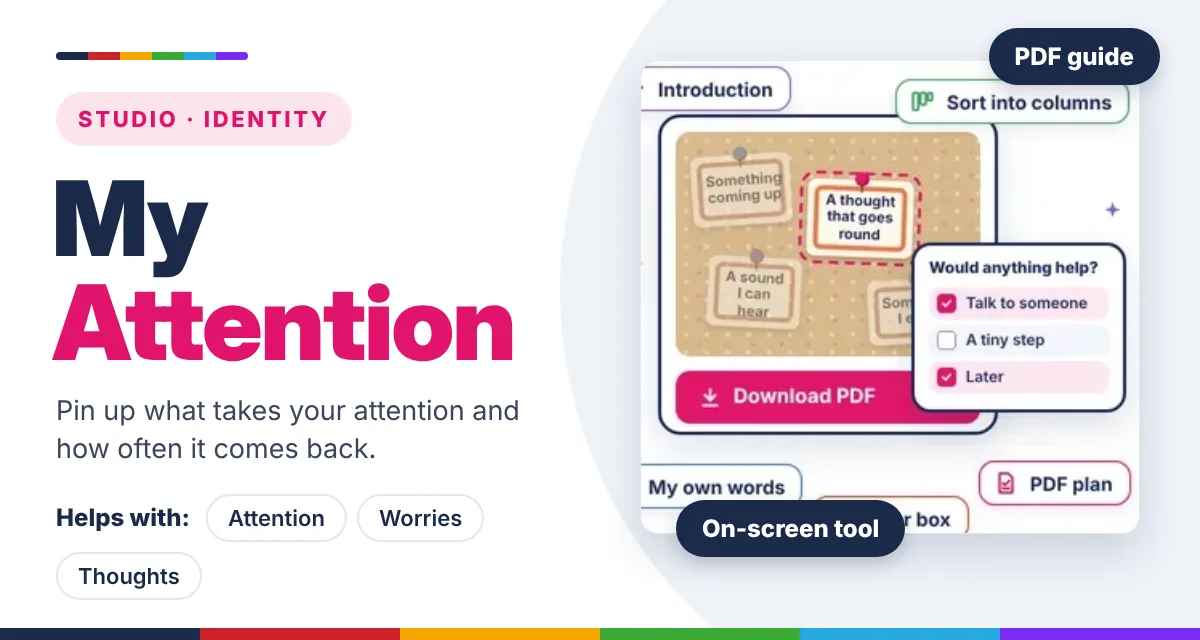
- Helps to sort thoughts, feelings and worries on a pinboard by how often they come back, showing what takes up their attention.