Neurodivergent-Affirming Practice
Using The BOUNCE Approach®
What’s happening
Across education, health, and care, more professionals are moving away from behaviour charts, rigid routines, and compliance systems. But what does it really mean to be neurodivergent-affirming?
- Neurodivergent describes people whose brains function differently from the “typical” — including autism, ADHD, dyslexia, dyspraxia, and sensory processing differences.
- Neurodiversity is the natural variation across all brains — the mix of neurodivergent and neurotypical minds in every community.
- Being affirming means recognising that children aren’t “choosing” difficult behaviour — they are communicating needs through their body and nervous system.
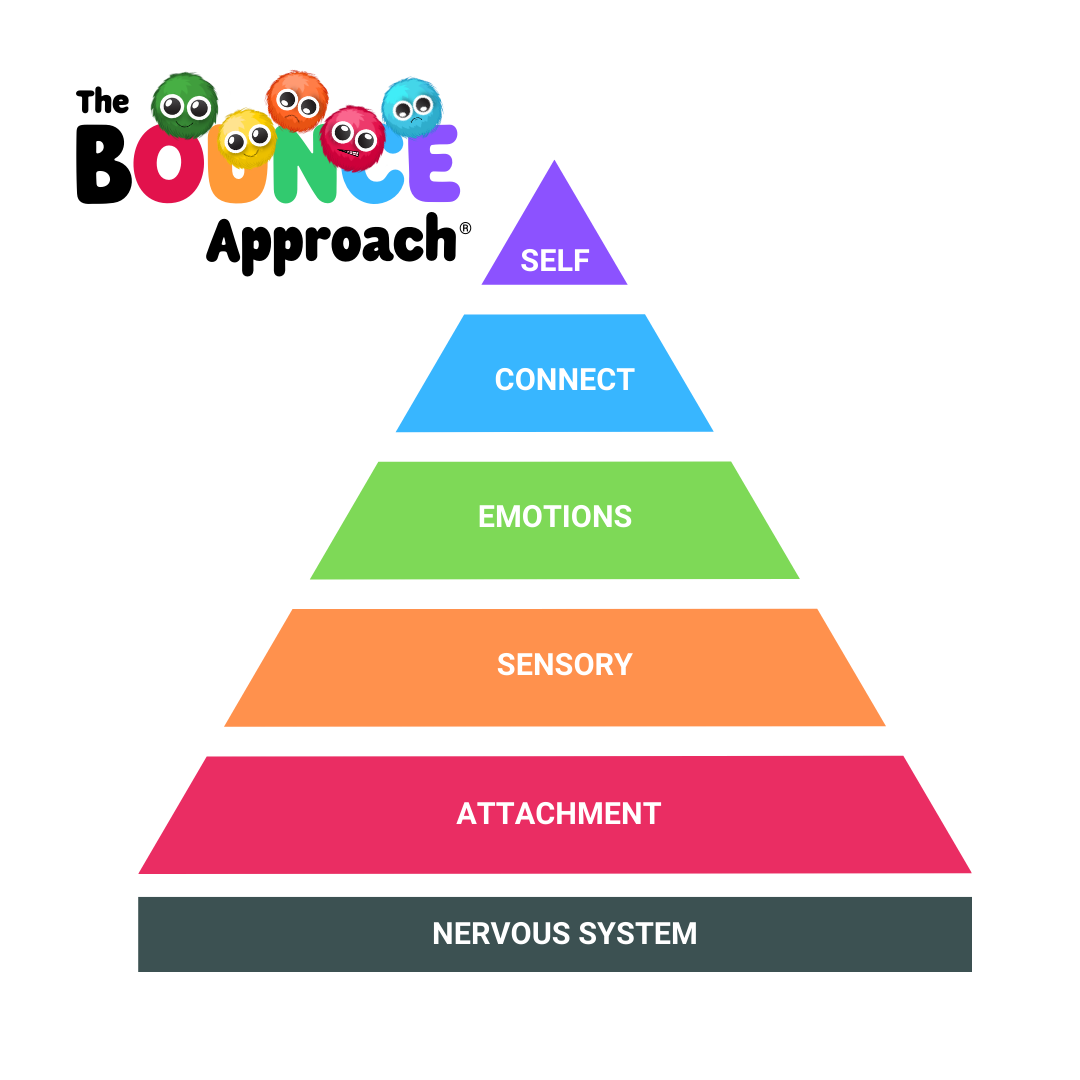
The BOUNCE Approach®
🖤 B — Body and Nervous System (Inside Tool)
- See behaviour as a stress signal, not a choice.
- Support regulation through sensory breaks, movement, and breathing before expecting thinking or learning.
❤️ O — Openness to Connection and Attachment (In-Between Tool)
- Respond with curiosity, not correction: “What’s this telling me?” instead of “How do I stop it?”
- Use co-regulation to show safety and trust.
🧡 U — Understanding Sensory Differences (Outside Tool)
- Adapt environments with quieter lighting, visual schedules, or choice-based transitions.
- Provide access to fidgets, sensory circuits, or calming spaces.
💚 N — Navigating Emotions (Inside Tool)
- Use parts-informed language: “A part of you feels overwhelmed right now.”
- Help children map feelings using the colour system to build awareness and vocabulary.
💙 C — Connection to Self and Others (In-Between Tool)
- Encourage peer understanding and belonging.
- Recognise and celebrate the diverse ways children connect, communicate, and play.
💜 E — Esteem and Identity (Inside Tool)
- Affirm strengths and unique perspectives.
- Build self-worth through choice, autonomy, and valuing difference.
Adult Focus:
- You don’t need to wait for a diagnosis or EHCP to adapt your practice.
- Small environmental changes often have the biggest impact.
- Regulation, relationship, and respect come before compliance.
Next Steps
- Explore further learning:
- Being Neurodivergent-Affirming: The BOUNCE Approach® — language, insight, and practical tools to adapt practice.
- Understanding P.A.C.E — using Playfulness, Acceptance, Curiosity, and Empathy to build trust.
- Improving Attachment through Play — practical strategies for connection and co-regulation.
- Join the Learning Portal: Access 80+ trainings, printable resources, and interventions designed to help you create environments where every child can thrive. Click here to learn more
👉 Because when we change the environment, not the child — everyone thrives.