Anxiety about school / new situations
Using The BOUNCE Approach®
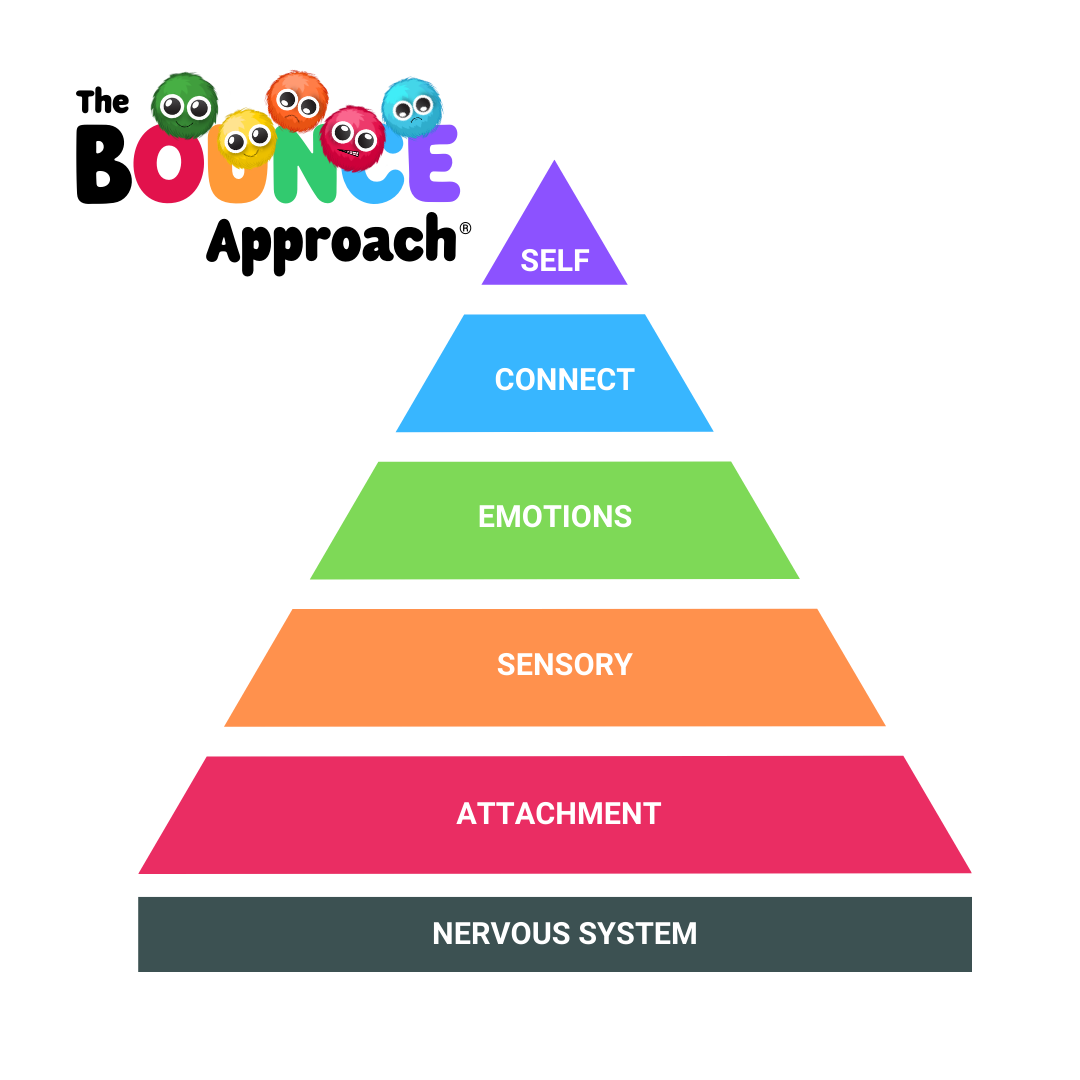
The BOUNCE Approach® supports children’s social, emotional, and mental health using evidence-based research, therapy models, and practical tools.
- Polyvagal Theory — helps us understand emotions through the lens of the nervous system (safety, danger, shutdown).
- Window of Tolerance — helps us see emotions through the lens of energy and arousal (too high, too low, or “just right”).
Together:
- Polyvagal = why the nervous system responds the way it does.
- Window of Tolerance = what level of energy/arousal the child has available.
The goal is not to “stay green” all the time — it’s to build self-awareness and a felt sense of safety.
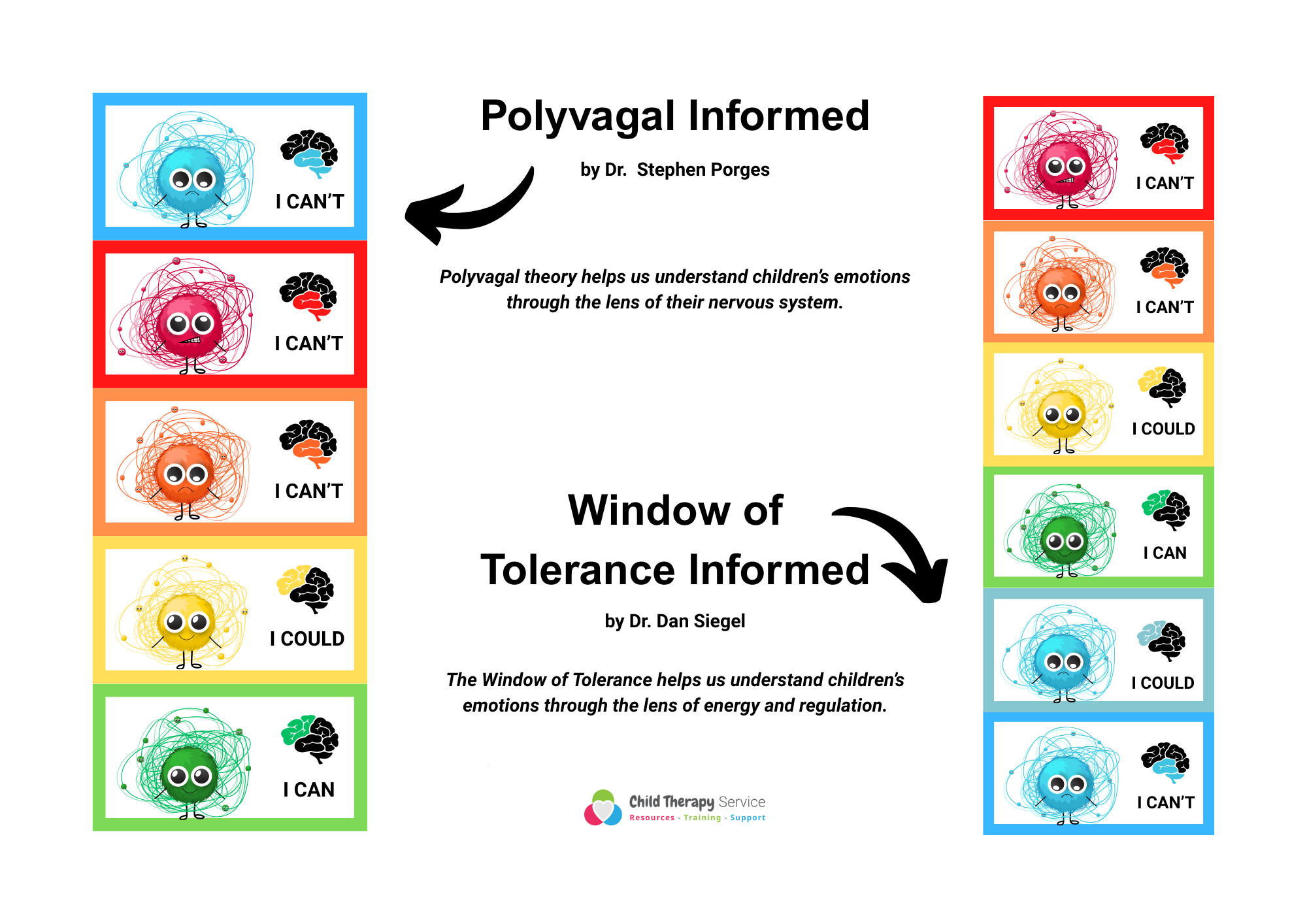
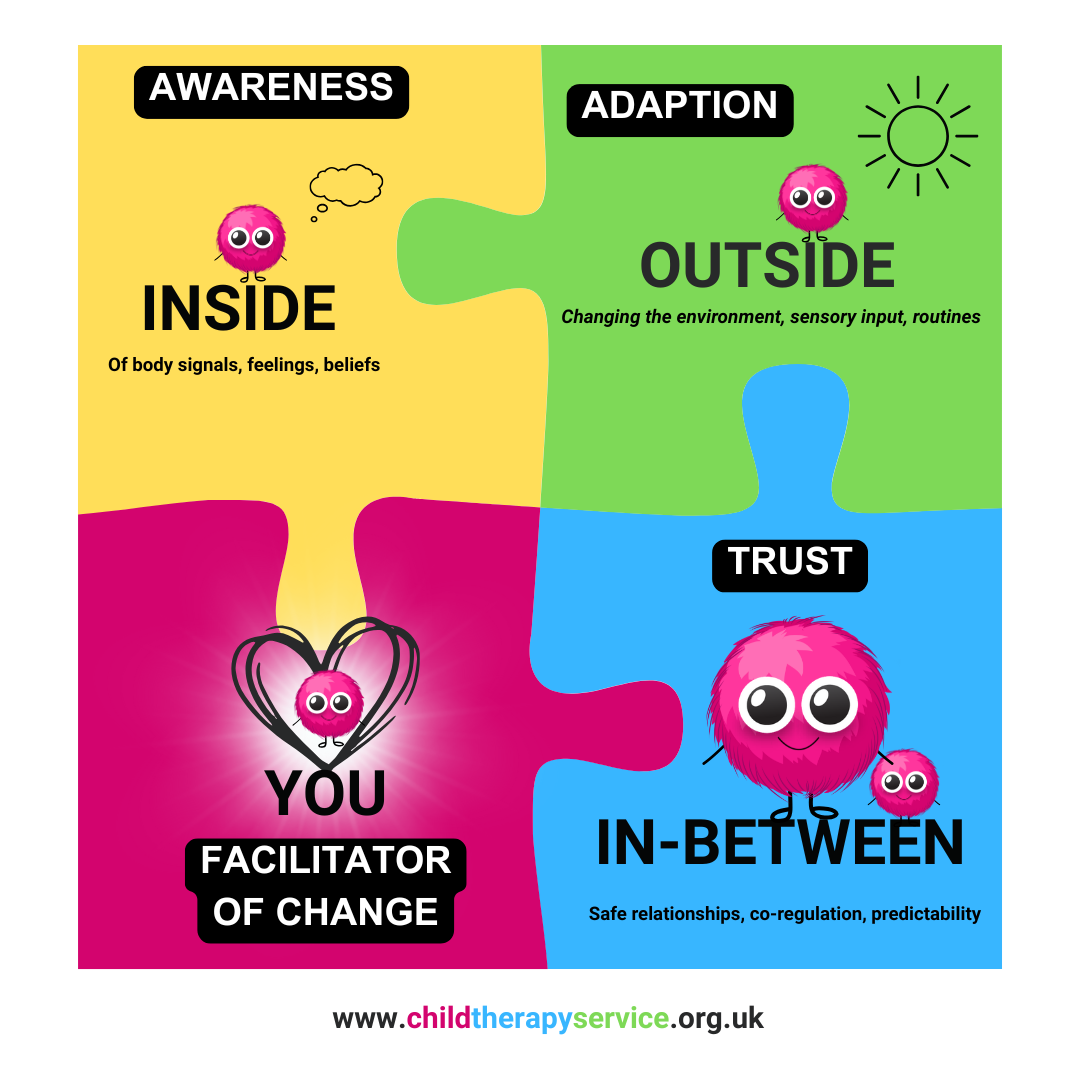
Once we know where the child is, we can put the right supports in place:
- Inside — what happens within the child’s body and mind (breath, sensations, beliefs).
- Outside — the environment and sensory world around them (noise, light, textures, routines, spaces).
- In-Between — relationships and co-regulation with others (connection, tone of voice, predictability, repair).
- You — the adult, whose regulation and presence are the foundation that makes all the other tools work.
What’s happening when Anxious about School
- The nervous system may be reading uncertainty as a potential threat, activating protective states (Orange – wobbly/uncertain or Red – angry/protective).
- Changes in environment, routine, sensory input, or social expectations can heighten this response.
- Physical signs may include shallow breathing, muscle tension, racing thoughts, or withdrawal.
- Energy battery impact: Starting the day in a high-alert state drains capacity for learning, flexibility, and social interaction.
The BOUNCE Approach®
🖤 B — Body and Nervous System (Inside Tool)
- Invite slow, rhythmic breathing (e.g., Balloon Breath, Box Breathing) to calm the heart rate and settle the body.
- Add gentle bilateral movement (shoulder rolls, “shake and settle”) to release tension and prepare for transition.
- Energy Battery Link: “This helps your battery feel more ready and steady for the day.”
❤️ O — Openness to Connection and Attachment (In-Between Tool)
- Keep the goodbye process predictable with a familiar ritual and/or safe carry item.
- Use warm, clear communication — tone, pacing, and facial expression all send cues of safety.
🧡 U — Understanding Sensory Differences (Outside Tool)
- Offer a choice from a sensory menu before leaving:
- Calming: weighted scarf, soft hoodie, noise-reducing headphones.
- Energising: upbeat music, stretch band, short bounce on a ball.
- Adapt the route or environment to reduce overwhelming sensory input where possible.
- Energy Battery Link: “Choose what helps your battery feel more charged or steady before school.”
💚 N — Navigating Emotions (Inside Tool)
- Name feelings using non-shaming parts language: “A part of you feels worried about…”
- Map the feeling on the colour system and notice where it shows up in the body.
- Offer a brief sensory or movement break before the next step.
💙 C — Connection to Self and Others (In-Between Tool)
- Identify one positive, safe, or predictable thing about the day ahead.
- If unsure, remind them of consistent supports (“Your teacher will meet you at the door”).
💜 E — Esteem and Identity (Inside Tool)
- Affirm self-trust: “You have already handled new days before — your skills are still with you.”
- Acknowledge bravery in taking even small steps forward.
Adult Focus:
- Prioritise co-regulation and safety cues over speed or compliance.
- Gradually build familiarity with the new situation through short, supported exposures.
- Ensure communication is clear, concrete, and supported visually if needed.
Next Steps
Explore further learning: Take our Reducing Anxiety course, which offers step-by-step strategies for helping children manage anxious thoughts and transitions. (Free to members)
Become a Member: Access 50+ practical trainings, printable resources, and member-exclusive interventions designed to support social, emotional, and mental health in children.