

Supporting a Child’s Transition into a New School
Starting a new school is a huge change. For many children – particularly those who are neurodivergent, have sensory sensitivities, or find emotional regulation challenging – it can be exhausting. New routines, environments, and people can push the nervous system into high alert, making even simple tasks feel overwhelming.
When home and school work together, children are more likely to feel safe, understood, and ready to learn. Using the BOUNCE™ approach, here’s how both parents and staff can support this transition.
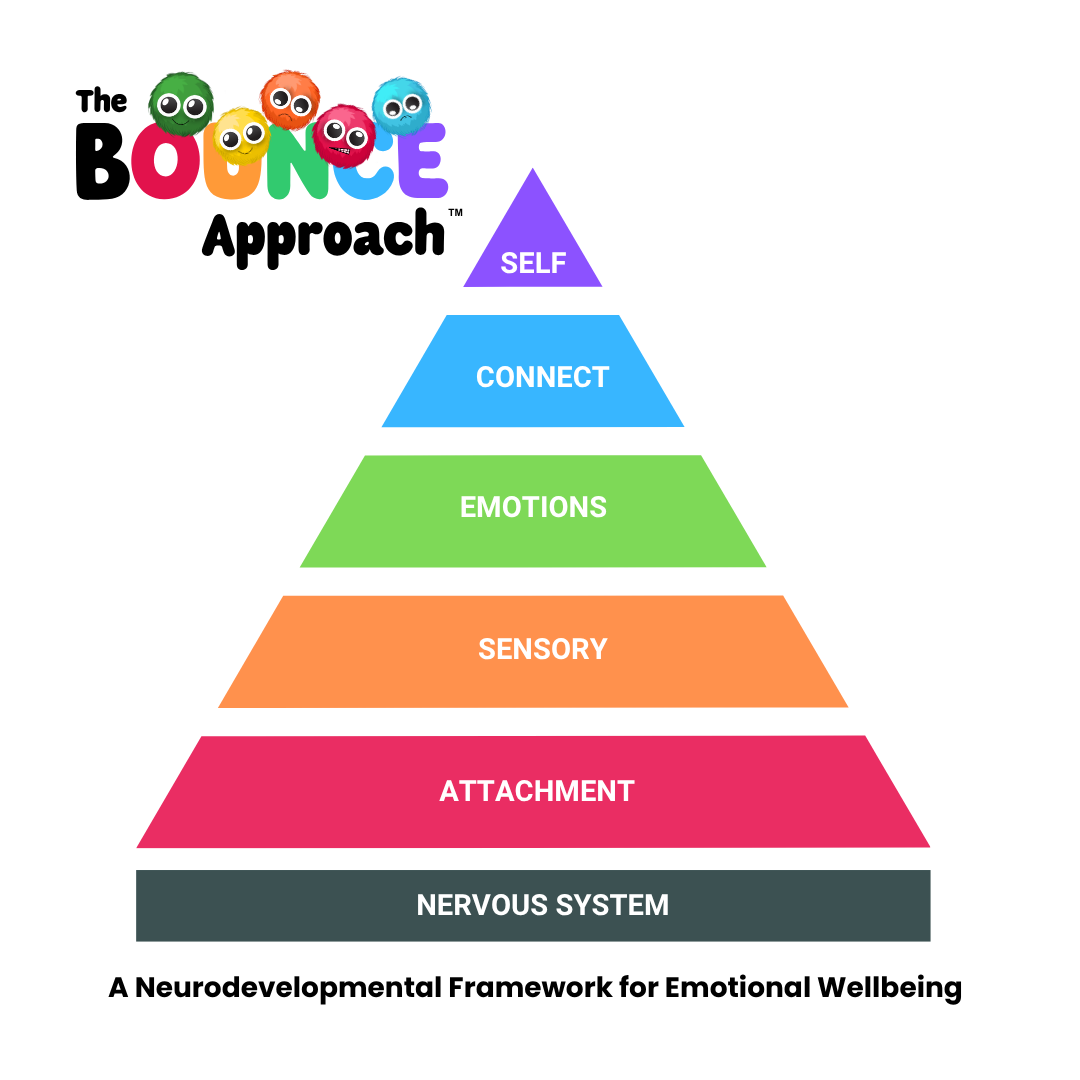
B – Body and Nervous System
A regulated body is the foundation for a regulated mind.
- At home: Reduce morning demands in the early weeks. Parents can help by preparing clothes, assisting with dressing, and organising the school bag. Use calm, minimal instructions rather than lots of questions. Offer familiar breakfasts and dinners for comfort.
- At school: Staff can support by allowing the child time to settle on arrival and recognising signs of physical overwhelm. A calm start to the day – perhaps with a quiet activity – can make a big difference.
O – Openness to Connection
Strong relationships are at the heart of a smooth transition.
- At home: Parents can share information about their child’s interests, strengths, sensory needs, and preferred ways to connect.
- At school: Assign a key adult who can act as a safe base. Consider a buddy system with a peer, or a mentor from an older year group, to help the child navigate social situations and the school environment. Daily micro-check-ins – a greeting at the door, a lunchtime chat – reinforce belonging.
U – Understanding Sensory Needs
A new school environment can bring sensory challenges.
- At home: Parents can provide items for regulation – such as a a jumper with a familiar scent, or a lunchbox with safe, well-loved foods.
- At school: Staff can agree how these supports will be used. Adjustments might include early entry to busy areas, access to quiet spaces, or permission to wear base layers under uniforms to reduce discomfort.
N – Noticing Emotions
Transitions can bring a mix of excitement, anxiety, and fatigue.
- At home: Parents can give the child space after school without questioning, offering a snack and drink instead. Gentle conversations can happen later, during a shared activity.
- At school: Staff can recognise signs of overwhelm and have a plan for when the child needs space. This might include a visual “I need a break” card or whiteboard drawing if verbal communication is difficult.
C – Connection to Self and Others
Connection grows when the child’s communication style is understood.
- At home: Parents can explain if their child uses gestures, AAC, visuals, or needs extra processing time.
- At school: Staff can adapt accordingly —-using visual timetables, written instructions, or breaking tasks into smaller steps to support executive function needs. Low-pressure social opportunities, like clubs linked to interests, can encourage friendships.
E – Esteem and Self-Worth
- At home: Celebrate small wins and effort, not just outcomes.
- At school: Acknowledge progress, however small, and reinforce that the child’s worth isn’t tied to performance.
When home and school communicate openly, agree on strategies, and focus on safety, trust, and connection, children have the best chance to thrive – not just survive – in their new school environment.
Suggested Training
Transition into Secondary School
Review: “Some great ideas in here to support transition, I can say this as a parent of a child about to start secondary school and as a support worker in school” Jo
Alternatively, explore our Learning Portal to get access to 40+ Courses, Strategies, Tools and more – click here to learn more