Attendance, Waiting Lists and EHCP Growth
The BOUNCE Approach® — what it helps us notice about attendance, waiting lists, and EHCP growth
The Child Therapy Service works from a simple but often overlooked starting point: children do well when their nervous systems, environments, and relationships are supported first.
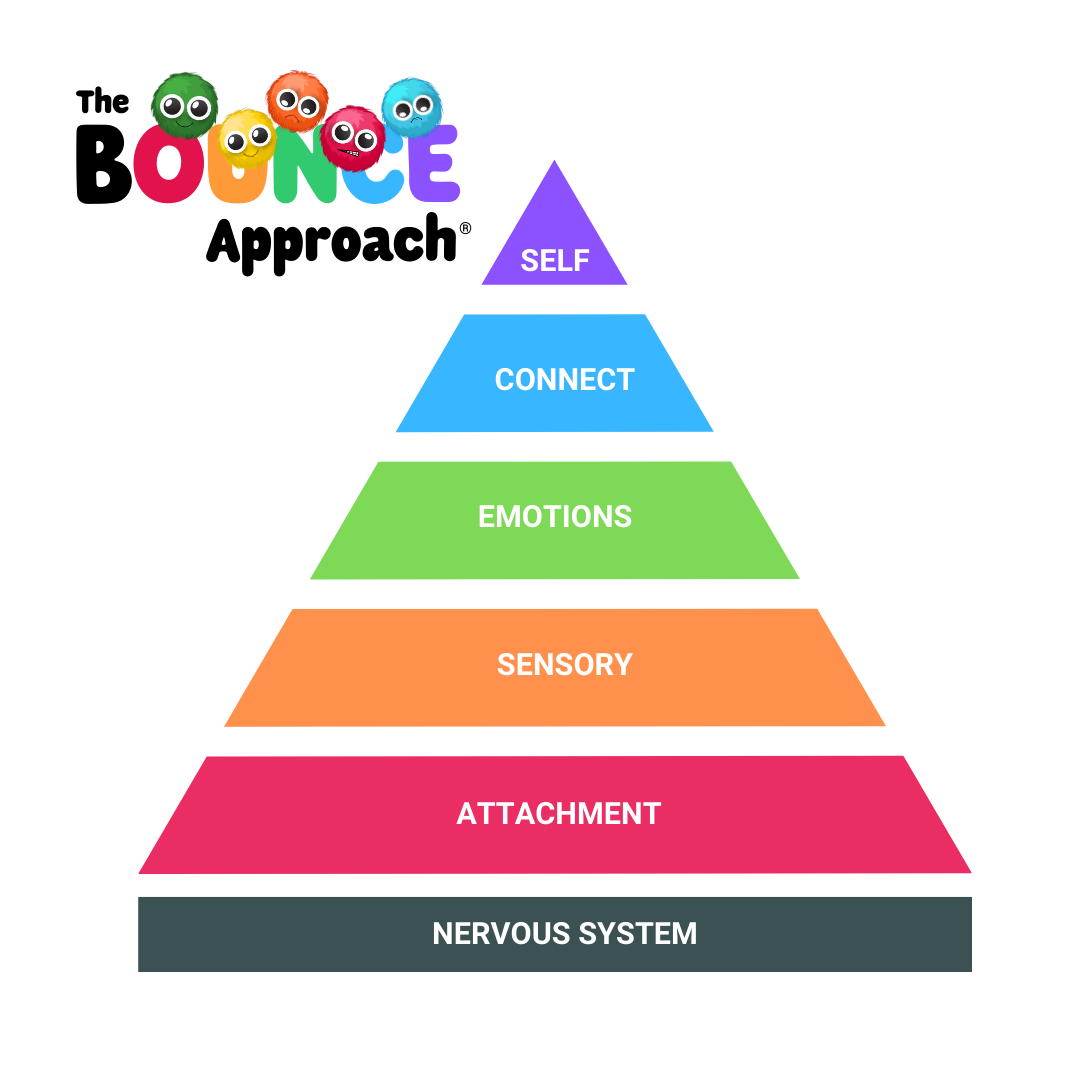
This understanding sits at the heart of The BOUNCE Approach® — a neurodevelopmental, regulation-first framework that helps adults make sense of behaviour, emotions, and attendance by looking beneath the surface, rather than reacting to what is most visible.
BOUNCE brings together six interconnected areas that build from the ground up:
- Body / Nervous System – how regulated and safe the body feels
- Openness to Attachment – trust, safety, and relational security
- Understanding Sensory Needs – how sensory experiences impact regulation and engagement
- Navigating Emotions – how feelings are processed and expressed
- Connection – communication, relationships, and belonging
- Esteem / Self – identity, confidence, and self-worth
These layers matter because when safety and regulation are missing, children struggle to learn, stay regulated, and attend consistently. BOUNCE does not ask children to cope first — it asks what conditions need to be in place for coping to be possible.
What BOUNCE helps us notice in the wider system
When this lens is applied beyond the individual child — to national patterns in attendance, assessment waiting lists, and EHCP growth — a quieter but consistent story emerges. These trends are often discussed separately, but together they point to issues of timing, capacity, and unmet need.
Attendance: a body-level signal, not a motivation issue
From a BOUNCE perspective, attendance difficulties are rarely about refusal. They are about capacity.
Children with emerging or unmet ADHD and autism needs often experience school as a place of sustained nervous system demand:
- continuous attention and executive load
- sensory environments that overwhelm
- emotional effort without adequate regulation support
When the body is overloaded, attendance tends to fray gradually — late starts, partial timetables, increasing absence. The nervous system moves into protection long before words, labels, or formal plans appear.
Attendance, in this sense, is communication.
ADHD and autism waiting lists: understanding delayed, not support
Current data shows the scale of unmet neurodevelopmental need:
- ~2.5 million people in England estimated to have ADHD
- ~741,000 children and young people (aged 5–24)
- Up to 549,000 people waiting for an ADHD assessment
- 227,000+ people waiting for an autism assessment
- 90% waiting longer than NICE-recommended timeframes
- Average autism waiting times now over 16 months
These delays matter — but through a BOUNCE lens, the greatest risk is not the absence of diagnosis. It is the absence of understanding and adaptation while children wait.
Good practice is not dependent on a label.
It is about putting supportive, regulation-first practice in place as standard.
Many of the adjustments that support children with ADHD or autism — predictable routines, sensory-aware environments, flexible expectations, co-regulation, and emotional safety — benefit all children. Waiting for diagnosis before acting means waiting while nervous systems remain under strain.
From this perspective, waiting lists delay certainty, not care.
Emotional load increases, esteem quietly erodes
As waiting continues without consistent support:
- anxiety and fear become more visible
- tolerance for demand reduces
- emotional responses intensify or collapse
Without early adaptation, Self–Esteem is affected. Children begin to internalise difficulty as personal failure rather than a mismatch between capacity and expectation.
By the time formal support arrives, the work is often no longer just about provision — it is also about repair.
EHCPs: containment when early support hasn’t arrived
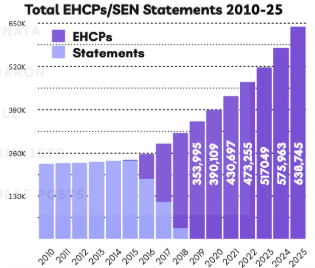
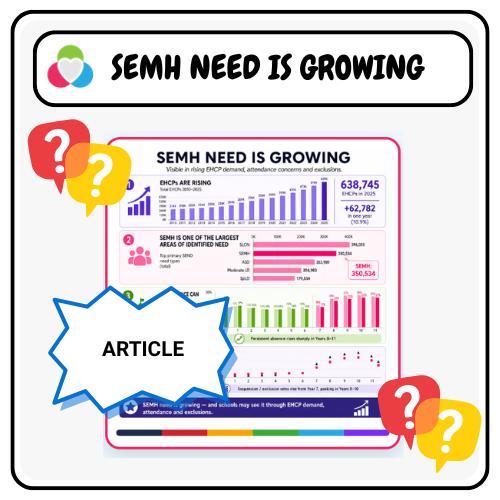
EHCP numbers have risen steadily over the past decade. Through a BOUNCE lens, this is not surprising.
EHCPs increasingly function as containers — holding children safely in education when:
- assessment pathways are delayed
- health input is unavailable
- informal adjustments are no longer sufficient
Rather than reflecting over-identification, EHCP growth reflects systems stepping in late, once pressure has already built.
Joining the dots differently
BOUNCE helps us see these patterns not as isolated crises, but as a sequence:
- Bodies under strain → attendance becomes fragile
- Understanding delayed → needs remain unmet
- Emotional load increases → regulation falters
- Systems escalate → EHCPs increase
This is not about blame. It is about timing.
A different question
Instead of asking:
- “Why aren’t they attending?”
- “Why are EHCP numbers rising?”
- “Why are waiting lists so long?”
The BOUNCE Approach invites a quieter, earlier curiosity:
- What would attendance look like if regulation came first?
- What if understanding did not depend on diagnosis?
- What if supportive practice was the norm, everywhere — including while children wait?
When we listen through this lens, attendance data, assessment backlogs, and EHCP growth stop being separate problems.
They become signals — asking us to build conditions that fit children before systems have to catch them when they fall.
Where this leads
If waiting lists delay understanding — and attendance, wellbeing, and confidence are affected now — then the question becomes: what can be put in place today?
The Learning Portal exists for this exact gap.
It supports families, professionals, and teams to:
- understand a child’s needs without waiting for a diagnosis
- apply regulation-first, neurodivergent-affirming practice as standard
- make consistent, practical changes that support attendance, wellbeing, and learning
Grounded in the BOUNCE Approach®, the Learning Portal brings together learning pathways, targeted CPD, and ready-to-use resources that help you move from noticing to doing — safely, thoughtfully, and without overwhelm.
Because children shouldn’t have to wait for support while systems catch up.
Sources
EHCP growth:
➡️ https://www.specialneedsjungle.com/ehcps-2025-show-22-rise-pupils-educated-elsewhere-schools-la-hall-shame/#infog
Autism assessment waiting times:
➡️ https://www.autism.org.uk/what-we-do/news/autism-assessment-waiting-times-11
ADHD assessment waiting lists:
➡️ https://adhduk.co.uk/nhs-adhd-assessments-waiting-lists-report/