When a child becomes so deeply absorbed in something that the rest of the world seems to disappear.
For many neurodivergent children and young people, hyperfocus is not simply “being distracted” or “obsessing over something.” Through the lens of the BOUNCE Approach®, hyperfocus is understood as a nervous-system-led state of deep attention that can feel calming, organising, emotionally safe, and regulating.
It is often misunderstood because adults only see the behaviour on the outside:
- difficulty transitioning
- not responding immediately
- becoming distressed when interrupted
- losing track of time
- talking intensely about one topic
- forgetting food, movement, or rest
But underneath that behaviour is often a brain and body that have finally found a sense of rhythm, predictability, regulation, or emotional safety.
Why Hyperfocus Happens
Many neurodivergent children experience what researchers describe as monotropic attention – a style of attention that naturally focuses deeply on one interest, activity, or experience at a time.
This is not laziness, defiance, manipulation, or intentional ignoring.
Often, the nervous system is organising itself around what feels:
- predictable
- interesting
- emotionally meaningful
- sensory regulating
- safe
- competent
- rewarding
For some children, deep focus helps reduce sensory overload. For others, it creates emotional recovery after masking, social exhaustion, anxiety, or overwhelm.
Sometimes hyperfocus is the place where the nervous system finally stops fighting quite so hard.
Hyperfocus and Flow States
For many neurodivergent children and young people, hyperfocus can also create what psychologists describe as a flow state – a deeply immersive experience where attention, creativity, motivation, and nervous system regulation align.
During flow, children may feel:
- fully absorbed
- emotionally calm
- highly creative
- capable and competent
- less aware of outside stress
- more connected to themselves
For children who regularly experience overwhelm, criticism, sensory chaos, or social exhaustion, these moments of deep engagement can feel profoundly regulating and restorative.
Sometimes hyperfocus is not the problem.
Sometimes it is the place where a child finally feels organised, safe, capable, and free enough to thrive.
That is why neurodivergent-affirming practice does not aim to remove deep interests or force constant switching.
Instead, we help children build flexibility, body awareness, and safer transitions while still protecting the joy, regulation, identity, and creativity that flow states can provide.
When Hyperfocus Becomes Difficult
The challenge is often not the focus itself.
The challenge usually appears during:
- unexpected interruption
- sudden transitions
- demand shifts
- sensory overload
- loss of predictability
- being forced to stop too quickly
- cognitive shifting between tasks
What adults may interpret as:
- “ignoring”
- “obsession”
- “refusal”
- “non-compliance”
- “rudeness”
may actually be a nervous system experiencing overwhelm, abrupt change, loss of regulation, or difficulty shifting attention safely.
The child is not necessarily refusing the adult.
A part of them may be trying to protect predictability, emotional safety, or nervous system regulation.
Understanding Hyperfocus Through the BOUNCE Lens
🖤 Body and Nervous System
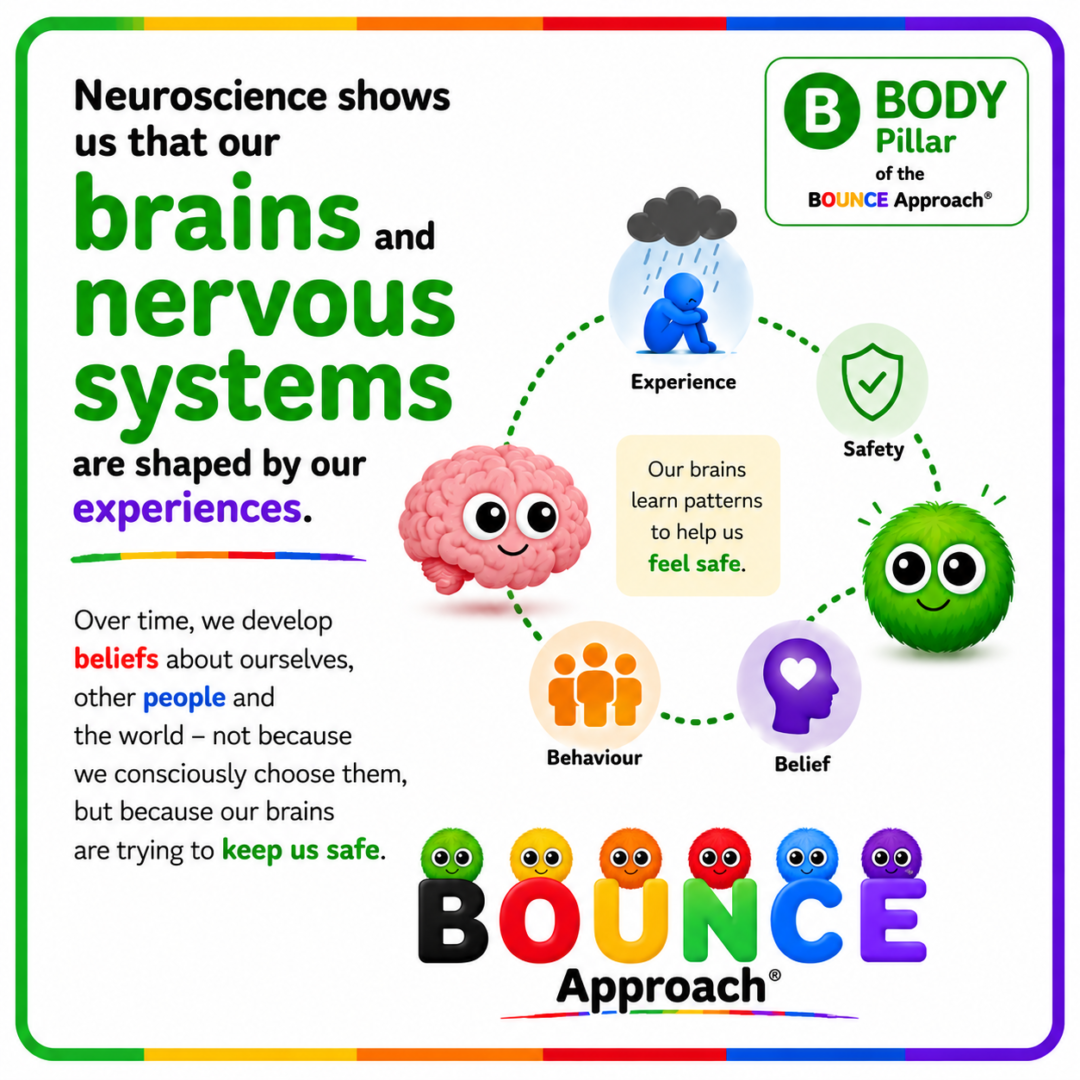
Transitions can trigger nervous system activation. Sudden interruption may feel physically jarring or dysregulating.
❤️ Openness to Trust and Attachment
Children transition more successfully when they feel emotionally safe, understood, and not shamed for struggling.
🧡 Understanding Sensory Differences
Deep focus can reduce sensory chaos and help organise an overwhelming environment.
💚 Navigating Emotions
Big emotional reactions during interruption are often protective nervous system responses rather than intentional overreactions.
💙 Communication Differences
Shutdown, silence, anger, or withdrawal may communicate overload, stress, or difficulty shifting attention safely.
💜 Esteem, Identity and Self
Special interests are often deeply connected to competence, confidence, joy, belonging, and identity.
What Helps?
The goal is not to “stop” hyperfocus.
The goal is to support flexibility, body awareness, regulation, and safer transitions without shame.
Helpful approaches may include:
- giving predictable transition warnings
- using visual timers or countdowns
- allowing pause points rather than abrupt stopping
- reducing unnecessary sensory input during transitions
- using collaborative, low-demand language
- protecting time for deep interests and recovery
- supporting hydration, movement, and body awareness during long periods of focus
- recognising intense interests as meaningful rather than “too much”
Declarative language can reduce nervous system threat:
“I wonder how much time your brain needs to finish this part.”
“Your body looks really focused right now.”
“Transitions can feel hard when something feels important.”
“Let’s find a safe stopping point together.”
One Thing to Remember
Hyperfocus is often a sign that a child’s nervous system has found something that feels safe, organising, meaningful, or regulating.
When we understand hyperfocus through a trauma-informed and neurodivergent-affirming lens, the question changes completely.
Not:
“How do we stop this?”
But:
“How do we support flexibility and transitions while still protecting the safety, regulation, creativity, and identity this focus provides?”
That shift changes everything.
Ready to Learn More?
Inside the Learning Portal, we explore:
- executive functioning
- nervous system regulation
- monotropism
- sensory processing
- neurodivergent-affirming practice
- emotional regulation through the BOUNCE® lens
Recommended training includes:
- Executive Functions
- Being Neurodivergent-Affirming
- Managing Demand Avoidance
- Emotional Regulation + BOUNCE®