BOUNCE Approach®TransitionsCPD CertifiedOn-DemandND-Affirming
Effective Transition into Secondary School
Explore evidence-informed strategies for supporting students through the move from primary to secondary school — reducing anxiety, preventing academic dips, and building a genuine sense of belonging.
Transition from primary to secondary school is one of the most significant changes in a young person’s life — and for children with SEND, SEMH needs, or additional vulnerabilities, the risks of getting it wrong are real. Effective transition strategies prevent academic dips, ease anxiety, and build a sense of belonging from the very start. Tailored support plans, early preparation, orientation sessions, and mentoring programmes make the difference between a child who arrives ready to engage and one who arrives already overwhelmed.
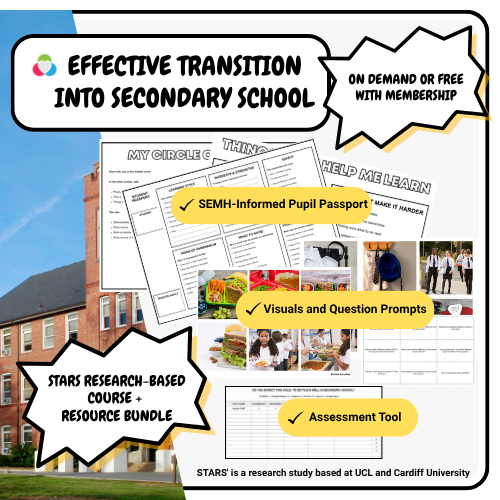
This training explores each of these approaches in practical detail, with a focus on involving students and families throughout the process. It includes the SEMH-Informed Student Passport Pack with guided tutorial — a practical tool for capturing and communicating individual needs across the transition. Suitable for primary and secondary school staff, SENCOs, pastoral leads, and anyone responsible for planning and supporting transition provision.
Also included
Three bonus resources to deepen your practice.
🔄 Transition Snapshot Access
A structured snapshot to identify where a child is likely to struggle during transition — so you can put the right support in place before the risk point arrives.
📈 Progress Overview Access
Track entry to exit progress and evidence what has changed across the review period — giving you a clear picture of impact over time.
🧠 Introduction to the BOUNCE Approach® Webinar
Understand the nervous system foundations behind regulation, emotional expression, and connection — so you can apply them with confidence in your sessions.
Objectives
Learning Objectives
By the end of this training, you will be able to:
1
Explore the key findings of the STARS Report
Understand what the STARS Report tells us about transition experiences for children and young people — and what its findings mean for practice in schools and support settings.
2
Review the key findings of the UCL Report
Identify what the UCL research highlights about transition — including the factors that increase risk and the conditions that support positive outcomes for children and young people.
3
Highlight the key findings of the Education Endowment Foundation Study
Understand what the EEF evidence base tells us about effective transition support — and how its findings can inform decisions about provision, resource, and intervention in your setting.
4
Identify the key findings of the Children’s Commissioner’s Study
Explore what children and young people themselves report about transition — and what the Children’s Commissioner’s research highlights as the most significant gaps in current support.
5
Identify commonalities and ideas for successful transition
Draw together the themes across all four studies to identify what consistently makes transition work — and leave with practical ideas grounded in the evidence for what successful transition actually looks like.
Resources
What’s Included
Three practical resources to support children through transition with structure and confidence.
1
Visual Prompts and Question Cards — Secondary School Transition
Ready-to-use visual prompts and question cards designed specifically for secondary school transition — supporting children in exploring their thoughts, worries, and hopes about the move ahead.
2
All About Me
A child-centred profile tool to capture strengths, needs, preferences, and important information — helping receiving schools and settings understand the whole child from day one.
3
Assessment for High Risk
A structured assessment tool for identifying children at highest risk during transition — so you can prioritise targeted support early and put the right provision in place before difficulties escalate.