

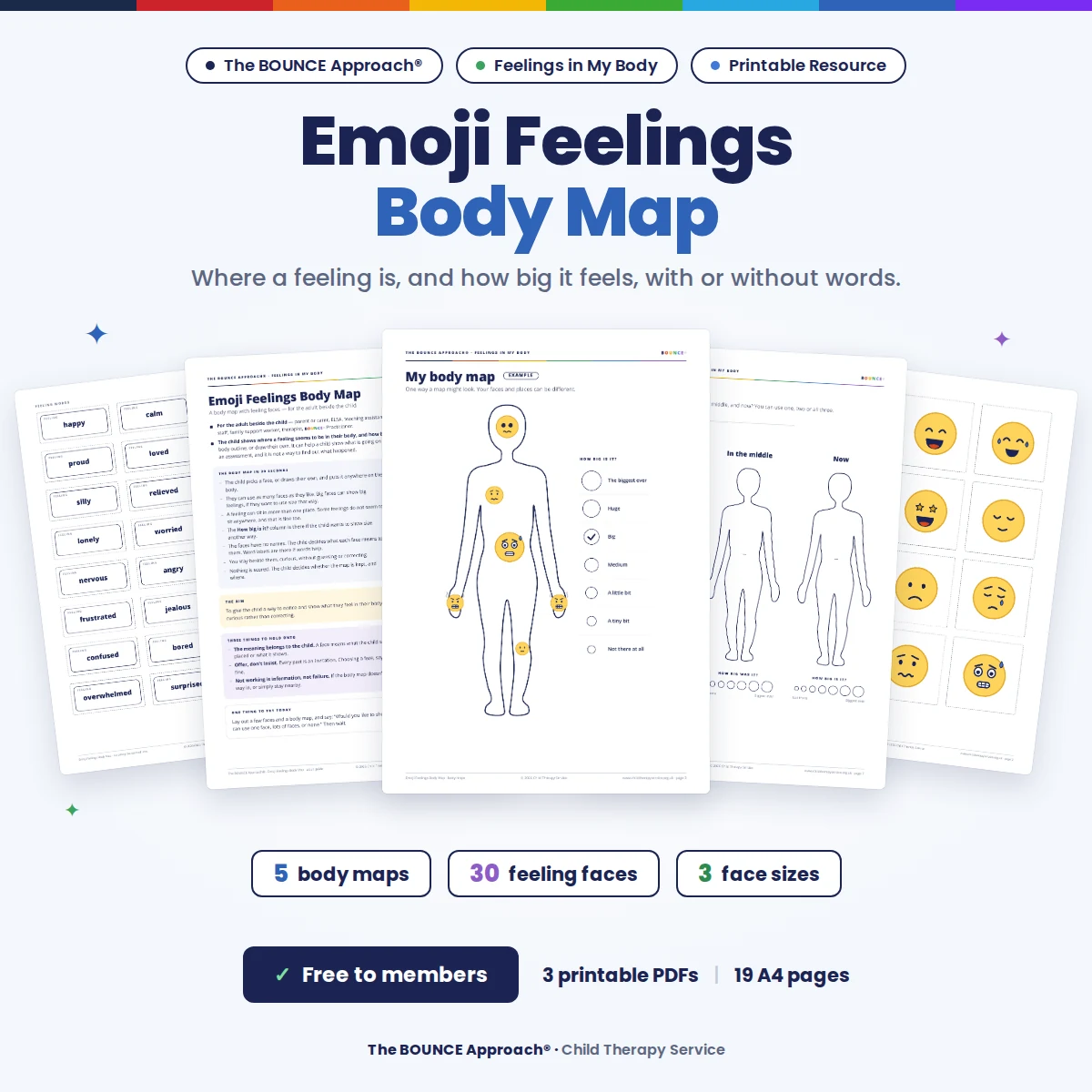
Emoji Feelings Body Map
Feeling faces to place on a body outline, so a child can show where a feeling is and how big it feels, without needing many words.
Free for members. Membership includes every resource in the shop.
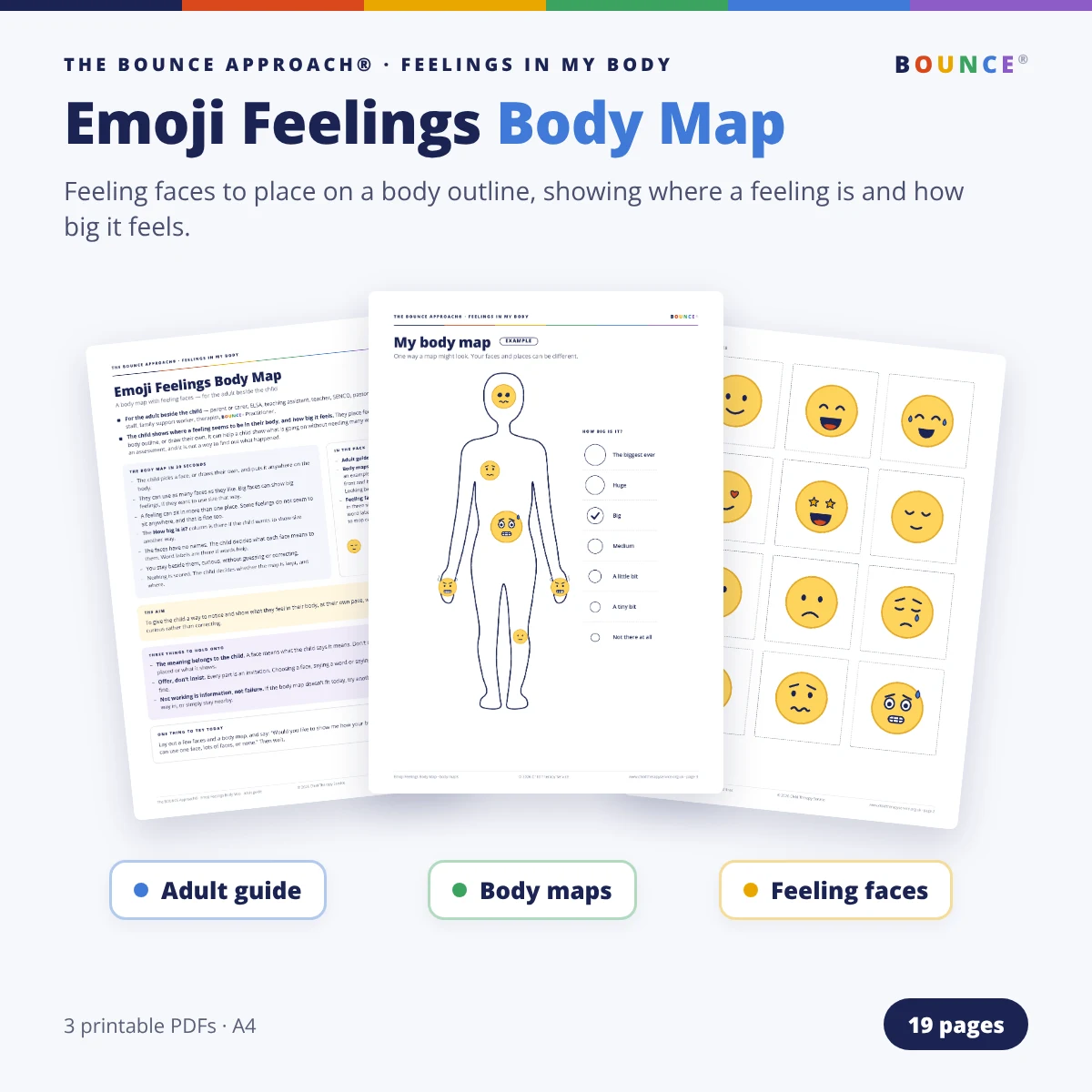
What it is
The child picks a face, or draws their own, and puts it anywhere on the body. They can use as many faces as they like. It is not an assessment, and it is not a way to find out what happened.
- For parents, carers and anyone working with children
- Faces with no names, so the child decides what each one means
- White body outlines, so the child chooses any skin tone or colour
- A How big is it? column, so any feeling can be sized
- An I want to stop card, so the child can stop at any time
Three things to hold onto
What’s in the pack
Three printable PDFs. Print, cut out, laminate and use again and again.
-
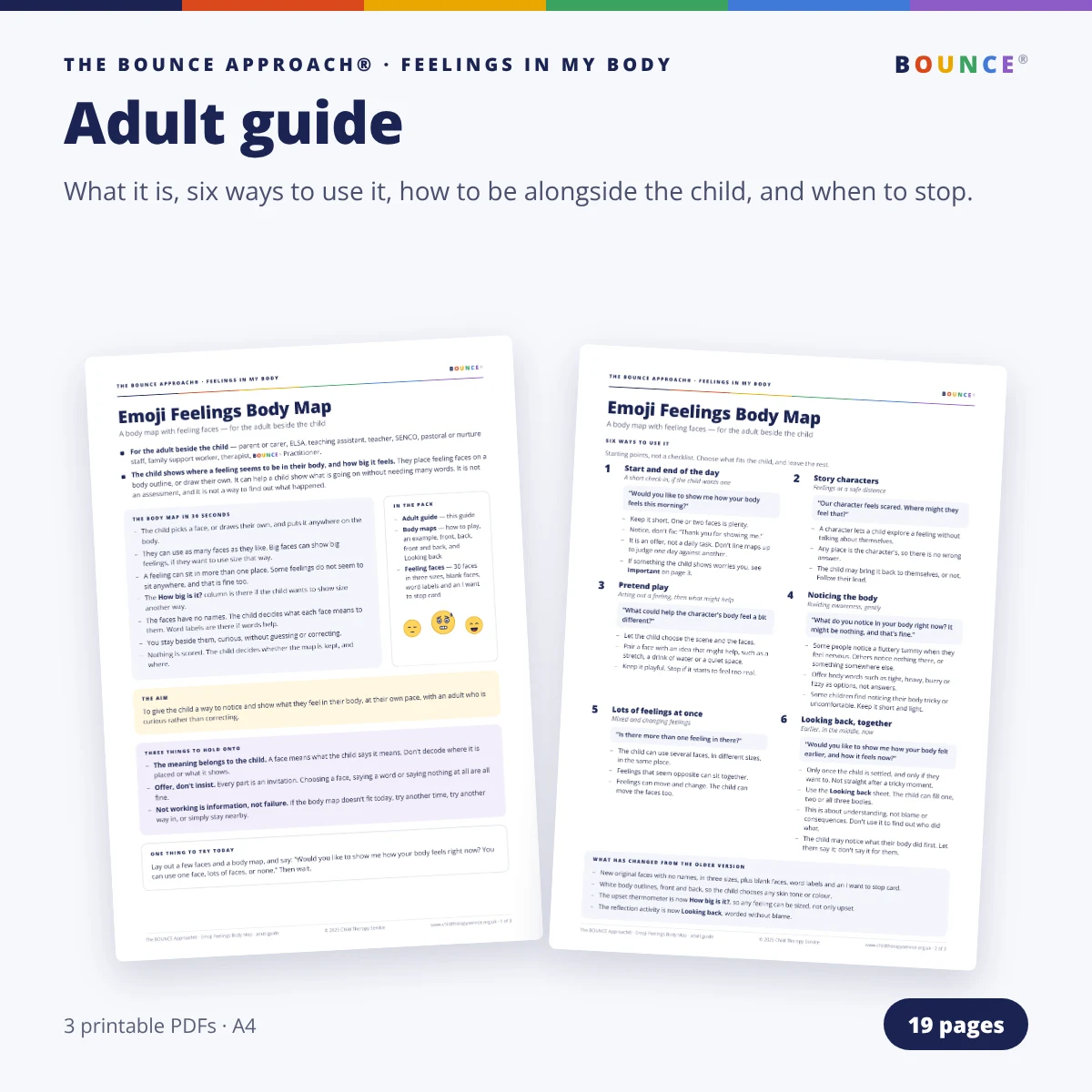 Adult guide · 3 pagesAdult guideWhat it is, six ways to use it, how to be alongside the child, and when to stop
-
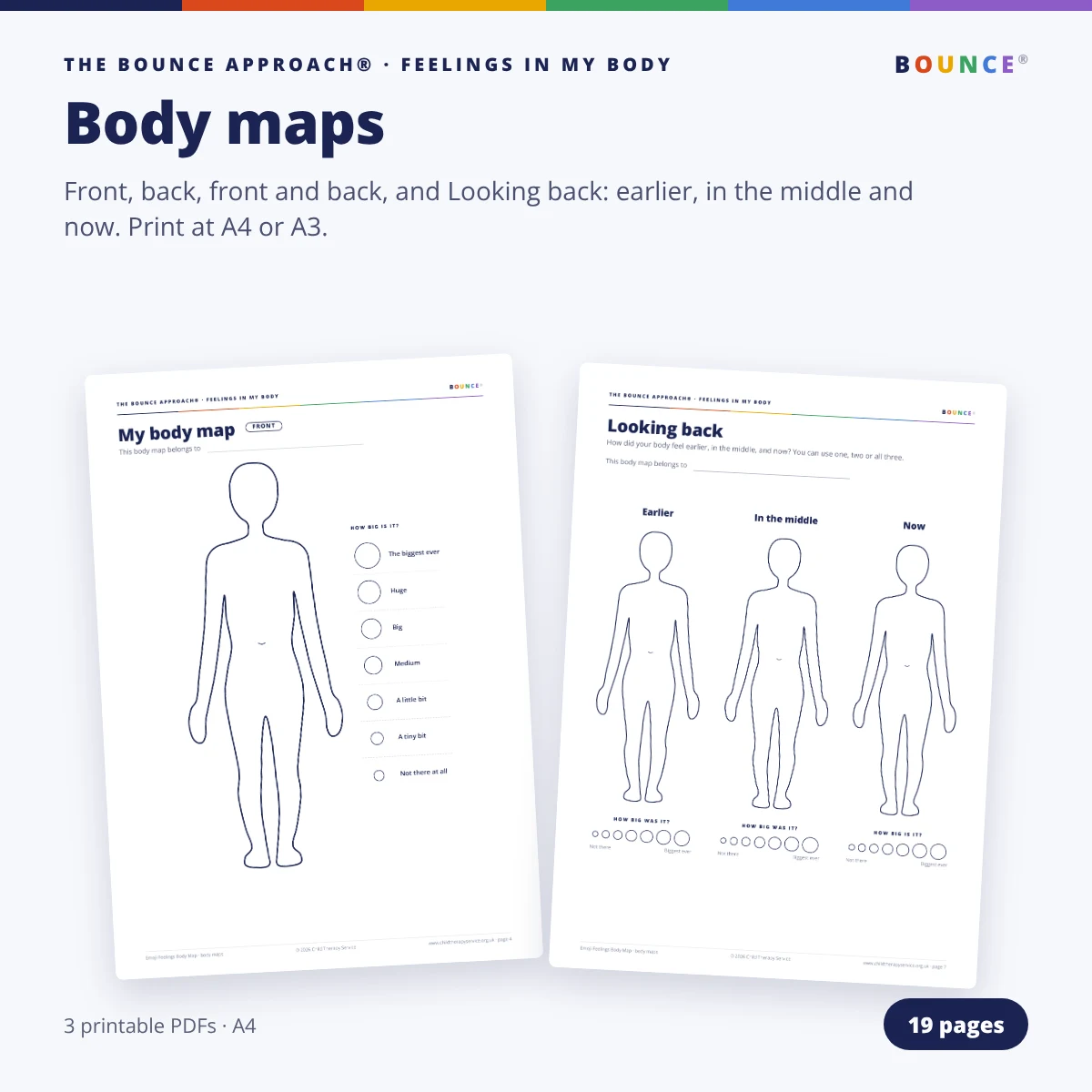 Body maps · 7 pagesBody mapsHow to play, an example, and front, back, front and back, and Looking back. Print at A4 or A3
-
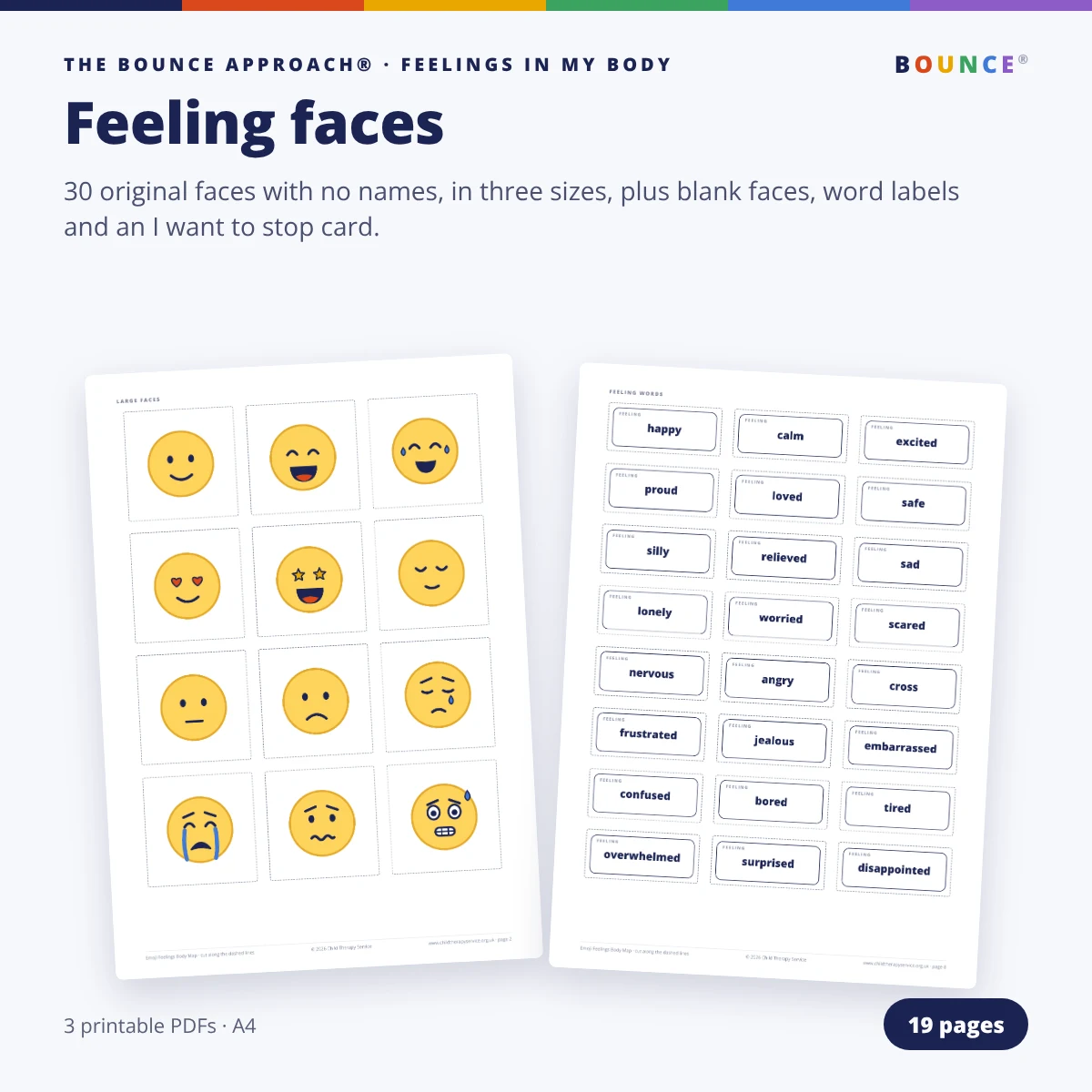 Feeling faces · 9 pagesFeeling faces30 original faces in three sizes, blank faces, feeling and body word labels, and an I want to stop card
Six ways to use it
Starting points, not a checklist. Choose what fits the child, and leave the rest.
- Start and end of the dayA short check-in, if the child wants one
Would you like to show me how your body feels this morning?
- Story charactersFeelings at a safe distance
Our character feels scared. Where might they feel that?
- Pretend playActing out a feeling, then what might help
What could help the character’s body feel a bit different?
- Noticing the bodyBuilding awareness, gently
What do you notice in your body right now? It might be nothing, and that’s fine.
- Lots of feelings at onceMixed and changing feelings
Is there more than one feeling in there?
- Looking back, togetherEarlier, in the middle, now
Would you like to show me how your body felt earlier, and how it feels now?
Being alongside the child
You stay beside them, curious, without guessing or correcting. Nothing is scored, and the child decides whether the map is kept, and where.
You might say
- “Where would you like to put it?”
- “Is it big or small today?”
- “Would a face of your own fit better?”
- “Does this feel finished for today?”
When to stop
- The child says or shows they want to stop, or shows the I want to stop card.
- The child seems more unsettled the longer it goes on.
- The child begins to share something that worries you.
- You notice you are guiding the answers.
The body map supports a conversation. It is not an assessment, and what the child makes is not evidence. If a child says or clearly shows something that worries you, follow your setting’s safeguarding procedures straight away.
Making it up
- Print the maps at A4, or choose A3 for a bigger map
- Colour or black and white both work
- Laminate, and use reusable adhesive so faces can move
- Print extra small faces to use the same face twice
Many people link feelings with places in the body, but maps vary a lot from person to person. Use the body map to wonder together, not to check against a pattern.
Need more than one? Membership is £319 a year.
It includes every intervention in the shop, every resource, and everything added through the year.