One neurodivergent-affirming framework. Every EHCP strand.
The picture in schools has shifted. More children are on the pathway to diagnosis. More are on SEMH support plans while they wait – sometimes for years. More are reaching statutory assessment with needs that are genuinely complex, genuinely interconnected, and genuinely difficult to meet within what a school can ordinarily provide.
And the EHCPs that follow are demanding more specific provision, more evidence of impact, and more clarity about what is being done and whether it is working.
SENCOs are navigating all of this with the same hours and the same budget. And often with a provision landscape that is fragmented – different programmes, different frameworks, different people carrying different pieces of knowledge about the same child.
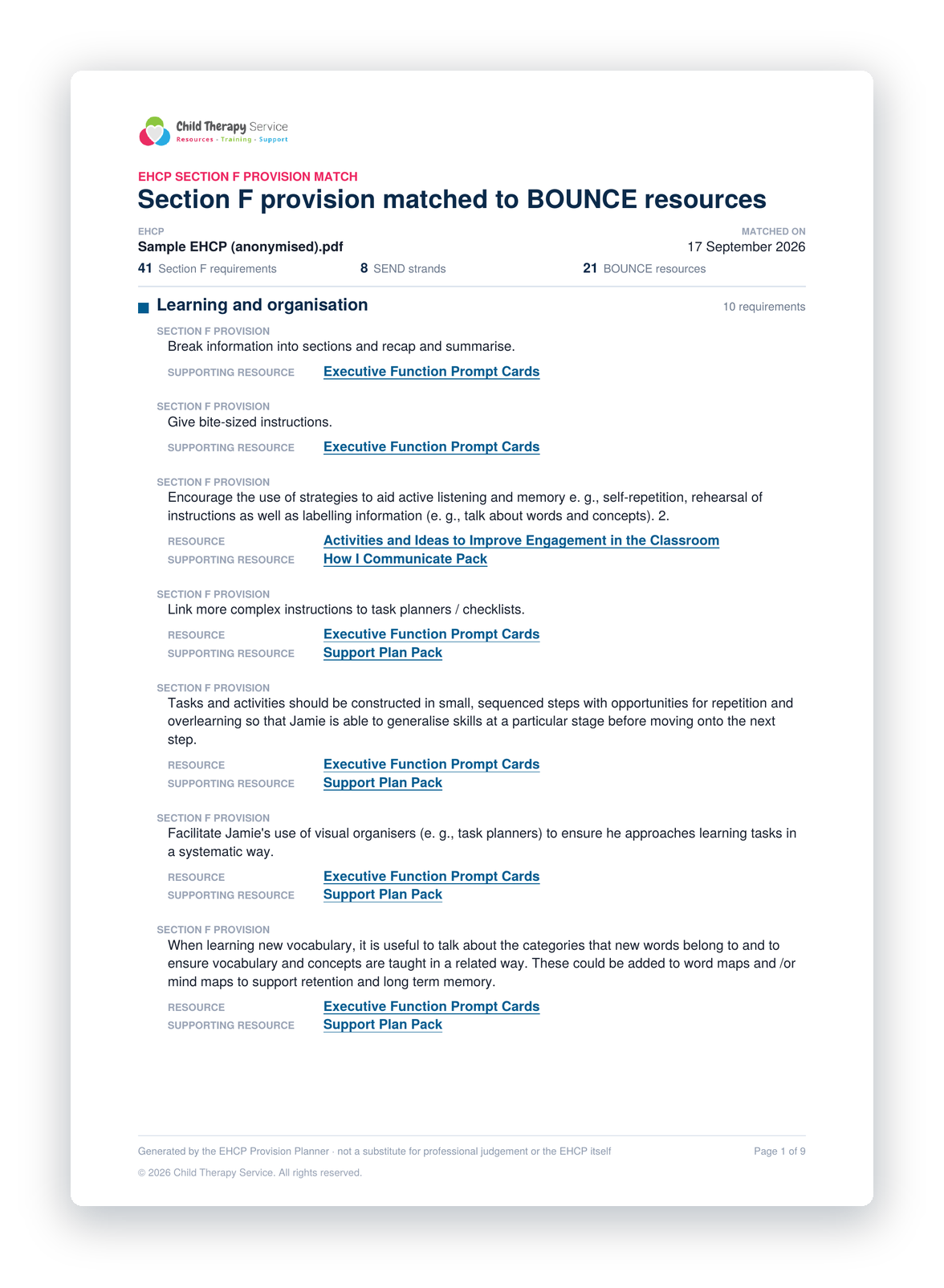
The BOUNCE Approach® offers something different. A single, coherent, neurodivergent-affirming SEMH framework that addresses the barriers to inclusion and progress children with complex needs face every day – and an EHCP Provision Planning Tool that maps that provision directly to the four strands of Section F.
Being a SENCO often feels like spinning plates.
One email about a new referral. A phone call about a child at risk of exclusion. Three teachers asking for strategies. And the never-ending Section F updates.
Most SENCOs already know their pupils well. You can list their strengths, triggers, and barriers to learning without looking at a file. But when it comes to provision planning, you hit a familiar wall:
How do I translate what I see into a measurable intervention? Which provision belongs under which EHCP strand? How do I word outcomes so they are specific, achievable, and defensible if challenged? And how do I do this not just once, but across a whole caseload of children – with staff expecting direction and parents needing reassurance?
That is the pressure point the EHCP Provision Planning Tool was built to solve.
The problem with Section F
Section F is often where SENCOs feel most exposed.
You are expected to map needs to provision with precision, show how provision will meet outcomes, use consistent evidence-based language, and make it all realistic enough for teachers and support staff to actually deliver.
Too often, Section F ends up as a patchwork of copied wording, good intentions, and guesswork. Plans that look fine on paper but do not always translate into practice.
The challenge is particularly acute for children with neurodivergent profiles, trauma histories, or complex presentations that span multiple strands. For these children, provision that addresses surface behaviour without understanding what is driving it will not enable the progress the EHCP is aiming for.
Why we built the EHCP Provision Planning Tool
We wanted to take the guesswork out of provision mapping – and help SENCOs feel confident that the provision they are putting in place is actually addressing the barriers that matter.
The EHCP Provision Planning Tool links the four main EHCP strands – Communication and Interaction, Cognition and Learning, SEMH, and Sensory and Physical – directly to practical, neurodivergent-affirming interventions already inside the Learning Portal.
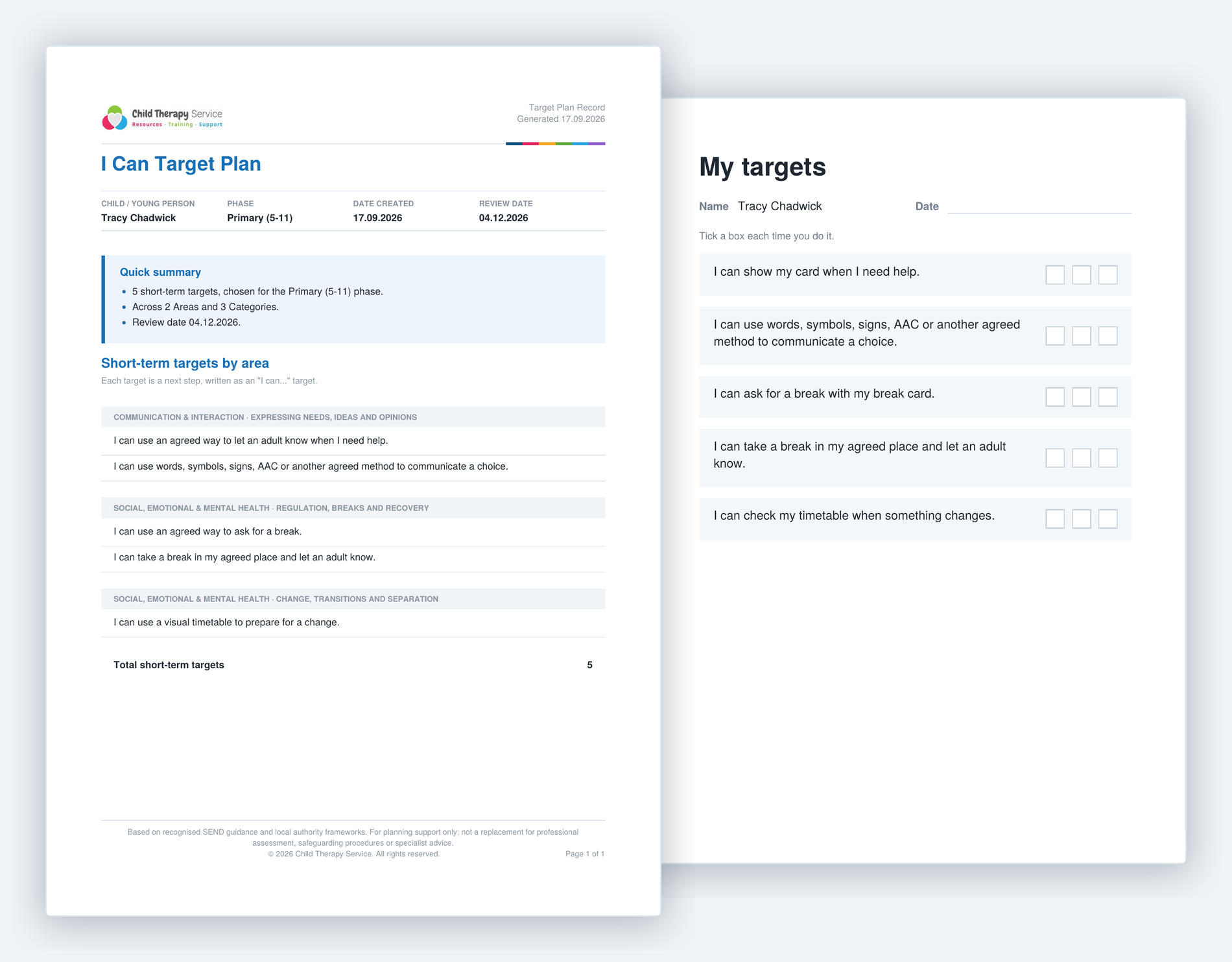
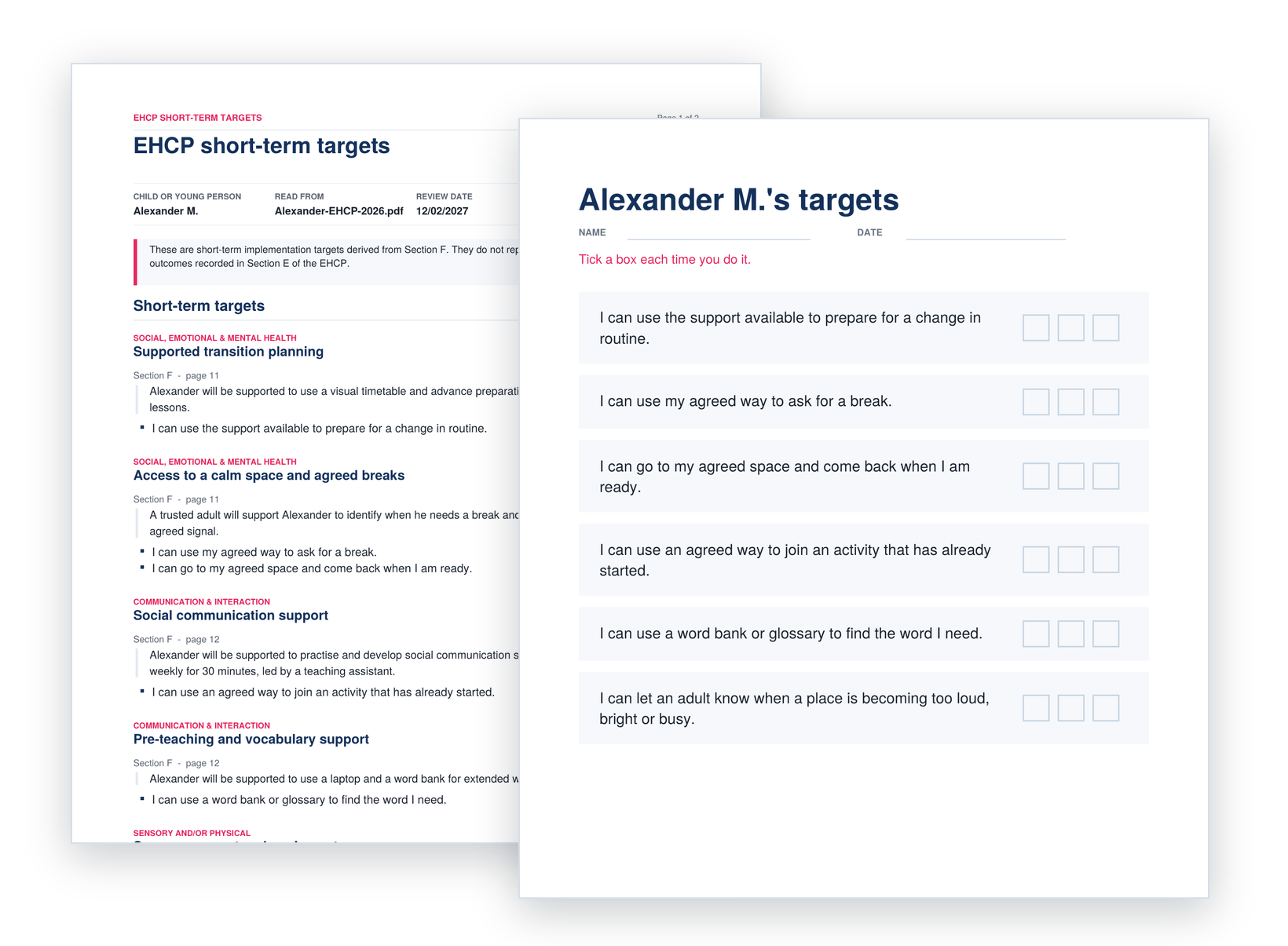
Each intervention comes with an assessment tool. This means you can measure progress clearly over time, generate evidence of impact, and – if progress stalls – stop early and select another intervention from the list rather than persisting with something that is not working.
This gives you a built-in cycle: identify need, introduce provision, review impact, adapt. Making your Section F not just compliant, but demonstrably effective.
Interventions mapped to EHCP strands
Communication and Interaction
For neurodivergent children especially, communication differences are frequently central to what makes school hard – not because they cannot communicate, but because the way they communicate is not always understood or accommodated. Provision in this strand should address those differences, not attempt to correct them.
- LEGO®-based Therapy
- Lego Feelings Intervention
- Running a Comic Strip Intervention
- Theory of Mind Intervention
- Running Solution Circles
- Supporting Autistic Students in the Classroom
- Using Declarative Language
- How I Communicate Pack
- Pupil Voice
The SEMH-Informed Student Passport creates a structured, shareable record of how a child communicates, what helps, and what makes communication harder – giving every adult around that child the information they need.
Cognition and Learning
For children with complex SEMH needs, the barrier to learning is rarely cognitive capacity. It is access. A child whose nervous system is in a state of activation or shutdown cannot learn – not because they lack ability, but because the regulatory conditions for learning are not yet in place. Provision in this strand must address those regulatory foundations, not only the learning targets that sit above them.
- Running SEMH Sensory Circuits
- Interoception in the Classroom
- A Somatic Toolbox
- Expanding the Window of Tolerance
- Welcome to The Optimal Zone
- BOUNCE Lesson Plan Curriculum
- Body Scans – Physical Sensations
- Mindful Awareness Interventions
- Executive Functions and Supporting Students with Executive Function Difficulties
- Drawing Feelings Intervention
- Supporting Students with Different Behaviour Between Home and School
The BOUNCE Assessment Tracker documents regulatory baseline functioning and tracks progress over time – showing whether the regulatory conditions for learning are improving.
Social, Emotional and Mental Health
This is the strand most directly addressed by the BOUNCE framework. For children with complex needs, provision here must go deeper than standard emotional literacy activities. It must address nervous system regulation, relational safety, and – particularly for neurodivergent children – identity.
A child who has experienced relational trauma does not build trust quickly. A child who cannot identify their own emotional states cannot use regulation strategies that depend on that awareness. A child whose identity has been shaped by years of deficit framing cannot build self-esteem on demand. Provision must meet children where they actually are.
- Running Nurture-Informed Groups
- Understanding and Exploring PACE
- Being Trauma Informed
- Running a Tree of Life Intervention
- A Parts Approach
- Emotionally-Based School Avoidance
- Expanding the Window of Tolerance
- Emotional Regulation and BOUNCE
- De-escalation through Co-regulation
- Reducing Anxiety in Children
- Managing Demand Avoidance
- Drumming for Regulation
- Running Sand-based Interventions
- Running a Play-doh Feelings Session
- Grounding Techniques
- Exploring Mindful Awareness Interventions
- Creating a Neuroprofile
- A Part of Me Feels
- Inspired by LEGO: Belief and Cognitive Distortions Bundle
For measurement, the Stirling Children’s Wellbeing Scale, Positive and Negative Affect Schedule, Rosenberg Self-Esteem Scale, and SUD Scale Assessment Form provide validated outcome measures that quantify social and emotional functioning at baseline and over time.
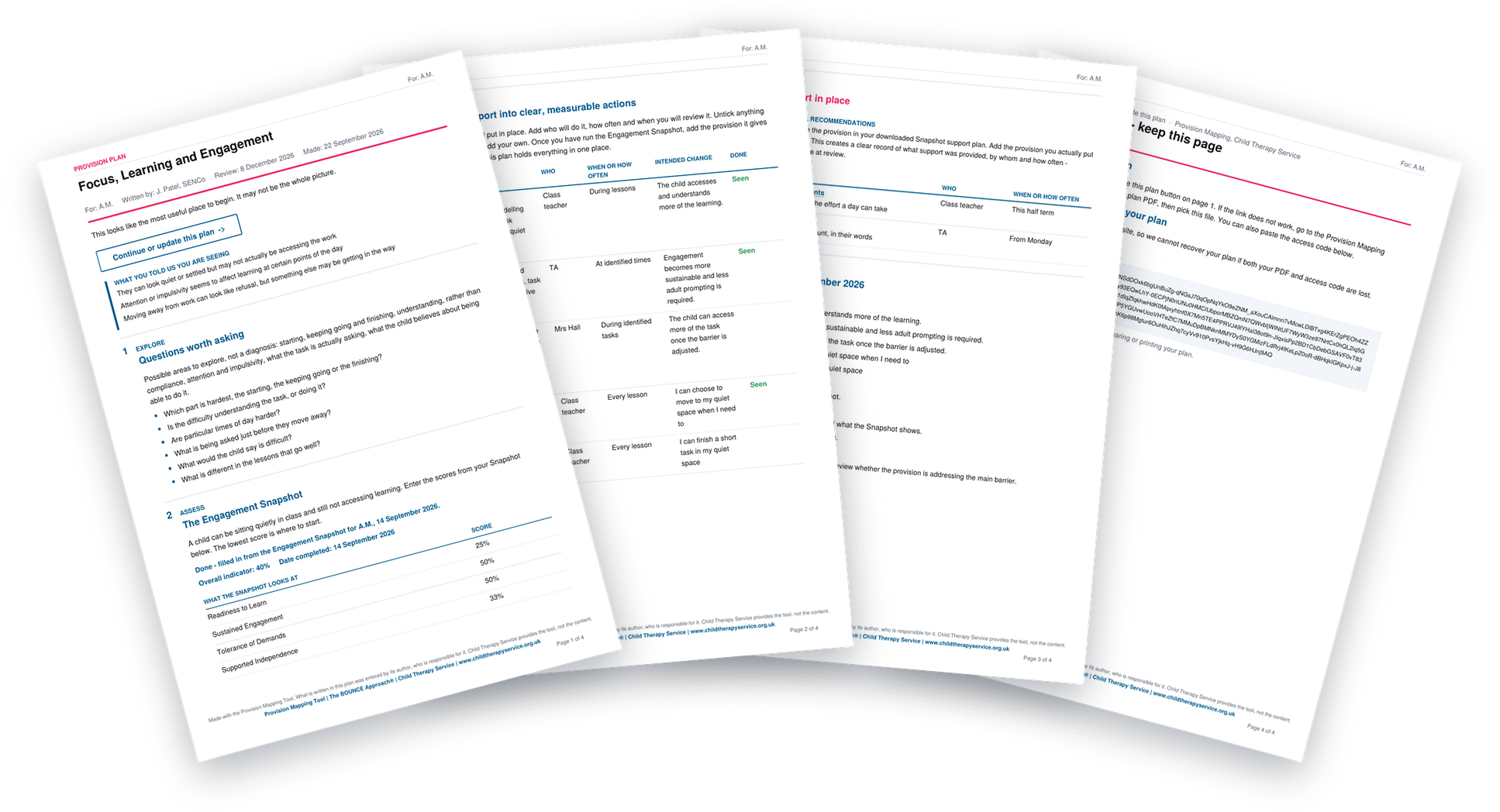
The Snapshots tool is the practical starting point – a two-minute structured baseline that identifies current risk of social and emotional escalation, generates a targeted support plan, and triggers a review cycle two weeks later. For children on support plans awaiting EHCP assessment, Snapshots creates a documented evidence trail of need and provision. For children already with EHCPs, it evidences whether provision is reducing risk and supporting progress.
Sensory and Physical
Sensory processing differences are significantly more common among children with complex SEMH needs than is widely recognised – particularly among autistic children, those with ADHD, and children who have experienced developmental trauma. Unmet sensory needs drive behaviour that looks like emotional dysregulation, social difficulty, and learning avoidance. Until those needs are addressed, other provision cannot do what it is designed to do.
- Sensory Differences – Assessment of Need
- Sensory Differences Activity Pack
- Interoception in the Classroom
- Running SEMH Sensory Circuits
- Sensory Story Massage
- Creating a Multi-Sensory Regulation Toolkit
- The Tactile Defensiveness Project
- Somatic Exercises
- Emotional Overwhelm due to Sensory Overload
The Sensory Differences – Assessment of Need tool provides a structured assessment of a child’s sensory profile – generating the specific, evidenced picture of sensory processing that is rarely present in EHCPs but often essential for understanding what a child needs to access school safely and comfortably.
Independence and Preparing for Adulthood
- Running Solution Circles
- Running a Tree of Life Intervention
- A Parts Approach
- Supporting Students with Different Behaviour Between Home and School
Staff Training and Whole-School Development
Because the tool draws on the BOUNCE Approach®, many of the interventions and CPD courses strengthen whole-school practice at the same time. While you are meeting one child’s need in Section F, you are also equipping your staff team with strategies they can use more widely.
- Welcome to The Optimal Zone
- BOUNCE @ School
- BOUNCE Practitioner Course
- Being Trauma Informed
- Understanding and Exploring PACE
- Being Neurodivergent Affirming
- Supporting Autistic Students in the Classroom
- Supporting Students with Executive Function Difficulties
- Understanding and Supporting a Child with Tourette Syndrome
How it works in practice
Imagine this. You are working on a Year 5 EHCP review. The child is bright but struggles with attention and transitions – restless during lessons, easily distracted, and resistant when it is time to move from one task to another.
With the tool, you select Sensory and Physical, choose attention, focus, and managing transitions, and explore the suggested interventions. You find Running SEMH Sensory Circuits, with a structured outcome: the child will complete movement routines to prepare their nervous system for focus and learning. You have the assessment tool to track whether it is working. If it is not, you have clear evidence to stop and try another option.
That is the cycle the tool is built around. Identify need. Introduce provision. Review impact. Adapt.
Why this makes a difference
SENCOs who use the tool report that the biggest benefit is time saved – and confidence gained.
Instead of drafting Section F from scratch, you are starting with provision that is already organised by strand, already linked to assessment, and already grounded in a neurodivergent-affirming framework.
Instead of inconsistent language and approaches across staff, you have a shared framework that keeps everyone aligned around the same understanding of what a child needs.
And because every intervention is linked to an assessment tool, you can show what is changing – and why.
When you get stuck
Even with a tool, provision planning can feel overwhelming. Some cases are complex, some children do not fit neatly into a strand, and sometimes you just want to talk it through.
That is why the tool is backed up with live drop-in sessions – informal, supportive spaces where you can bring a tricky case, ask questions, and leave with clear next steps.
One portal. Every strand. Every child.
The children with the most complex needs – those awaiting diagnosis, on support plans, in statutory assessment, or with existing EHCPs that are not yet enabling full inclusion – are the children who most need provision that is coherent, neurodivergent-affirming, and genuinely responsive to their developmental profile.
The BOUNCE Learning Portal provides that provision across all four EHCP strands. One framework. One shared language. Over 50 CPD-certified courses, targeted interventions, validated assessments, and practical resources – organised around the six BOUNCE pillars and available to every member of your staff team.
The EHCP Provision Planning Tool is live now in the Learning Portal.