SEMH Need Is Growing: What Are Professionals Seeing?
If you work with children and young people, you are probably already seeing it.
- More children struggling to attend.
- More children becoming overwhelmed in school.
- More pressure around behaviour, regulation and engagement.
- More families asking for help.
- More professionals trying to understand what sits underneath what they are seeing.
At the same time, demand for formal SEND support continues to grow.
The figures do not tell us that every absence, suspension or difficulty in school is caused by SEMH.
But together, they show why early identification and a better understanding of need matter more than ever.
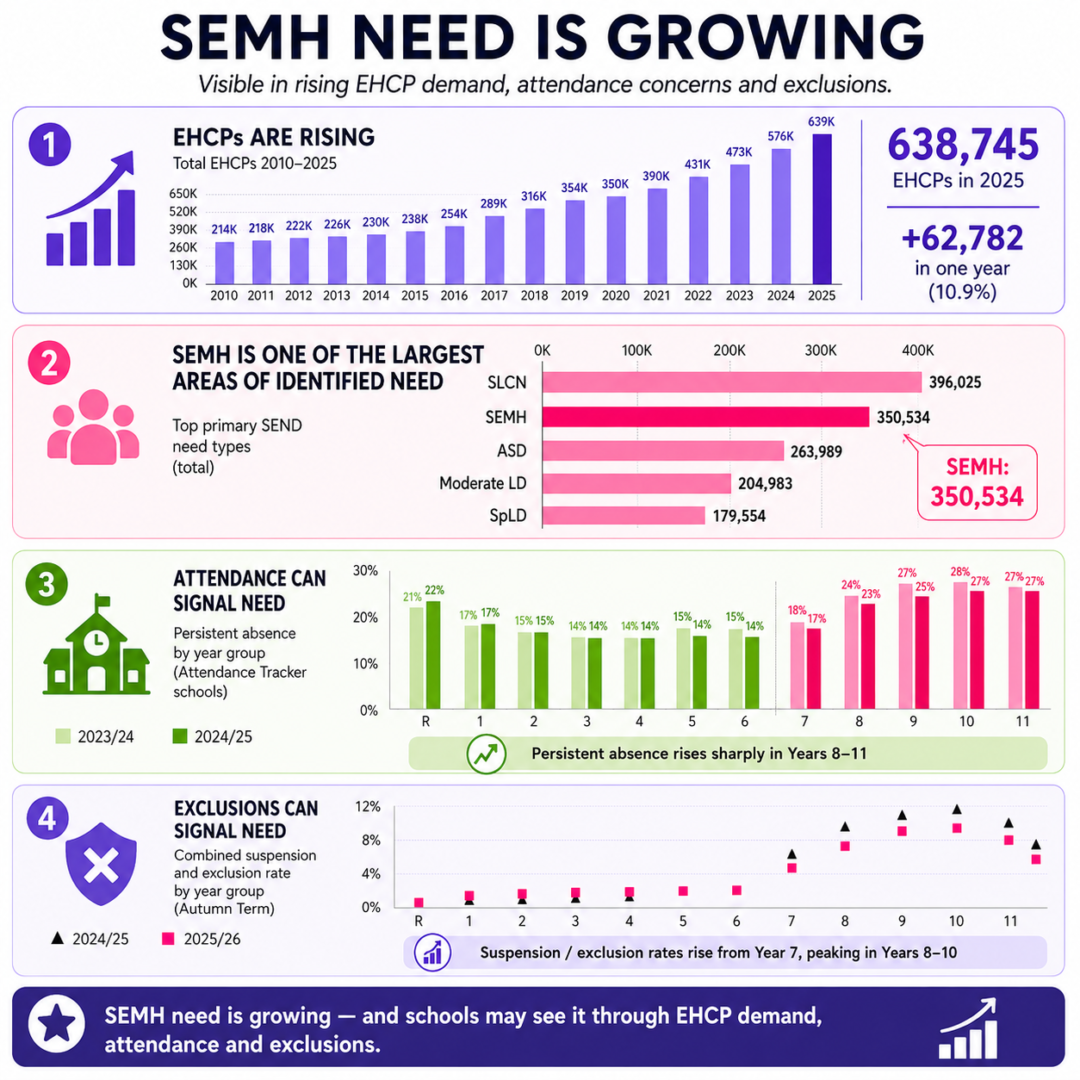
SEMH need sits within a much wider picture of growing SEND demand, persistent absence and suspension/exclusion.
EHCP demand continues to rise
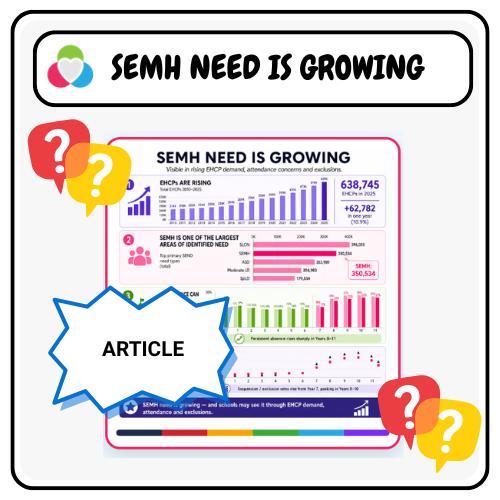
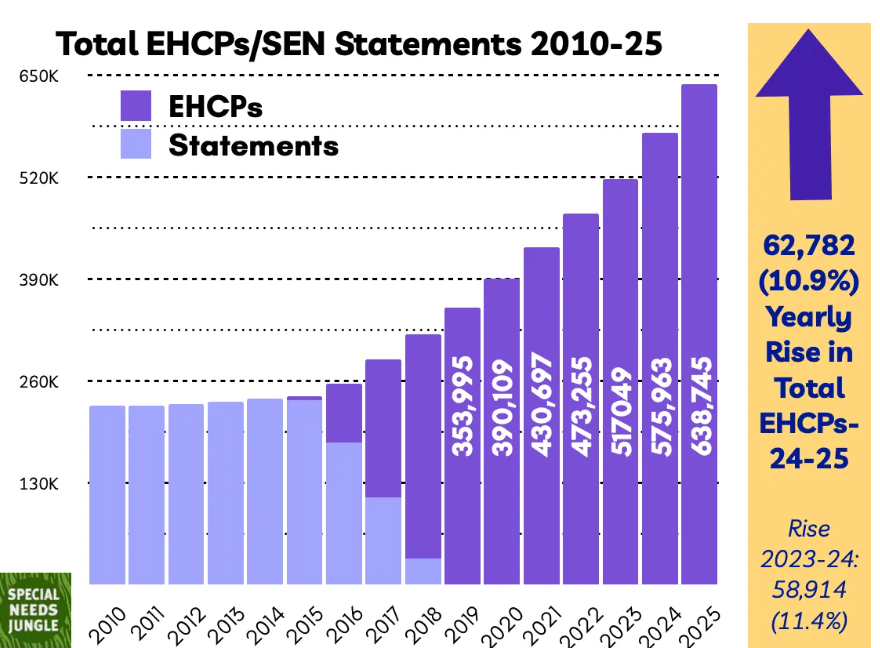
There were 638,745 active Education, Health and Care Plans in England in January 2025.
That is a substantial increase over the last decade and an increase of 10.8% in just one year.
For professionals in schools and settings, this reflects something already being experienced on the ground: more children requiring support and increasing complexity of need.
But an EHCP is often the end of a much longer journey.
The difficulties that eventually contribute to formal identification may have been visible in school for months or years beforehand.
That makes the period before formal assessment particularly important.
SEMH is already one of the largest areas of identified need
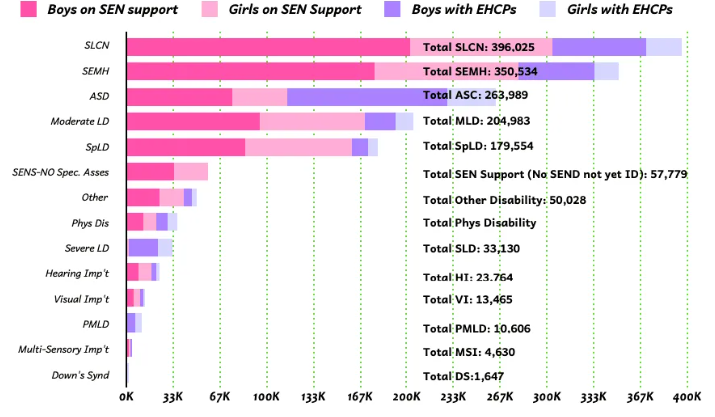
When we look at primary SEND need, social, emotional and mental health difficulties form one of the largest groups, alongside speech, language and communication needs.
The data shown here records approximately 350,534 pupils with SEMH as their primary area of need.
For professionals, however, SEMH does not arrive with a label attached.
It may first look like:
- difficulty getting started
- withdrawal
- avoidance
- dysregulation
- conflict
- shutting down
- difficulty with relationships
- reduced engagement
- repeated requests to leave lessons
- difficulty attending school
- behaviour that is becoming increasingly hard to manage
These are not diagnoses.
They are signals that tell us to become curious.
Attendance can be part of the picture
Persistent absence becomes particularly striking through the secondary years.
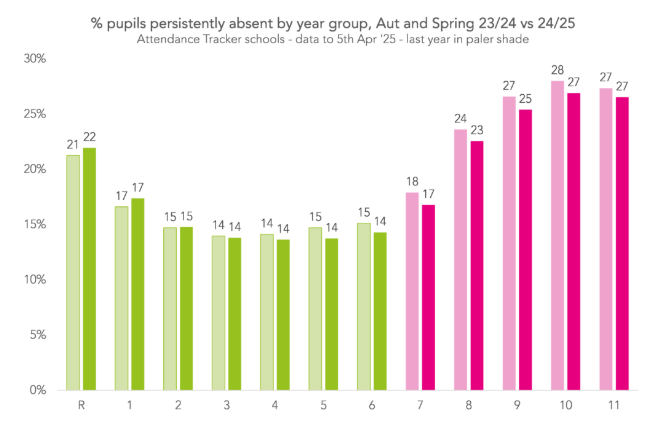
Attendance data cannot tell us why an individual child is absent.
But for professionals, a change in attendance should give us information to explore.
Instead of only asking:
“How do we improve their attendance?”
we also need to ask:
“What is making it difficult for this child to be here?”
That might involve sensory demands.
It might involve relationships.
It might involve anxiety, regulation, communication, learning, safety, belonging or experiences outside school.
The attendance figure is the visible outcome.
Our job is to understand what may be contributing to it.
Suspensions and exclusions can tell us something too
A similar pattern can be seen in suspension and exclusion data, with rates rising sharply from Year 7 and remaining particularly high through the secondary years.
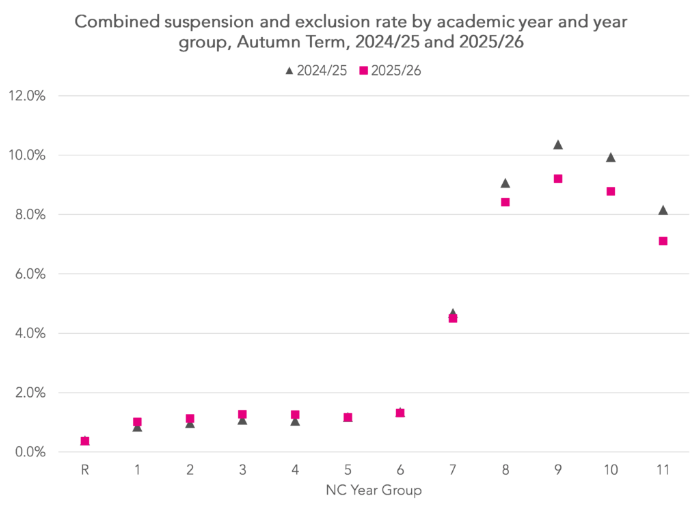
Again, suspension does not automatically mean SEMH.
But when a child repeatedly reaches the point where they cannot successfully remain in a lesson or school environment, the response cannot stop at the behaviour.
Professionals need space to consider what may sit underneath:
- Body and nervous system.
- Relationships and safety.
- Sensory differences.
- Emotional regulation.
- Communication.
- Learning.
- Belonging.
- Identity.
- Unmet SEND.
Behaviour tells us something has happened.
Understanding tells us what to do next.
The opportunity is earlier
Too often, the strongest evidence that a child needs help appears once the difficulty has become significant.
- Attendance has deteriorated.
- Learning has become increasingly difficult to access.
- Behaviour has escalated.
- Relationships have broken down.
- Suspensions have accumulated.
- The family is struggling.
- A referral or EHCP assessment is being considered.
But the child’s need did not suddenly appear at that point.
Professionals may have been seeing pieces of the picture for a long time.
That is why early identification is not simply about identifying a diagnosis sooner.
It is about helping professionals notice patterns, bring information together and make sense of what they are seeing before difficulties become entrenched.
And that is where our work fits.
How we help professionals
We are building a joined-up system around the child.
- Not one assessment.
- Not one intervention.
- And not another collection of activities without a clear understanding of why they are being used.
Our aim is to help professionals move through a much more useful process: Notice → Understand → Plan → Support → Review
Snapshots: identify and prioritise need
Often, professionals already know that a child is struggling.
The harder question is: Where do we start?
Our Snapshots help turn professional observations into a clearer picture of need.
They help practitioners and settings:
- bring observations together
- identify patterns
- recognise areas of potential need
- decide what should be explored first
- plan support
- review whether provision is making a difference
They are not diagnostic tools.
They support professional judgement.
Instead of:
“We are worried about this child.”
a Snapshot helps move the conversation towards:
“This is what we are seeing. This is where the need may sit. This is what we need to explore and support next.”
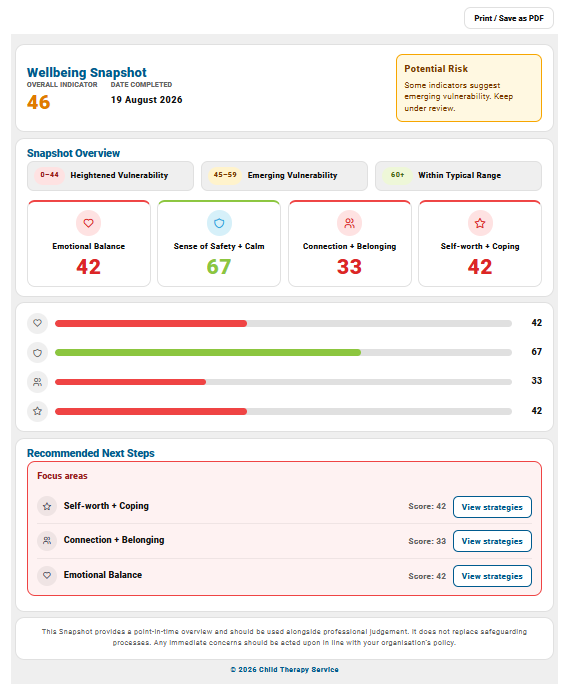
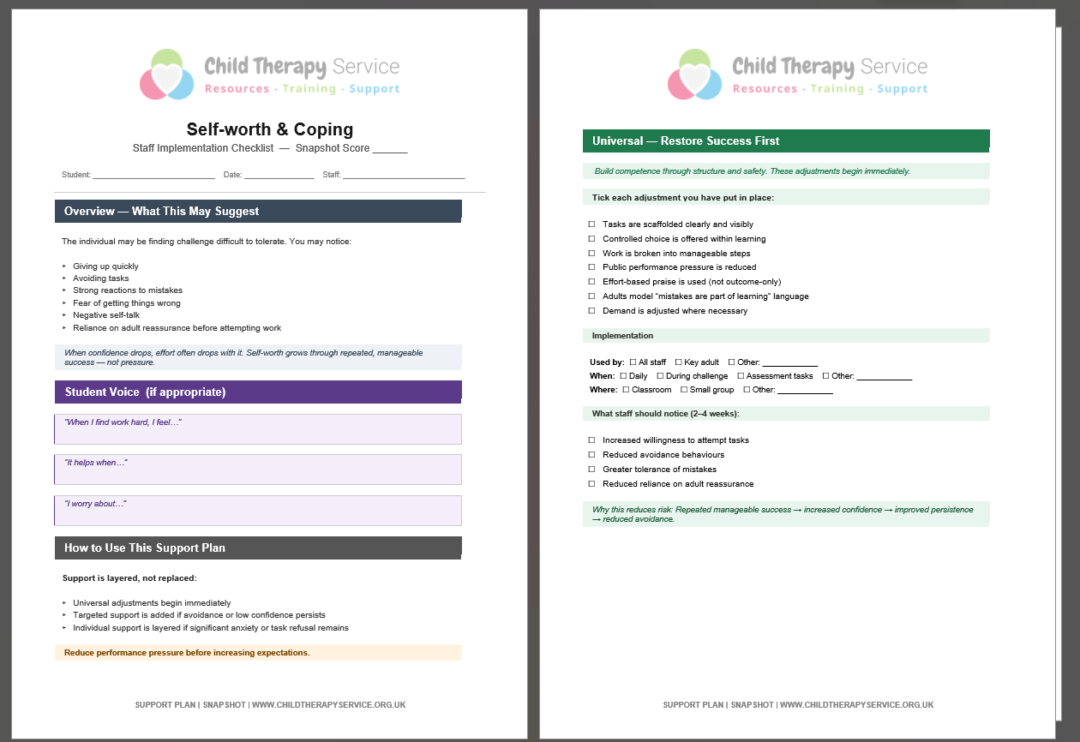
Editable Support Plan linked to area of need and provision of resources and training in the Learning Portal
The Learning Portal: understand what sits underneath
Identification alone is not enough.
Professionals also need the knowledge and confidence to understand why a child may be struggling.
Our Learning Portal brings together professional learning, practical tools, strategies, Learning Journeys and intervention resources through the BOUNCE Approach®.
BOUNCE encourages professionals to consider six connected areas:
- Body & Nervous System
- Openness & Attachment
- Understanding Sensory
- Navigating Emotions
- Communication Differences
- Esteem & Identity
This helps move practice away from simply asking:
“What strategy can I use for this behaviour?”
towards:
“What might be happening for this child, and what does that tell me about the support they need?”
The aim is not more activities.
It is better-informed practice.
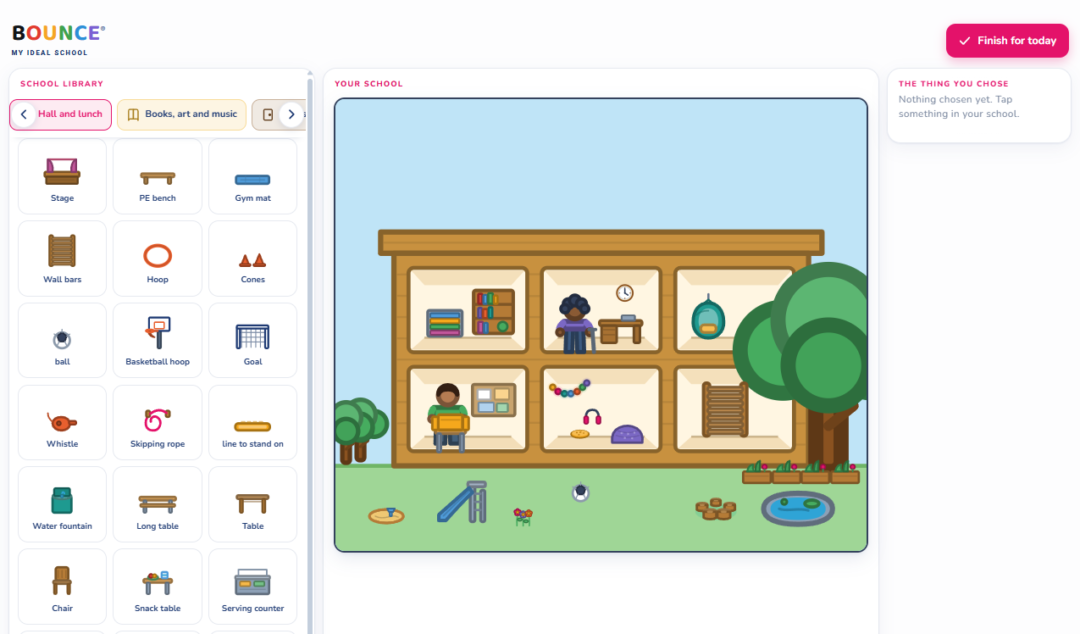
KidZone: give children different ways to show us
Adults are only one source of information.
We also need the child’s perspective.
But children cannot always answer:
“What’s wrong?”
or
“How do you feel?”
Some children need to communicate through movement, pictures, play, choices, creativity or interaction rather than direct conversation.
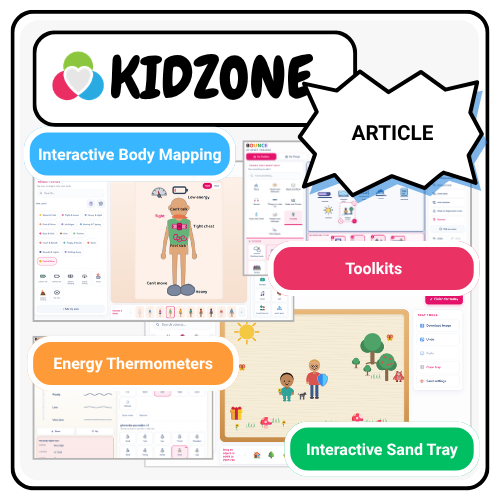
Our free KidZone gives professionals practical tools they can use alongside children to explore experiences including:
body signals, regulation, energy, sensory experiences, relationships, worries, safety, belonging, identity and what helps.
KidZone is not an assessment.
It creates another route into child voice.
Sometimes what a child shows us gives us information that a direct question never would.
Supporting parents: connect the whole picture
Professionals do not see everything.
A child who appears to cope throughout the school day may fall apart when they get home.
A child struggling to enter school may have been distressed for hours beforehand.
Parents may see exhaustion, shutdown, anxiety, sleep difficulties, sensory overwhelm or changes in behaviour that are not visible in the classroom.
Equally, school may be seeing things that are not happening at home.
That is why supporting parents matters too.
Helping parents understand regulation, sensory differences, communication and behaviour as communication can create a much more useful conversation between home and school.
Instead of:
“We don’t see that here.”
we can ask:
“What are you seeing? What are we seeing? What does the whole picture tell us?”
One child. A bigger picture.
Growing SEMH need cannot be solved by one professional, one intervention or one service.
But we can get much better at noticing what children are communicating before their difficulties reach crisis point.
Snapshots help professionals identify and prioritise need.
The Learning Portal helps professionals understand and respond.
KidZone gives children different ways to communicate and explore.
Parent support helps connect what is happening across home and school.
Together, they help build a fuller picture around the child.
Because we should not have to wait for persistent absence, repeated suspensions or an EHCP application before we become curious about what a child needs.
Notice earlier. Understand more. Respond with purpose.
Sources
- Department for Education, Education, health and care plans: Reporting year 2025.
- Department for Education, Special educational needs in England: Academic year 2024/25.
- Special Needs Jungle, SEND in England’s Schools 2025, analysis of Department for Education statistics.
- FFT Education Datalab, Pupil absence in Autumn and Spring 2024/25.
- FFT Education Datalab, Exclusions and suspensions in Autumn 2025/26.