BOUNCE Approach®AttachmentCPD CertifiedOn-DemandND-Affirming
Understanding and Supporting Attachment Needs
A two-part webinar series covering attachment theory, how different attachment styles affect a child’s capacity to trust and regulate, and how play-based approaches support relational repair.
Attachment shapes everything — how children experience safety, how they relate to adults, and how well they can regulate when things get hard. This two-part series offers a comprehensive introduction to attachment theory and the neuroscience behind it, exploring how secure, avoidant, ambivalent, and disorganised attachment styles each affect a child’s capacity to trust, connect, and engage.
The first session focuses on identifying attachment needs and matching provision to the child’s relational template. The second moves into practice — exploring how structured, attuned, play-based interventions build relational trust, create emotional safety, and support co-regulation over time. Suitable for teachers, teaching assistants, SENCOs, therapists, foster carers, and anyone supporting children with insecure or disrupted attachment histories.
Also included
Three bonus resources to deepen your practice.
💜 Wellbeing Snapshot Access
A structured snapshot to identify where a child may be struggling on the inside while appearing fine on the outside — so you can see beneath the surface and respond to what is actually there.
📈 Progress Overview Access
Track entry to exit progress and evidence what has changed across the review period — giving you a clear picture of impact over time.
🧠 Introduction to the BOUNCE Approach® Webinar
Understand the nervous system foundations behind regulation, emotional expression, and connection — so you can apply them with confidence in your sessions.
Learning Objectives
Learning Objectives
By the end of this training, you will be able to:
P1
Part 1 — Identifying Provision for Children with Attachment Difficulties
1
Understand why attachment matters
Explain why understanding attachment is foundational to supporting children’s emotional wellbeing, behaviour, and capacity to learn and connect with others.
2
Explain attachment injury and relational templates
Understand what attachment injury is, how relational templates are formed early in life, and how they shape a child’s expectations of adults and relationships long into the future.
3
Distinguish between secure, avoidant, ambivalent, and disorganised attachment
Identify the key features of each attachment style — and understand how each one presents differently in children’s behaviour, relationships, and responses to adult support.
4
Identify provision and support needs for each attachment style
Match the right provision to each attachment profile — understanding what each child needs from the adults around them and how to structure support that genuinely meets those relational needs.
5
Apply key strategies to meet attachment needs
Explore the practical strategies that support children with attachment difficulties — grounded in relational safety, consistency, and a deep understanding of what each child’s nervous system needs from the adults around them.
P2
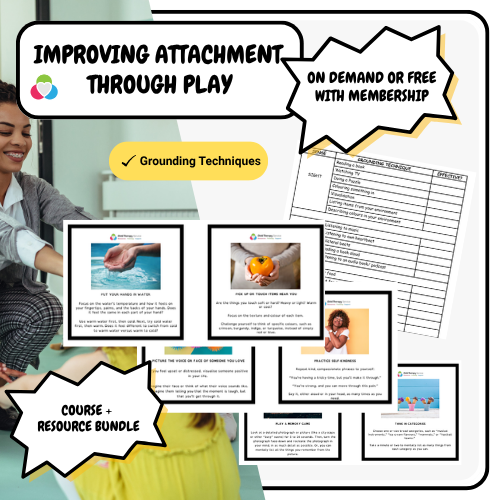
Part 2 — Improving Attachment Through Play
6
Understand why early attachment opportunities are critical
Explore the developmental importance of early attachment experiences — and understand why missed or disrupted opportunities in early life shape the nervous system in ways that require intentional, relational repair.
7
Understand attachment styles through a developmental lens
Deepen your understanding of how attachment styles develop across childhood — and what this means for how you interpret behaviour and plan support at different ages and stages.
8
Understand the neuroscience of attachment and relational safety
Explore what neuroscience tells us about how attachment shapes the developing brain — and why relational safety is the biological prerequisite for connection, regulation, and growth.
9
Use attachment-focused play to build trusted relationships
Learn how to use play as a deliberate, attachment-focused tool — building the trust, co-regulation, and felt safety that children with attachment difficulties need before deeper relational repair becomes possible.
10
Create a circle of trust through play-based sessions
Explore how to structure play-based sessions that gradually expand a child’s circle of trust — creating the relational conditions for earned secure attachment, one safe interaction at a time.