
Sand Tray Interventions
Using The BOUNCE Approach®
What’s happening
- Talking about feelings isn’t easy for every child. Some find it overwhelming; others may not yet have the language to explain what’s going on inside.
- Emotions often show up as behaviour, not words — leaving children frustrated and adults unsure how to help.
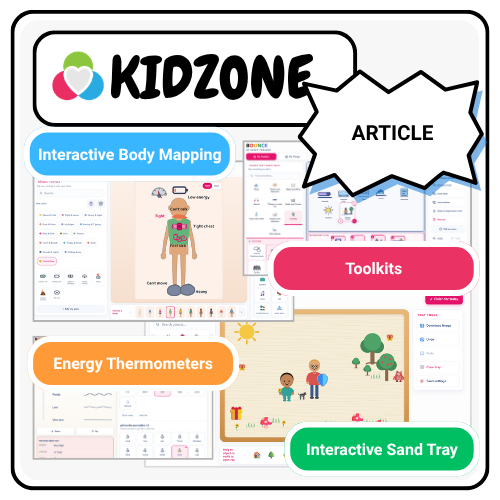
- Sand Tray interventions give children a safe, creative way to express their inner world through play, story, and metaphor.
- Energy battery impact: By reducing pressure to talk, sand work supports regulation and prevents emotional overload.
The BOUNCE Approach®
🖤 B — Body and Nervous System (Inside Tool)
- The tactile feel of sand helps ground the nervous system and reduce stress.
- Figures and movement create safety before words are needed.
❤️ O — Openness to Connection and Attachment (In-Between Tool)
- Sharing a tray builds trust and co-regulation between child and adult.
- Presence and attunement matter more than asking questions.
🧡 U — Understanding Sensory Differences (Outside Tool)
- Sand offers sensory input that can be soothing or stimulating, depending on need.
- Children can choose how much or how little to interact, giving autonomy and control.
💚 N — Navigating Emotions (Inside Tool)
- Figures, symbols, and stories allow children to externalise feelings safely.
- Parts of the self (angry, sad, playful) can be placed in the tray without shame.
💙 C — Connection to Self and Others (In-Between Tool)
- The tray becomes a shared space for reflection, storytelling, and meaning-making.
- Adults can gently reflect themes back, helping children feel seen and understood.
💜 E — Esteem and Identity (Inside Tool)
- Children discover new ways of expressing themselves that feel safe and valued.
- Affirmation prompts and gentle processing help strengthen self-worth.
Adult Focus:
- You don’t need to be a therapist to use sand-based interventions safely.
- The role is not to interpret, but to provide space, witness, and co-regulation.
- Sand work is respectful, non-intrusive, and deeply attuned to children’s emotional worlds.
Next Steps
Explore further learning:
- Sand Tray Intervention Training — practical guides, live experiential drop-ins, and visual/sensory resources.
- Play-Doh Feelings — tactile tools for emotional expression.
- Drawing Feelings — creative methods for exploring emotions through art and colour.
- Join the Learning Portal: Access 80+ trainings, printable resources, and interventions that help non-therapists bring therapeutic principles into everyday practice safely and effectively. Click here to learn more
👉 Sand trays help children show what they feel — making the invisible visible, one story at a time.