
BOUNCE Approach®Sensory PlayCPD CertifiedOn-DemandND-Affirming
Running Sand-Based Interventions
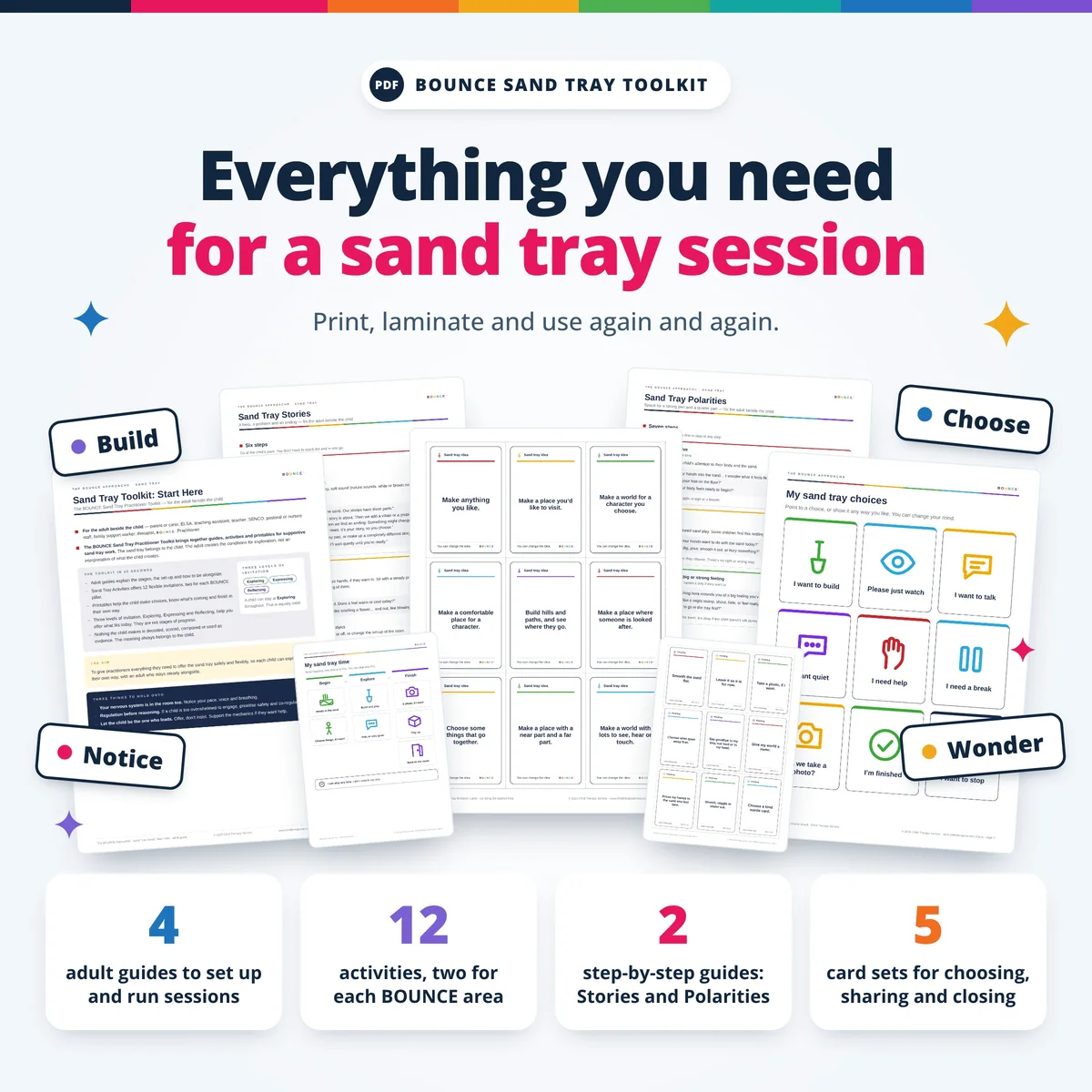
A structured approach to emotional expression through sensory play, miniatures, and symbolic storytelling — for non-therapist professionals working with children who find it hard to talk.
For many children — particularly those who are autistic, have experienced trauma, or carry a PDA profile — being asked to talk about their feelings can feel overwhelming, unsafe, or simply impossible. Sand tray intervention offers a different way in. The symbolic distance of a sand tray narrative creates safety, allowing children to express, process, and explore at their own pace — without ever having to find the words.
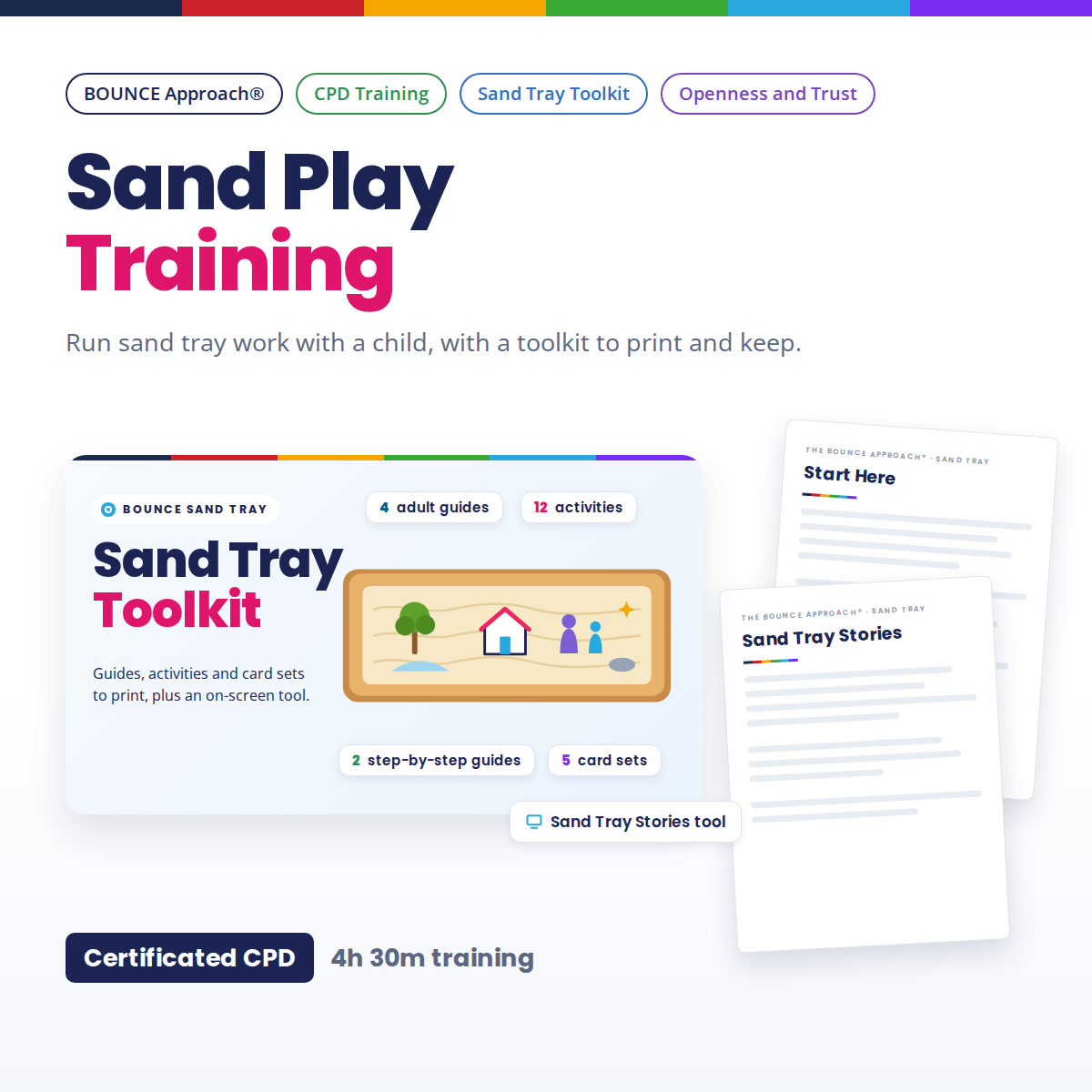
Rooted in Polyvagal Theory and The BOUNCE Approach®, this training equips non-therapist professionals with the scaffolding, language, and practical tools to create sessions that feel child-led, non-pressured, and genuinely supportive. You do not need to be a therapist to use these techniques safely and effectively.
Designed for teaching staff, learning mentors, school counsellors, family support workers, play workers, and early help practitioners. No prior experience of sand tray work required — just a commitment to meeting children where they are.
Also included
Three bonus resources to deepen your practice.
💜 Wellbeing Snapshot Access
A structured snapshot to identify where a child may be struggling on the inside while appearing fine on the outside — so you can see beneath the surface and respond to what is actually there.
📈 Progress Overview Access
Track entry to exit progress and evidence what has changed across the review period — giving you a clear picture of impact over time.
🧠 Introduction to the BOUNCE Approach® Webinar
Understand the nervous system foundations behind regulation, emotional expression, and connection — so you can apply them with confidence in your sessions.
Learning Objectives
Learning Objectives
Eight practical objectives designed to build your knowledge, confidence, and readiness to run sand tray sessions with children.
1
Explore how sand tray fits into a whole child approach
Understand where sand tray and play-based sessions sit within a holistic, child-centred model of support — and how they complement other approaches you may already be using with children and young people.
2
Explore how emotional states impact interventions
Gain a working understanding of Polyvagal Theory and how a child’s nervous system state shapes their capacity to engage, reflect, and connect — and what this means for how you plan and deliver sessions.
3
Understand the importance of relationship and neuroception
Explore why the relational foundation of a session matters as much as the activity itself — and how neuroception shapes whether a child can truly engage with the work.
4
Apply the Window of Tolerance to sand tray sessions
Learn how to use the Window of Tolerance as a practical guide during sessions — recognising when a child is regulated enough to engage, when they need grounding support, and how to adapt your approach in the moment to maintain emotional safety.
5
Explore somatosensory engagement within sand play
Discover how the sensory experience of sand — its texture, weight, and malleability — supports nervous system regulation and opens pathways to emotional expression that words alone cannot reach.
6
Explore how music can be incorporated into a session
Learn how carefully chosen music can support co-regulation, deepen sensory engagement, and create a felt sense of safety — without adding pressure or expectation to the child’s experience.
7
Experience a sand tray session for yourself
Walk through a sand tray session from the inside — so you understand what children experience when they participate. This first-hand perspective is one of the most powerful ways to build empathy, confidence, and readiness as a facilitator.
8
Use case studies to explore suitability and real-world practice
Review real-world session examples and reflections to explore which children are most likely to benefit from sand tray interventions — and how to make informed, thoughtful decisions about suitability within your setting.