BOUNCE Approach®Restorative PracticeCPD CertifiedOn-DemandND-Affirming
Running Solution Circles
Learn how to facilitate restorative circles in school settings — structured, dialogue-based approaches that build relationships, address conflict constructively, and create a genuinely inclusive community.
Restorative practices shift the focus in schools from punishment to relationship — building positive community, reducing disciplinary issues, and giving every voice a place to be heard. At the heart of this approach are restorative circles: structured meetings where participants engage in open, facilitated dialogue grounded in equality, respect, and active listening.
This training explores the principles and philosophy behind restorative practice and gives you the skills to facilitate solution circles with confidence. You’ll learn how to address conflict constructively, promote accountability through restorative justice, and take practical steps to embed a restorative culture into daily school routines and policy — moving from reactive discipline toward a genuinely supportive and connected school environment.
✓
Includes the BOUNCE Social Skills Snapshot
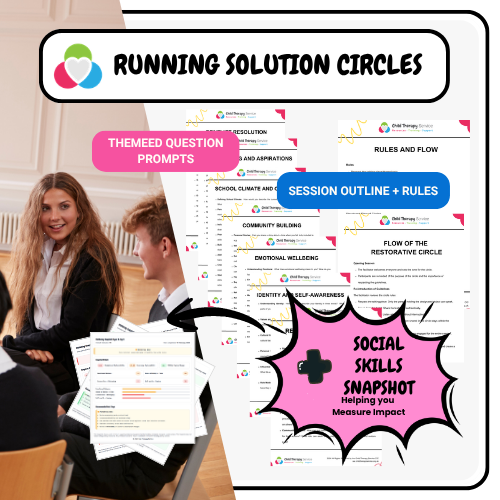
This course includes free access to the BOUNCE Social Skills Snapshot, helping you establish a baseline, monitor progress and evidence the impact of Restorative and Solution Circles over time.
Objectives
Learning Objectives
By the end of this training, you will be able to:
1
Explain what restorative practice is
Describe the principles and purpose of restorative practice — and how it differs from traditional disciplinary approaches in schools.
2
Describe what a Resolution Circle is
Understand the structure and purpose of a Resolution Circle — and how it creates the conditions for genuine dialogue, repair, and shared understanding.
3
Identify the goals and challenges of Resolution Circles
Understand what Resolution Circles aim to achieve — and the real-world challenges involved in facilitating them effectively in a school context.
4
Understand what a restorative culture is and why it matters
Explain why embedding a restorative culture — rather than using isolated techniques — has a significantly greater impact on emotional wellbeing across the whole school community.
5
Apply the process for embedding a restorative culture
Understand the steps involved in moving from individual restorative conversations to a whole-school culture — and what that process looks like in practice.
6
Plan and deliver a weekly Restorative Circle session
Know what a structured weekly Restorative Circle session looks like — and how to facilitate it in a way that builds trust, connection, and a sense of belonging over time.
7
Facilitate a 1:1 restorative session
Understand the structure and approach for individual restorative conversations — and how to hold the space for repair, accountability, and reconnection with a single child or young person.
8
Recognise the outcomes of embedded restorative practice
Identify the significant outcomes that restorative practice achieves when embedded across a school — including improved relationships, conflict resolution, enhanced emotional wellbeing, a positive school climate, stronger social and emotional learning, and reduced discipline disparities.
Resources
What’s Included
Five practical resources to help you plan, structure, and facilitate restorative circle sessions with confidence.
1
Circle Rules and Flow
A clear reference for establishing the agreements and rhythm that make circle sessions feel safe, consistent, and purposeful for every participant.
2
Circle Session Outline
A structured session plan to follow — so you can facilitate weekly Restorative Circle sessions with clarity and confidence from the very first week.
3
Suggested Circle Themes
A bank of ready-to-use themes to draw on across the year — giving your sessions purpose and variety without the planning burden.
4
Question Prompts for each Circle Theme
Tailored question sets for eight themes — Goal Setting and Aspirations, Community Building, Identity and Self-Awareness, Conflict Resolution, Emotional Wellbeing, Celebration and Acknowledgment, Restorative Justice and Accountability, and School Climate and Culture.
5
Outline of a Solution Circle
A structured guide to facilitating a Solution Circle — so you can move from identifying a difficulty to co-creating a way forward with children in a safe, restorative frame.