Strengthening early identification in a system under pressure
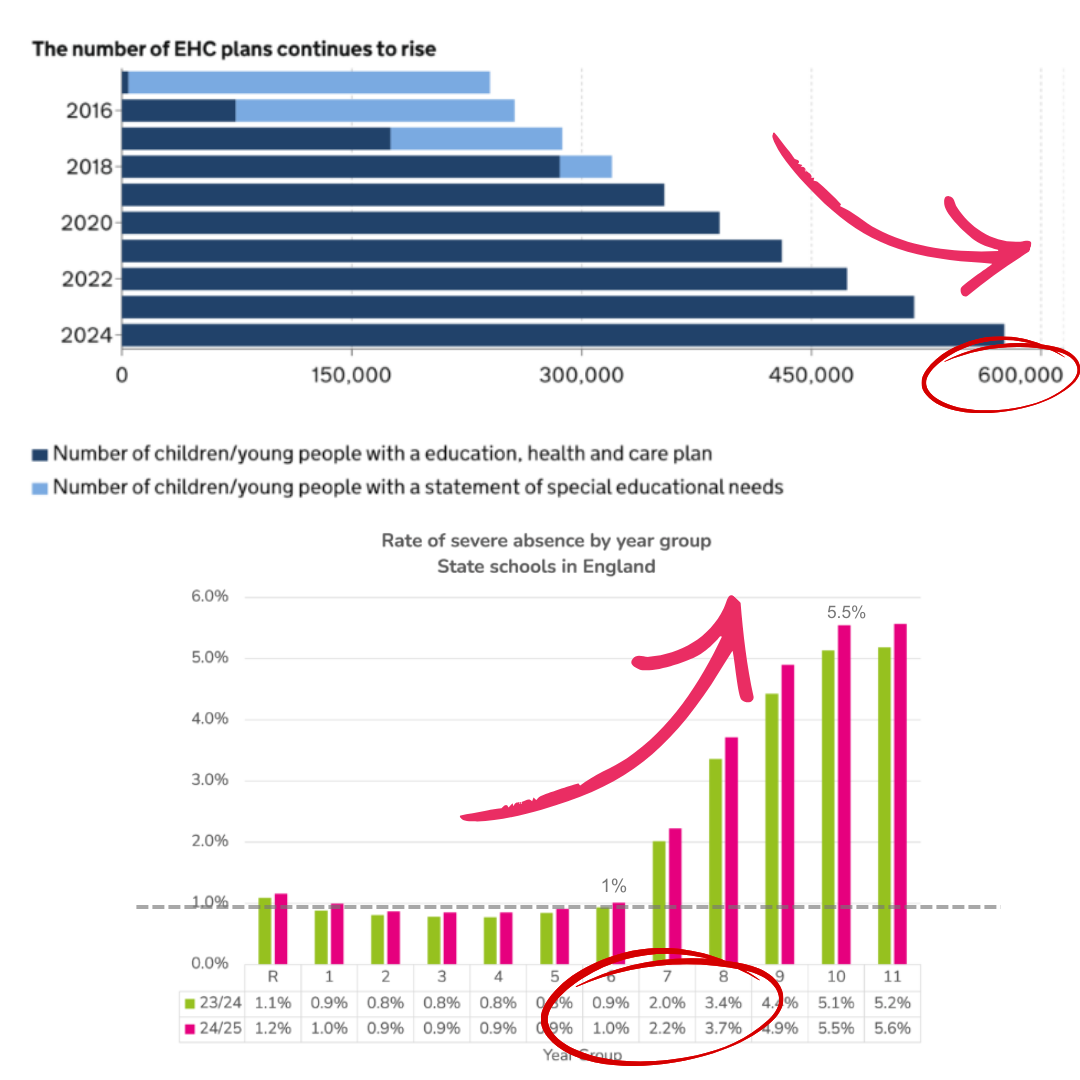
Recent national data continues to show rising complexity across schools.
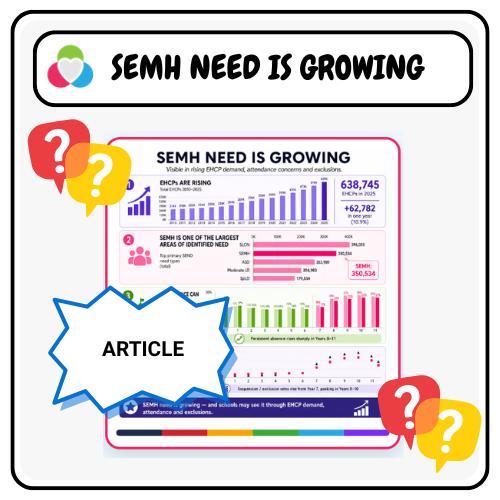
📈 Education, Health and Care Plan numbers are at their highest recorded levels.
📊 Persistent absence remains significantly above pre-pandemic levels.
🧠 Speech, Language and Communication Need (SLCN) remains the most common primary need among pupils receiving SEN Support.
💛 Social, Emotional and Mental Health (SEMH) is the second most common.
These are not short-term fluctuations.
They are sustained national trends.
Schools are working within guidance that:
- Emphasises early identification
- Requires a meaningful graduated response (Assess → Plan → Do → Review)
- Positions suspension and permanent exclusion as measures of last resort
- Encourages stronger mainstream inclusion wherever possible
The question is no longer whether support is needed.
It is:
How do we identify vulnerability early enough to prevent escalation — while keeping support proportionate and sustainable?
That is why Snapshots were created.
🔎 The Patterns Schools Are Seeing
Across settings, the same themes keep emerging:
- Strain during transition
- Communication difficulty beneath behavioural concern
- Faster escalation and slower recovery
- Disengagement before attendance drops
- Internalised anxiety that goes unnoticed
These are not simply behaviour issues.
They are access issues.
And when access weakens gradually, risk increases quietly.
Snapshots were designed to bring structure to that early stage — before escalation.
Not diagnostic tools.
Not labels.
Not lengthy reports.
But evidence-informed frameworks that strengthen identification and review
A 2-minute Snapshot of time – are they at risk? Yes or no?
📌 The Rationale Behind Each Snapshot
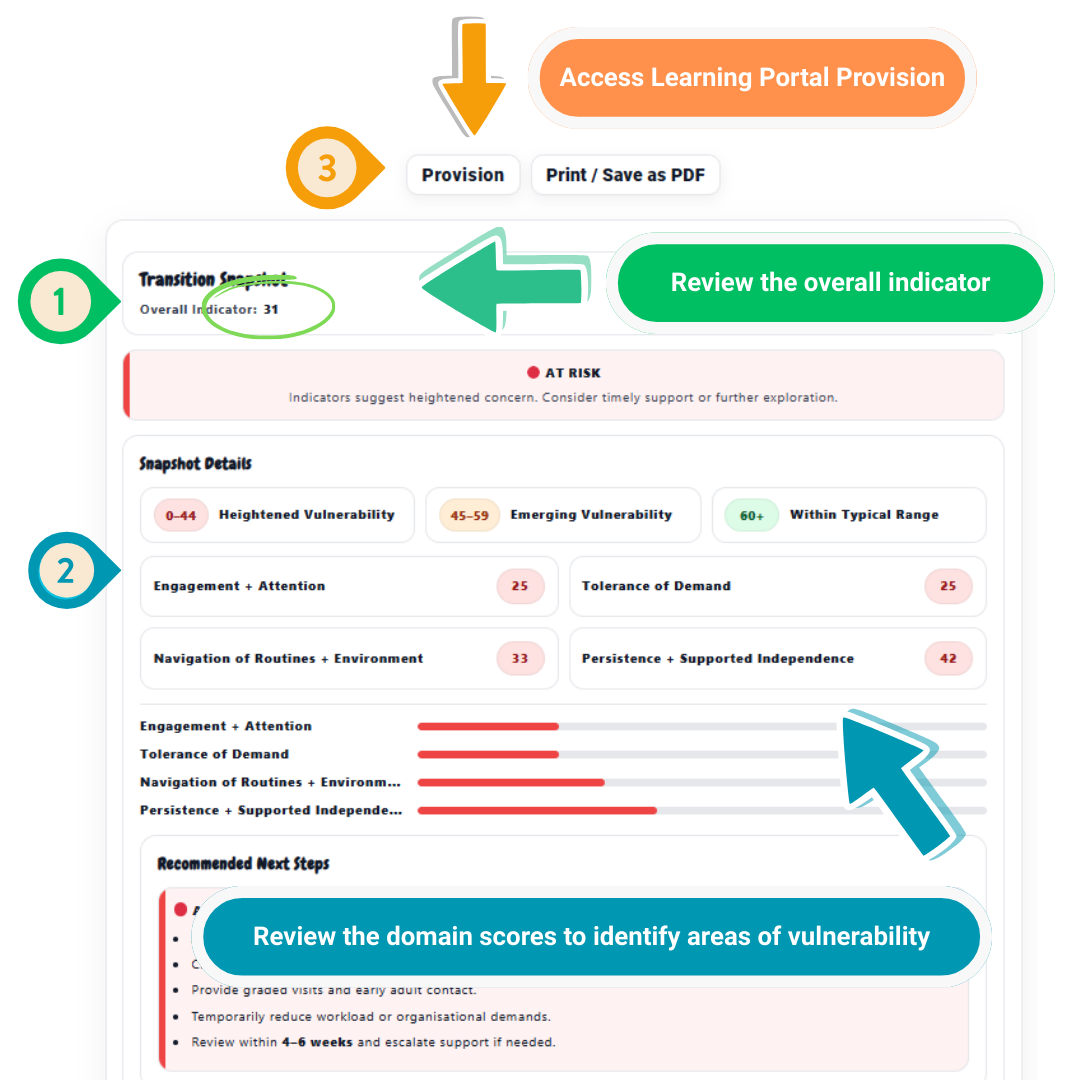
🔁 Transition Snapshot
When attendance dips after transition — you need earlier visibility
You know that the move into secondary can destabilise even pupils who previously coped.
Timetable complexity increases. Independence expectations rise. Social dynamics shift.
When vulnerability is missed early, it can drift into EBSA, persistent absence and placement instability.
The Transition Snapshot gives you structured insight into:
- Tolerance of change
- Response to rising demand
- Navigation of routines
- Growing independence
So you can strengthen scaffolding before attendance declines — not after.
💬 Social Skills Snapshot
When behaviour isn’t the root issue — clarity matters
Communication difficulty remains the most common primary need among pupils receiving SEN Support.
Yet social misunderstanding often presents as disruption, conflict or withdrawal.
Without clarity, behaviour is addressed.
With clarity, barriers are reduced.
The Social Skills Snapshot helps you:
- Identify social inference gaps
- Spot expressive or relational strain
- Separate communication barriers from behavioural intent
So response becomes proportionate — and relationships stabilise.
🧠 Regulation + Recovery Snapshot
When escalation is frequent — recovery is the key indicator
Across schools, escalation may be manageable.
Recovery is what determines sustainability.
When recovery slows:
- Learning time reduces
- Adult support intensifies
- Risk of exclusion increases
The Regulation + Recovery Snapshot shifts focus from incidents to nervous system capacity.
It helps you identify where recovery needs strengthening — so stability improves over time.
📚 Engagement Snapshot
When attendance becomes a concern — engagement weakened first
Persistent absence rarely appears without warning.
Before attendance drops, pupils often:
- Withdraw from tasks
- Avoid challenge
- Rely heavily on adult prompting
The Engagement Snapshot gives you early visibility of academic access strain.
It allows you to intervene while learning is still salvageable — not when attendance has already declined.
💛 Wellbeing Snapshot
When pupils appear ‘fine’ — but aren’t
Not all vulnerability is loud.
Some pupils internalise anxiety, self-doubt or chronic stress.
They comply.
They mask.
They cope — until they can’t.
The Wellbeing Snapshot makes internal strain visible early.
So the quiet pupils receive support before collapse or refusal emerges.
🌱 Prevention Through Structure
If you can:
- Identify vulnerability earlier
- Adjust provision proportionately
- Strengthen support before crisis
- Review impact clearly
You reduce the likelihood of:
- Escalating absence
- Placement instability
- Crisis referral
- Reactive EHCP escalation
Snapshots were built as a preventative structure.
Not a diagnostic label.
A system to help you act earlier, with confidence.
Because prevention isn’t about doing more.
It’s about seeing clearly — sooner.
🔓 Included with Professional & Team Membership
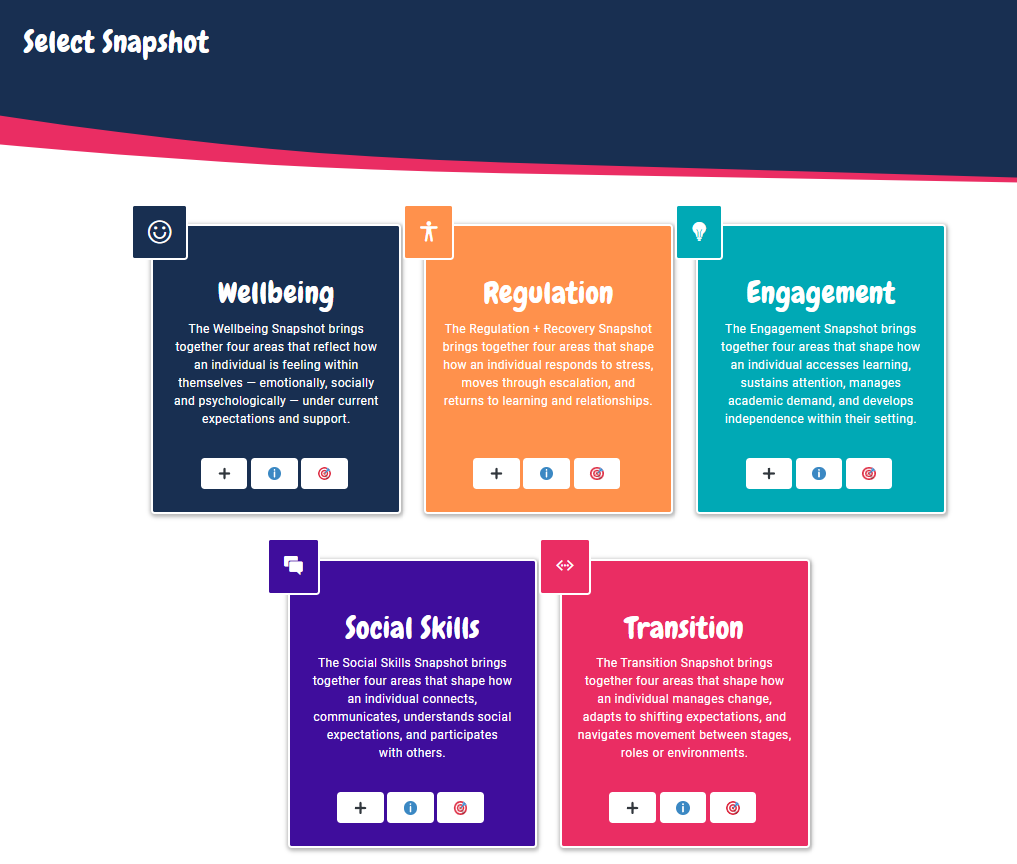
Snapshots is built into the membership.
Professional and Team Members receive full access to:
✔ All Snapshot tools
✔ Risk indicators
✔ Graduated provision guidance
✔ Linked training and resources
Because identification without provision isn’t enough.
Membership connects insight directly to action. Join today – click here!
📎 Sources
Education, Health and Care Plans – latest release
https://explore-education-statistics.service.gov.uk/find-statistics/education-health-and-care-plans
Pupil absence in schools in England – latest release
https://explore-education-statistics.service.gov.uk/find-statistics/pupil-absence-in-schools-in-england
Special educational needs in England – latest release
https://explore-education-statistics.service.gov.uk/find-statistics/special-educational-needs-in-england
Suspensions and permanent exclusions – statutory guidance
https://www.gov.uk/government/publications/school-exclusion
Education Inspection Framework
https://www.gov.uk/government/publications/education-inspection-framework