
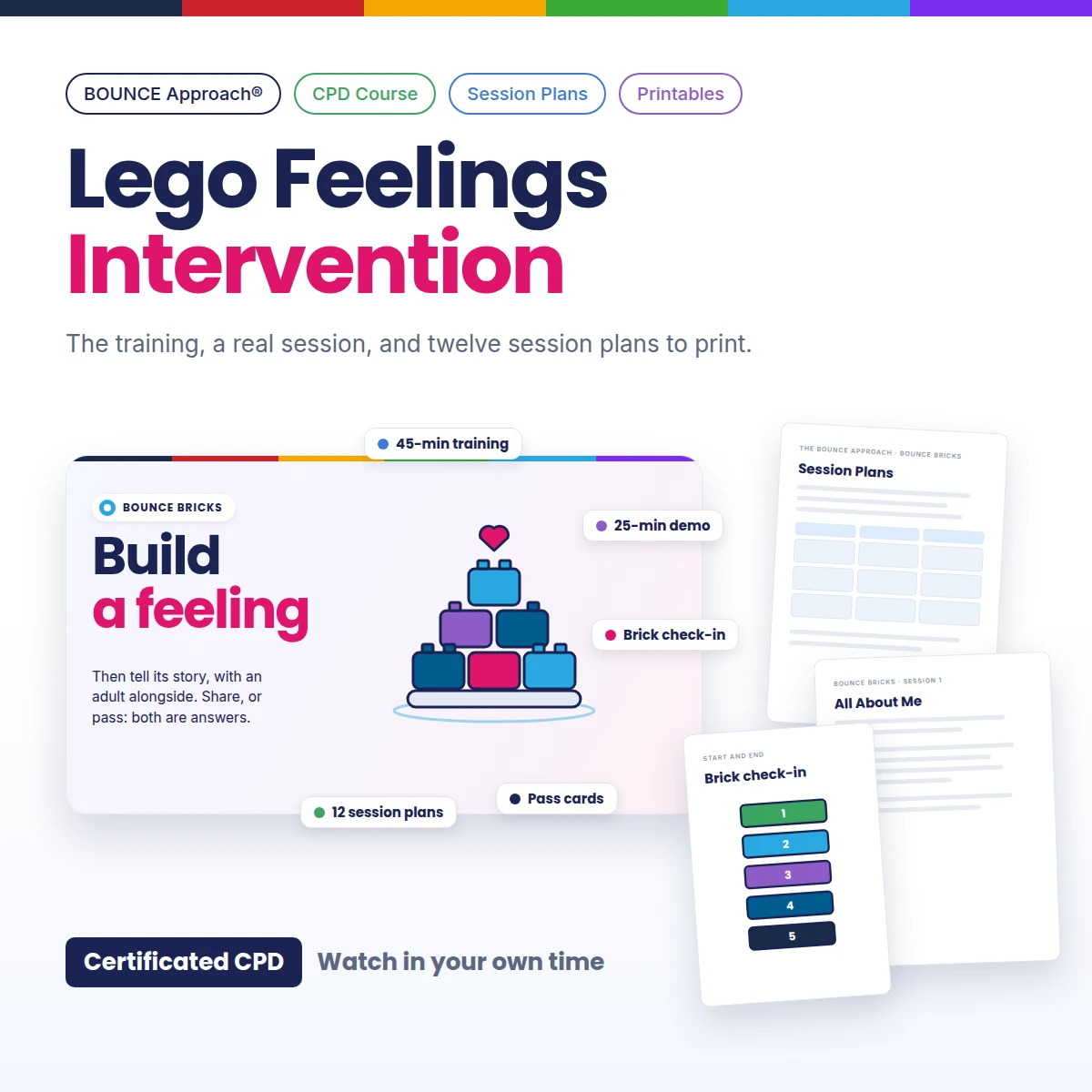
Lego Feelings Intervention
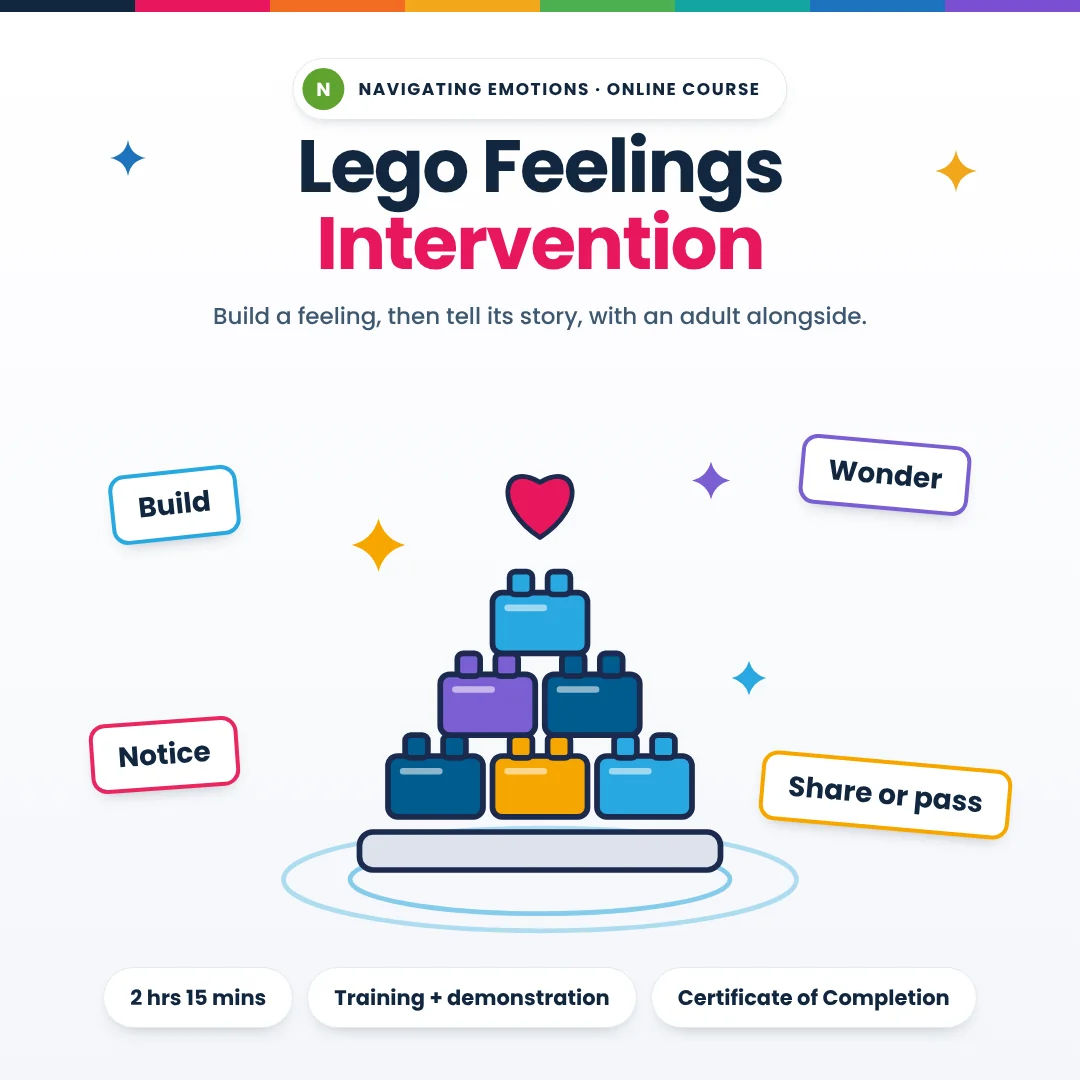
A creative, step-by-step way to help a child explore feelings and social situations through building and metaphor.
- Intermediate
- 45-minute training video
- 25-minute session demonstration
- Interactive activities
- 12 session plans, cards and mats
Included in annual membership. See membership
What it is
Some feelings are too big or too muddled to say out loud. In a Lego Feelings session, a child builds the feeling instead, then tells its story, so it can be seen and shared without needing the right words first.
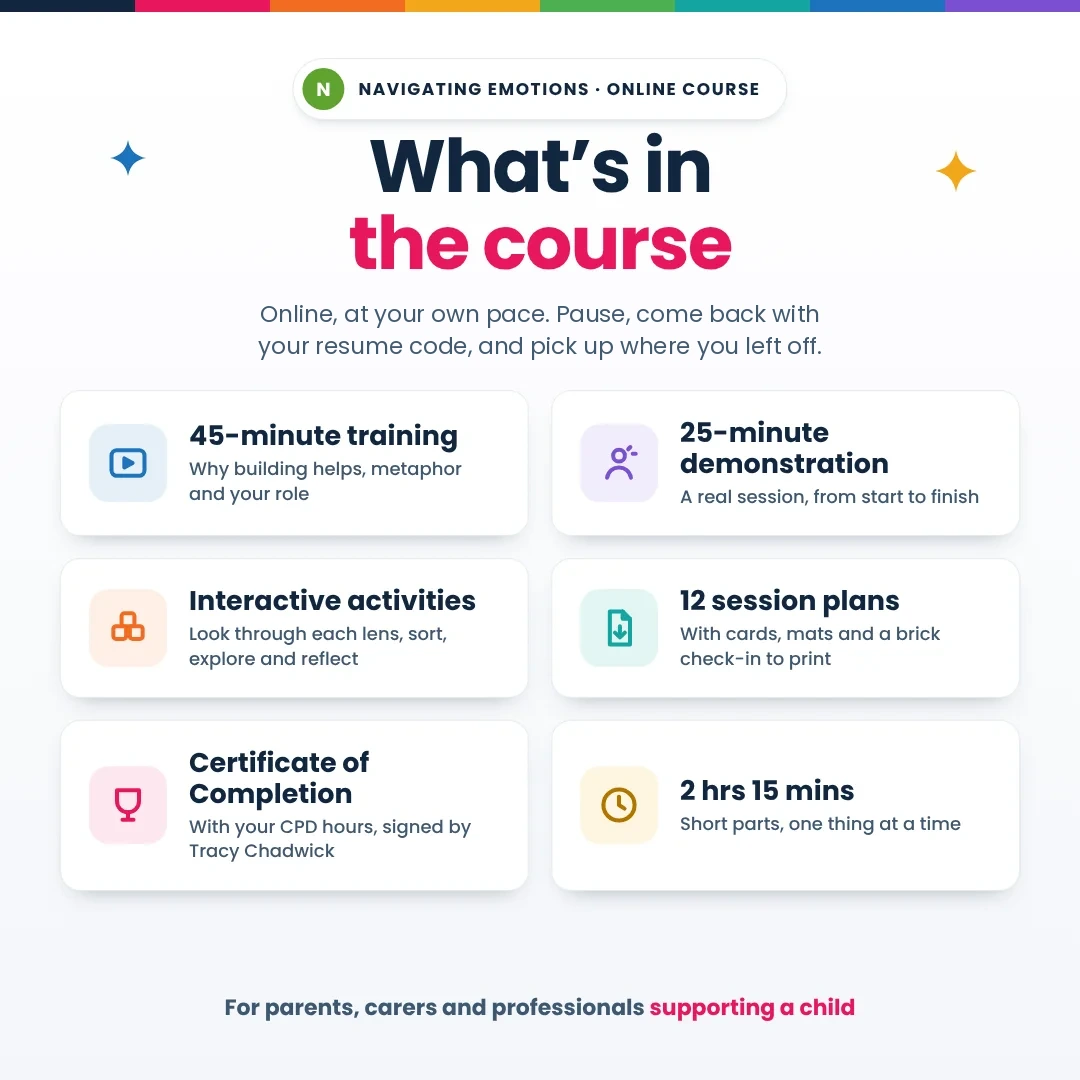
- For parents, carers and professionals who support children
- The child chooses what to share: a private build is a complete build
- Watch in your own time, with certificated CPD
How it helps
Sitting side by side, with the build between you, takes the pressure off talking face to face. Every session follows the same calm shape, so children know what comes next.
The bricks hold the feeling, so the child doesn’t have to hold it alone.
Helps with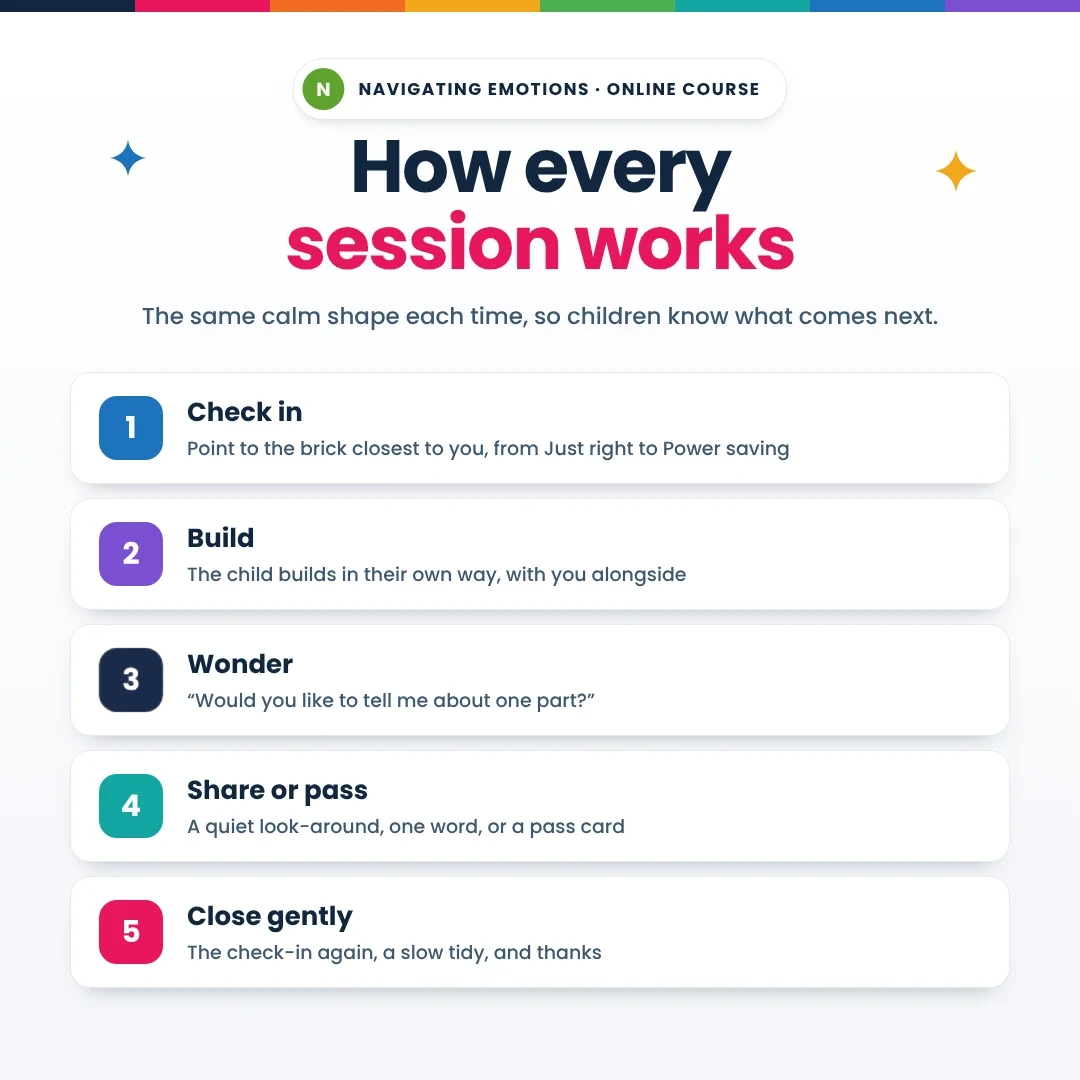
What the training covers
From what a session is to your role alongside the child.
- 1What a Lego Feelings session is
- 2Why building helps when words are hard
- 3How metaphor gives feelings a safe shape
- 4Your role as a calm, curious facilitator
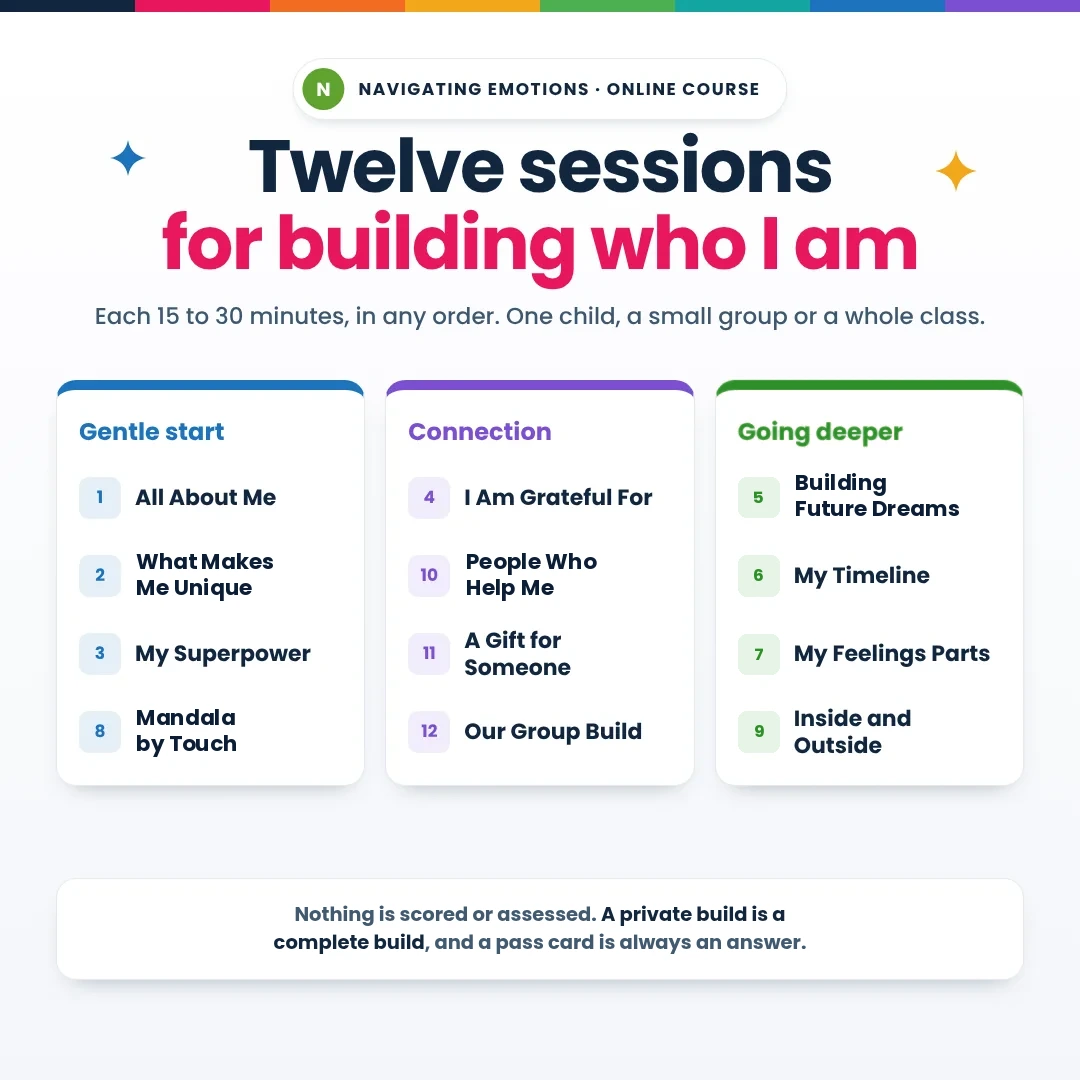
Twelve sessions to choose from
Each takes 15 to 30 minutes, in any order, with one child, a small group or a whole class. Each is its own download.
Keep 6, 9 and 10 for a small group or one child you know well: they can touch loss or change.
Adult guide
The BOUNCE Bricks Feelings Session Plans guide: the twelve builds, how to run them and how to choose.
What’s inside
Watch the training and a real session, then print what you need.
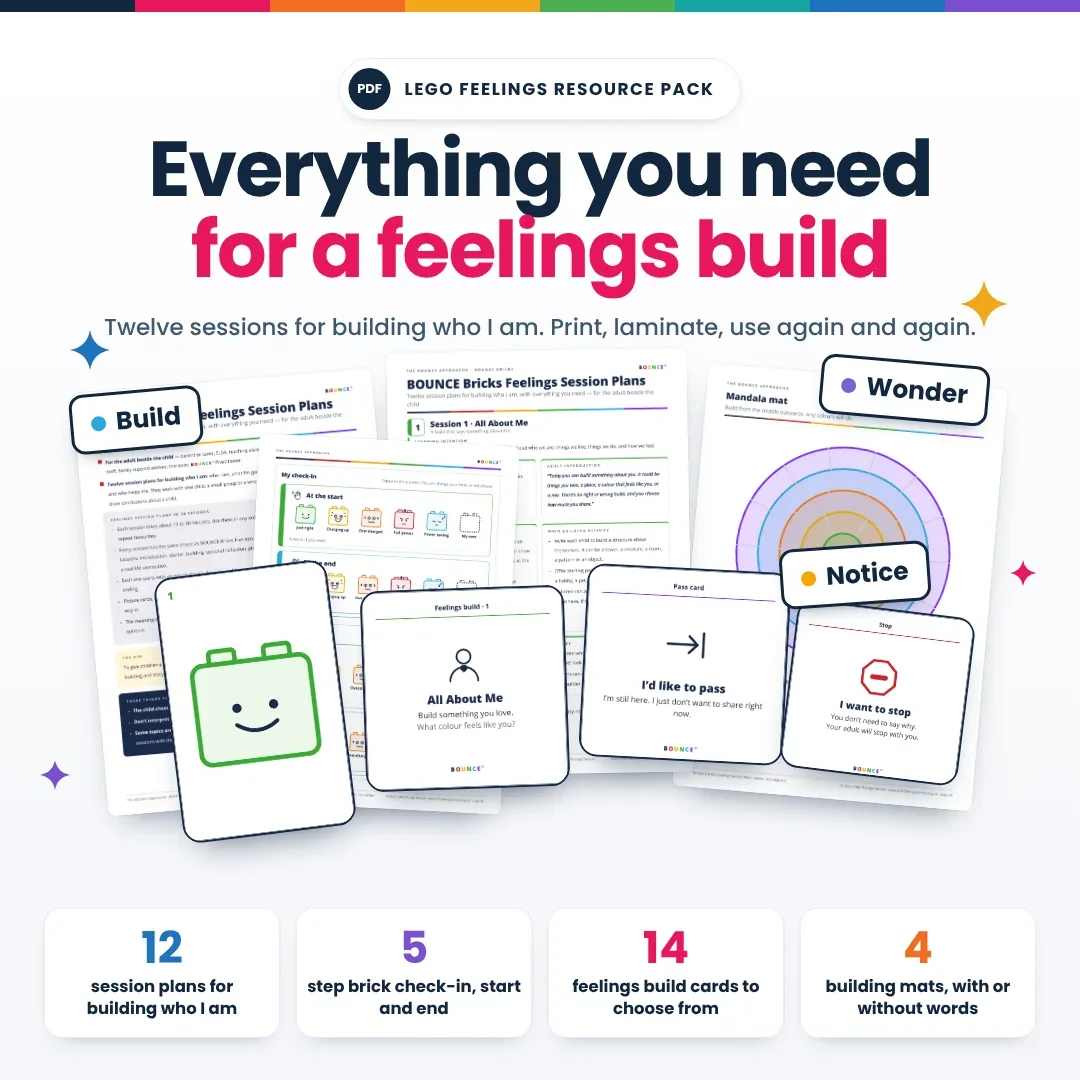
Session plans, cards and mats
12 session plans, a 5-step brick check-in for the start and end, 14 feelings build cards and 4 building mats.
LEGO®-inspired Body Scan
Build, part by part, what the body is feeling: a gentle way to settle and check in at the start of a session.
What you can print and keep18 files: the adult guide, twelve sessions and five sets for every session See all filesHide files
- Adult guideThe BOUNCE Bricks Feelings Session Plans guide, to read once before you start (PDF, 212 KB)
- Session 1 · All About MeA build that says something about me (PDF, 130 KB)
- Session 2 · What Makes Me UniqueCelebrating the things that are just me (PDF, 188 KB)
- Session 3 · My SuperpowerStrengths, skills and powers I’d love to have (PDF, 188 KB)
- Session 4 · I Am Grateful ForBuilding the things that make life good (PDF, 120 KB)
- Session 5 · Building Future DreamsHopes, wishes and one day (PDF, 178 KB)
- Session 6 · My TimelineMoments that matter, chosen by me (PDF, 224 KB)
- Session 7 · My Feelings PartsA build for each part of me (PDF, 131 KB)
- Session 8 · Mandala by TouchA calm, patterned build (PDF, 211 KB)
- Session 9 · Inside and OutsideWhat people see, and what I feel (PDF, 249 KB)
- Session 10 · People Who Help MeBuilding bridges to my people (PDF, 194 KB)
- Session 11 · A Gift for SomeoneBuilding kindness (PDF, 119 KB)
- Session 12 · Our Group BuildA place where everyone belongs (PDF, 116 KB)
- Session cardsA choice of what to build, in pictures or words, with two My own idea cards (PDF, 258 KB)
- Start and end check-inA five-brick check-in for the start and end of every session (PDF, 237 KB)
- Fans(PDF, 863 KB)
- Lesson strip and pass cardsIncluding the I want to stop card, to keep within every child’s reach (PDF, 174 KB)
- Big and small brick cards(PDF, 185 KB)
What learners say
The demonstration part of the course was really helpful, and the resources and plans are great!
Gave me a good understanding on how to facilitate sessions.