Our impact
What changes when we understand what is underneath behaviour
Our impact so far
- 1000s Families supported through coffee mornings, coaching and funded projects
- 1000s Professionals accessing training, tools and resources through the Learning Portal
- 100s Examples of children and young people whose progress has been followed through our Snapshot work
- 7 Funded projects — one in every year since we started
We started in 2019. Since then every project here has been paid for out of our own income, not by the families and settings taking part.
Who we are
A social enterprise with one mission
To make practical, evidence-informed SEMH support easier to access for children, families and the adults who support them.
Why it matters. In 2025, more than 350,000 children in England were identified with social, emotional and mental health (SEMH) needs — a rise of 10% in a single year. Statutory support alone cannot meet that demand, so adults around the child need something they can use early.
What we have reinvested in
-
The framework
The BOUNCE Approach® — one shared way to look underneath behaviour, across six areas.
Explore -
Funded projects
Training and resources paid for by us, for settings with no budget to try something new.
Apply -
Snapshots
A quick picture of what adults are noticing, while there is still time to respond.
How it works -
Professional Studio
Interactive SEMH tools to open on screen and work through together. Nothing to prepare.
What’s included -
The directory
A searchable directory of SEMH services, free to use and free for charities and non-profits to list on.
Find support -
Free to all
KidZone and the Introduction to BOUNCE course, open to anyone at no cost.
Visit KidZone
Continuous improvement
We notice what works — and keep improving it
Family coffee mornings and support groups
Where it startedA free, volunteer-led project created to give families of neurodivergent children and children with SEMH needs somewhere to turn before things reached crisis.
There was no referral, no waiting list and no threshold to meet — just regular, accessible support, practical help and connection.
Monthly online coffee mornings were capped at twenty people so everyone had space to talk, alongside live workshops for families and professionals.
In 2021 alone, 168 families attended the coffee mornings and 295 families and professionals joined the workshops — with more than 700 people supported across the year.
“A lifesaver for me — just to know I am not the only one struggling.”Katie MacGregor
What we learnt: families often need someone to listen, practical support and connection much earlier — not another referral pathway to navigate.
White Hall Academy
36 assessed · 29 supportedA funded regulation project exploring whether a short, daily grounding practice could improve children’s readiness to learn and help staff respond earlier to signs of dysregulation.
A five-minute grounding practice was embedded into the school day each morning, alongside staff development. Teachers assessed 36 children with SEMH needs; 29 across Years 1 to 6, including every child in care, took part. After two terms the same assessment was repeated and totals had fallen for most of them.
“I believe it has helped both children to settle in the class first thing in the morning, to calm them before their learning begins… There was nothing I didn’t like about it.”Learning support assistant, Year 4
What we learnt: short, predictable regulation practices can become part of everyday school life — supporting children before they reach crisis, rather than only responding afterwards.
Tactile Defensiveness Project
Eight families took partA funded sensory project exploring whether simple, parent-led regulation strategies could reduce distress around clothing, touch and everyday contact — including school uniform.
Eight families were shown practical somatic and sensory strategies to use at home over a short period. Two thirds reported a clear reduction in distress.
“Tracy is passionate about helping children and sharing her wealth of information and range of techniques with parents so they can begin to help their own children. We have already had great success in a short period of time using her easy techniques to tackle tactile defensiveness. We are excited to keep going with this and learn how similar techniques can help with other difficulties.”Jo & David Wainewright
What we learnt: when adults understood the distress as a nervous-system response rather than a child “making a fuss”, their response changed too. That learning was then turned into resources in the Learning Portal so more families and professionals could use it.
Compassion fatigue sessions
94 people supportedA subsidised wellbeing project for parents, carers and professionals, exploring whether short, structured sessions could help reduce stress and support the adults caring for children with emotional needs.
Sessions focused on helping adults notice and release some of the tension they were carrying. 94 people took part.
“Child Therapy Services were recommended to me by my local NHS Child Development Team for resources and support for my son. I thoroughly recommend Tracy’s training courses, they’ve given me some great tips for helping my son regulate his emotions. I also gave M Method a go last week to try and help myself for a change. I wasn’t sure what to expect but was surprised how much tension and emotion I was holding in and the relief in letting it go was amazing. The membership is well worth it and I look forward to seeing what else Tracy has to offer.”Sarah Howe
What we learnt: supporting a child also means supporting the adults around them. Making that support affordable and accessible matters too.
Funded and subsidised family coaching
Free and lower-cost placesWe continue to offer family coaching at a reduced cost so support is more accessible to families who may not be able to afford longer private sessions.
Sessions are kept to 30 minutes so they remain focused and affordable, with further discounts available to members. Each session is shaped around the child’s regulation, sensory and emotional needs, with practical ideas families can use at home and share with school.
“My daughter and I both have ADHD, and we have undertaken numerous courses and seminars on ADHD… However, we have learned more from Tracy’s coaching and her online courses than anything we have done before… My daughter described her sessions with Tracy as ‘being understood and accepted for the first time in her life’.”Parent, family coaching
What we learnt: sometimes a small amount of focused support can change how an adult understands what is happening — and that can change the environment around the child too.
Practitioner Programme
Building capacity within settingsThe Practitioner Programme was developed in response to settings wanting to build knowledge within their own teams, rather than relying on external training each time support was needed.
Part-funded places helped professionals embed The BOUNCE Approach® within nurture spaces, classrooms and outreach roles.
“This is a brilliant course. It has helped me so much with my job as an INA, but also as a parent and an autistic myself. There are many more courses I am going to do to help reinforce this and install what I have learnt here. Highly recommend this course!”Jo, individual practitioner
What we learnt: practitioners needed more than knowledge — they needed a way to apply it, reflect on it and know where to start. In response, we deepened the programme with reflective assignments and built in BOUNCE Snapshots, helping practitioners turn their learning into practice, identify areas of need and quickly see what support or provision may need to be put in place.
We also introduced a six-month membership option, making it more affordable for professionals and settings to access the Learning Portal, build confidence and put BOUNCE into practice.
BOUNCE Snapshots
Shaped with professionals and schoolsThroughout 2025, we worked with individual professionals and schools to understand how Snapshots were being used in practice — what was useful, what was missing, and what would make the information easier to act on.
Their feedback helped us move beyond a single assessment tool and develop a more complete system for assessing need, planning support and reviewing change.
“Snapshots are easy to do and are clear. It helps with early intervention and also allows adjustments when needed.”Amanda Dalton
What we learnt: professionals did not just need a score. They needed a clearer way to turn what they noticed into action.
That learning led to the development of Snapshot reports and Provision Mapping, helping settings see what may need support, plan provision more quickly and review what changes over time.
EHCP and SEND Tools
Connecting need directly to provisionIn 2026, we focused on one of the gaps we kept seeing in practice: professionals could often identify a child’s needs, but turning that information into clear targets, provision and day-to-day support was much harder.
We developed tools that allow professionals to upload an EHCP and link identified needs and Section F provision directly to relevant resources in the Learning Portal.
We also introduced an “I can” target system for children and young people on the SEND register, helping settings create clear, practical short-term targets that can be used within SEN Support, provision planning and review.
“I can now see a clear line from what was written in the EHCP to what we could actually put in place. It has made the next steps much clearer.”Sarah Clarke
What we learnt: identifying need is only useful if it leads somewhere.
That learning has helped us build a more connected system — linking need, targets, provision and practical resources, so professionals can move more quickly from understanding what a child needs to knowing what support they can put in place.
KidZone and the Professional Studio
More than one way to understand and communicateWe know children do not all learn, communicate or make sense of themselves in the same way. For some, talking or completing a worksheet is not the best way in.
That learning led us to develop KidZone and the Professional Studio — using technology to create fun, visual and creative tools that help make complex topics such as emotions, regulation, sensory needs and identity easier to explore.
We also wanted KidZone to be free and accessible to all, so children, families and professionals can use the tools without needing an account, referral or paid membership.
Children can draw, create, build, choose and interact — giving them different ways to understand themselves and show adults what their experience is like.
“The Professional Studio gives me a way to take quite complex ideas and make them accessible for the child in front of me. Instead of just talking, we can explore things visually and creatively.”Emma
What we learnt: giving children a voice means giving them more than one way to communicate. Technology can help us turn complex ideas into accessible experiences, and some of those tools should be available to every child who may benefit from them.
PSHE Learning Journeys
A different way into PSHEWorking with alternative provisions highlighted a recurring problem: many students had missed significant amounts of PSHE, but simply repeating traditional lessons was not always the answer.
Some young people already carried shame around their behaviour, emotions or experiences. They needed a different starting point — one that helped them understand themselves without feeling judged, corrected or told what they should be feeling.
That learning shaped our PSHE Learning Journeys: practical, creative lesson plans that explore regulation, emotions, sensory differences, communication and identity through a shame-free, neurodivergent-affirming lens.
The lessons begin with the body and build understanding gradually, helping young people make sense of their own experiences rather than simply learning the “right” emotional vocabulary.
What we learnt: young people who have disengaged from traditional PSHE do not necessarily need more of the same. They may need a different way in — one that starts with curiosity, safety and self-understanding.
Leeds Beckett University
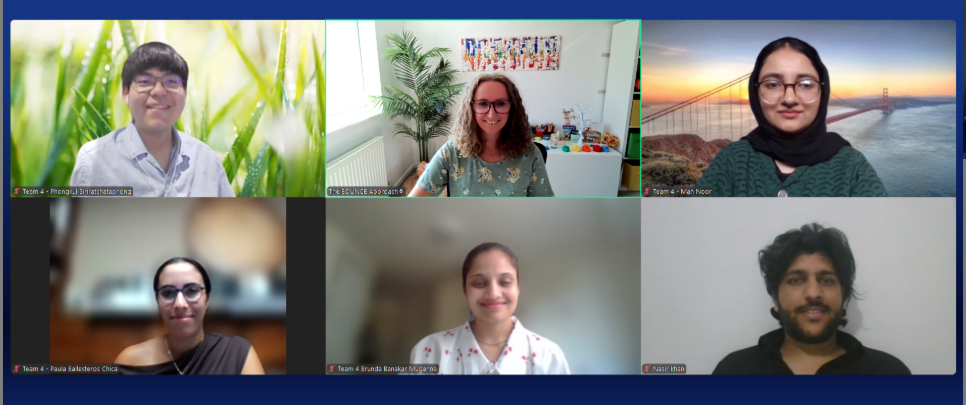
Accelerated Industry PlacementA university research partnership exploring a question we kept coming back to: can one assessment really tell us enough about a child’s SEMH needs?
The Accelerated Industry Placement is exploring the earliest signs of difficulty, what adults notice first, and how different needs can show up in different ways.
What we learnt: one assessment system is not enough. Regulation, wellbeing, engagement, social skills and transition can each tell us something different about what a child may be experiencing.
That learning helped us develop a range of focused Snapshots, so adults can choose the right starting point, notice need earlier and match support more quickly.
BOUNCE Projects
Two funded cohortsSix-week implementation partnerships exploring how one focused change can be embedded in a real setting, measured, and kept once the project ends.
Settings choose a single area of need, access funded training and resources, put it into practice for six weeks, and use Snapshots to measure what changed. Two cohorts are open.
What we are learning: what helps a small, focused change last after the project ends.
Apply for a funded projectEvery project teaches us something about what children need and what adults find useful. We use it to review and improve our courses, resources and tools.
What comes next
We are still learning
We will never assume that one approach will work for every child. The work we fund and develop helps us keep learning:
- what adults notice first
- which changes appear to help
- what is realistic in busy settings
- what children and families experience
- what lasts once a project ends
We use that learning to review, refine and improve what we offer — from our training and resources to our Snapshots, tools and funded projects.
We will keep sharing what we find: what worked, what did not, and what made us think differently.

BOUNCE has never been about having all the answers. It is about continuing to notice, learn and ask:
What is this child telling us — and what do they need from us next?
See it for yourself
Explore the Learning Portal, try the tools and see how the training, Snapshots and resources connect — so you can use the same approach to create meaningful change in your own setting.